

Nvidia is facing growing investor scrutiny as allegations surrounding CEO Jensen Huang introduce a new layer of uncertainty for the world’s leading AI chipmaker. An independent board review, potential regulatory implications and intensifying competition from Google are creating additional risks around the company’s leadership, valuation and longer-term competitive position.
The situation remains developing, and the allegations should not be treated as established findings. Huang reportedly acknowledged infidelity in a letter published on November 8, but did not identify the other individual or confirm allegations of espionage. Nvidia’s board has initiated an independent review overseen by independent directors and external legal counsel, while stating that there is currently no reason to believe national security or company secrets have been compromised.
For investors, the central question is whether the controversy remains a reputational issue or develops into something with more significant operational, regulatory or leadership consequences.
Nvidia Market Snapshot
| Indicator | Current Position |
|---|---|
| Company | Nvidia |
| CEO | Jensen Huang |
| Main issue | Leadership and personal conduct allegations |
| Board response | Independent review |
| Reported letter | Published November 8 |
| Government committee briefing request | November 18 |
| Response or alternative date | November 11 |
| Competitive pressure | Google’s expanding TPU programme |
| 2027 consensus median EPS forecast | Approximately $9.30 |
| 2028 consensus median EPS forecast | Approximately $15.90 |
| Indicative forward P/E | Approximately 18 |
| Indicative forward free cash flow valuation | Approximately 20–24, depending on assumptions |
Nvidia Leadership Controversy: What Investors Know
The controversy centres on allegations involving Jensen Huang and an individual identified in the supplied report as Alice Huang. The report raises questions about possible connections to Chinese intelligence, but these allegations have not been confirmed.
The distinction between allegations, company statements and verified investigative findings is important for investors.
According to the information provided:
- Huang’s reported statement: A letter published on November 8 acknowledged infidelity. Huang did not identify the other individual or confirm the espionage allegations.
- Independent board review: Nvidia’s board has initiated an investigation overseen by independent directors and outside counsel.
- Company position: The board stated that there is currently no reason to believe national security or company secrets have been compromised. This represents its position at the beginning of the review, not a final conclusion.
- Government scrutiny: Chairs of three government committees requested a closed briefing on November 18, with a response or alternative date expected by November 11.
- Singapore investigation: Singaporean authorities confirmed an investigation involving Megaspeed but denied reports that they were conducting their own inquiry into Alice Huang’s alleged connections to China, as well as statements attributed to them by The Wall Street Journal.
The outcome of the board review and any subsequent government briefings could influence how investors assess the seriousness of the situation.
Operational Risk: Could Nvidia’s Competitive Advantage Be Affected?
The most significant potential operational risk would arise if an investigation established that confidential company information had been accessed or disclosed.
Nvidia’s competitive advantage extends beyond individual chip designs. Its position is supported by an interconnected ecosystem of advanced processors, software, developer tools and supporting technology.
Even if confidential information were compromised, replicating the full Nvidia ecosystem would remain a substantial challenge. The report highlights China’s limitations in accessing sufficiently advanced semiconductor lithography as one factor restricting its ability to reproduce Nvidia’s technology.
However, investors would need to distinguish between the theoretical possibility of information exposure and evidence of an actual breach. At present, the supplied information does not establish that company secrets have been compromised.
Regulatory Risk: US Technology Oversight Could Intensify
The controversy could also contribute to increased scrutiny of the US technology sector, particularly where national security and advanced semiconductor exports intersect.
Even without evidence of a direct breach, the situation may add pressure for tighter oversight or further export restrictions.
Potential consequences include:
- Additional restrictions on overseas semiconductor sales.
- Greater regulatory scrutiny of technology companies and their leadership.
- Increased compliance and governance costs.
- Greater uncertainty around international investment and commercial relationships.
- Potential pressure on valuations across the wider semiconductor and AI sector.
The extent of any regulatory consequences remains uncertain. However, Nvidia’s importance to the global AI infrastructure market means that changes in US technology policy could have implications well beyond the company itself.
Leadership Risk: Could Jensen Huang Be Replaced?
A potential change in Nvidia’s leadership represents another risk investors may consider, although the supplied report does not establish that Huang’s removal is likely or that the board is considering such a move.
Huang has played a central role in Nvidia’s development and its position in the AI semiconductor market. Any unexpected leadership transition could raise questions about succession, strategic continuity and the ability of a replacement to maintain the company’s competitive momentum.
The report also raises the possibility of implications from Huang’s marital property arrangements and the family’s existing shareholding structure.
However, a potential division of marital assets would not automatically result in the sale of Nvidia shares or impose a direct financial cost on the company. The report notes that Lori Huang already co-manages a significant portion of the family stake through trust entities.
For shareholders, the more immediate issue is the outcome of the independent review rather than assuming a leadership change or shareholding disruption.
Nvidia Valuation: Cheap on Earnings, Less Attractive on Cash Flow
Nvidia’s valuation presents a more complicated picture than headline earnings multiples might suggest.
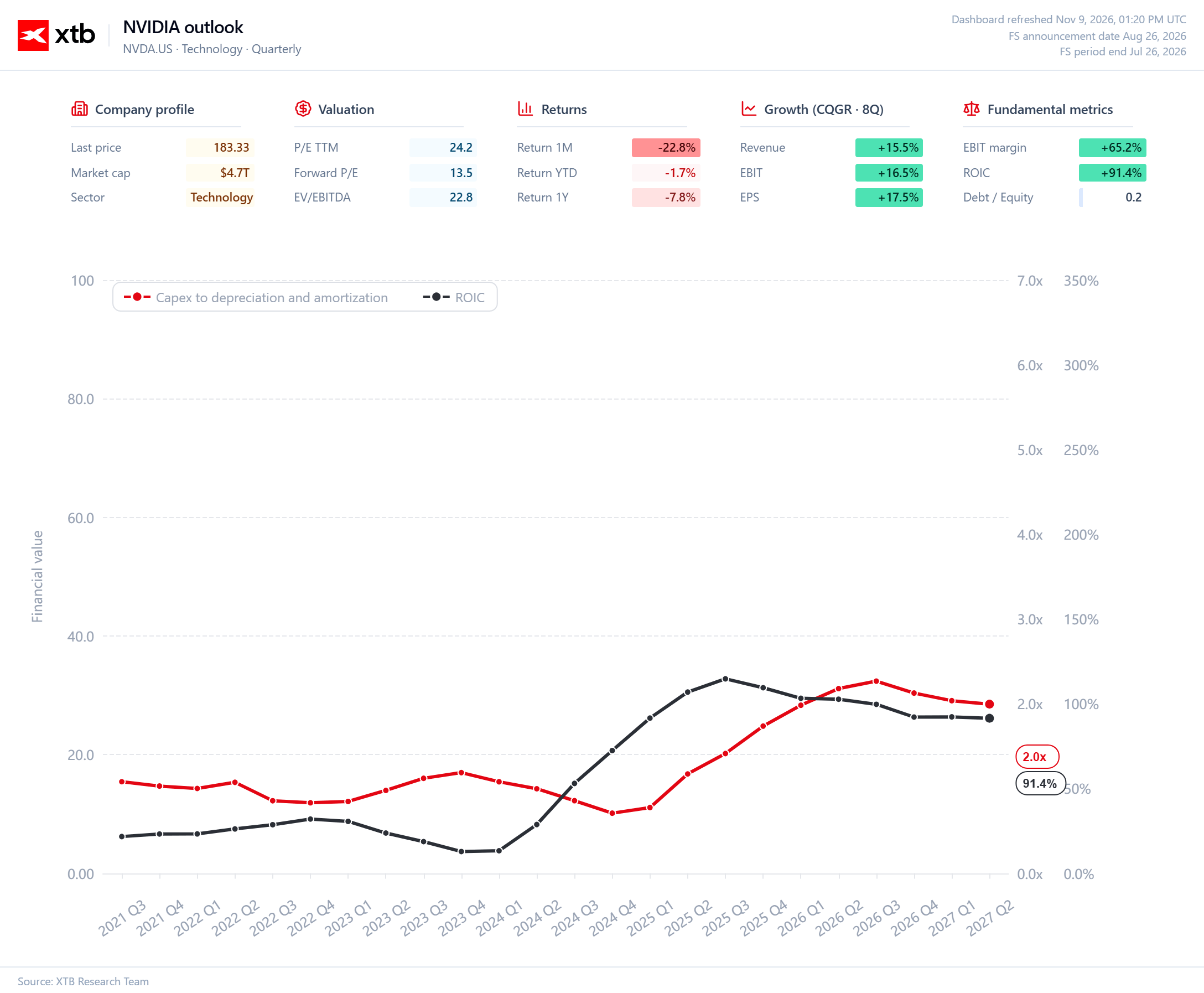
The supplied analysis indicates that consensus median earnings forecasts are approximately $9.30 per share for 2027 and $15.90 for 2028. At the current valuation, this implies a forward 12-month price-to-earnings ratio of approximately 18.
On an earnings basis, that may make Nvidia appear relatively inexpensive compared with its expected future profitability.
However, the picture is less favourable when measured against free cash flow. Forward free cash flow valuation metrics are estimated at approximately 20–24, depending on the assumptions used.
This distinction matters because accounting earnings and the cash generated by a business do not always move in line. Investors ultimately need to assess whether projected earnings growth translates into sustainable cash generation.
The compression of Nvidia’s valuation multiples in recent months may already reflect some expectation of negative surprises. However, a lower multiple does not automatically mean the shares are undervalued.
If the controversy produces primarily reputational damage, while earnings forecasts and cash conversion remain intact, some of the recent valuation pressure could prove excessive. That outcome is possible, but not guaranteed.
Google Intensifies Competition With New AI Chip Development
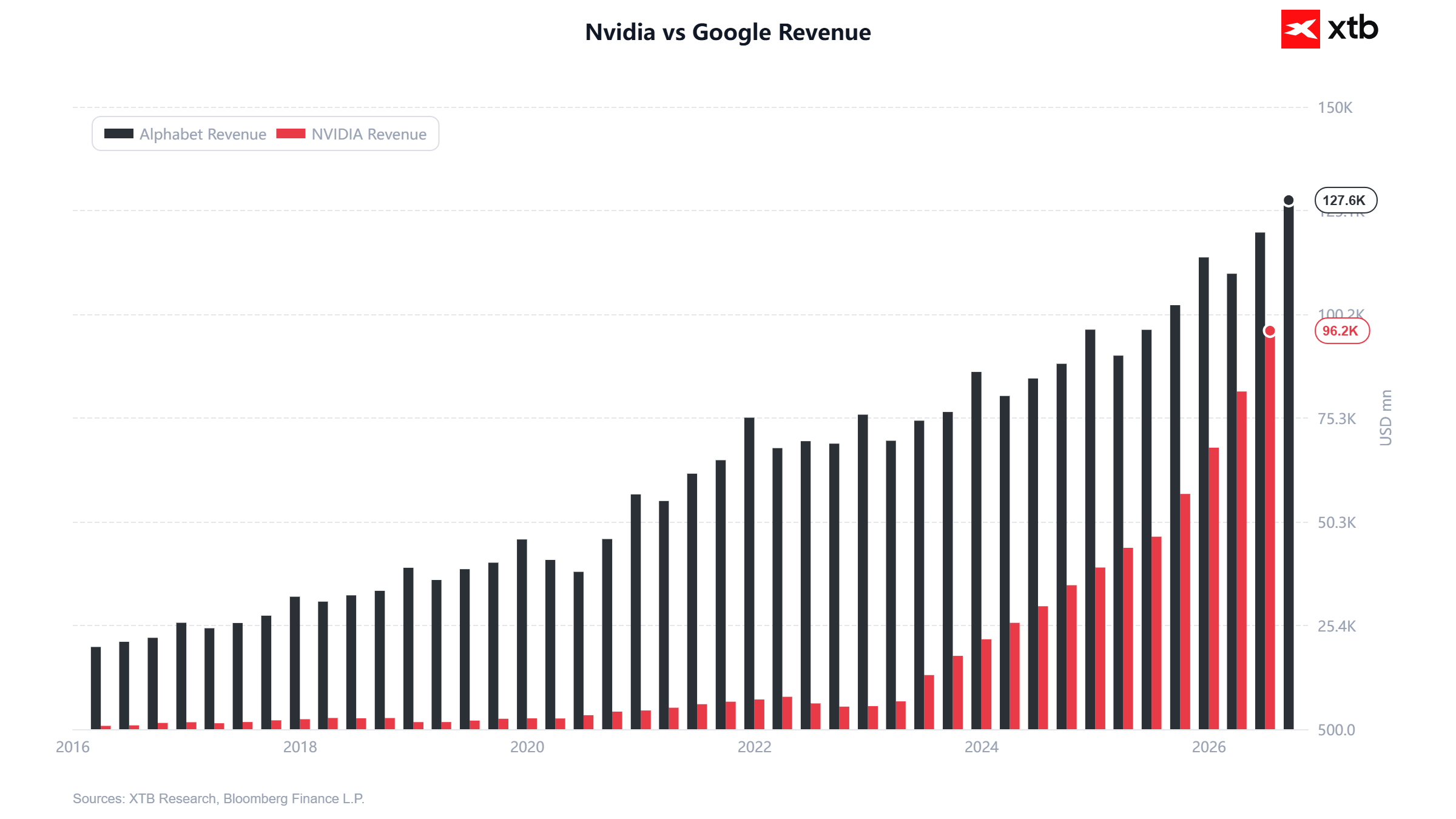
Nvidia’s leadership controversy is emerging at a time when competitors are working to reduce dependence on its hardware ecosystem.
Google has announced further initiatives in its Tensor Processing Unit (TPU) programme, including the TPU 8tx and 8i Max models. The products are designed for different workloads, reflecting the increasing specialisation of hardware required by the next generation of AI development.
The timing adds another dimension to the Nvidia investment debate.
Google’s developments do not establish that Nvidia is losing market share or that the new processors will immediately compete with Nvidia at scale. The products still need to demonstrate their capabilities and commercial adoption.
Nevertheless, growing competition could place pressure on Nvidia’s long-term pricing power and the valuation investors are willing to assign to its future earnings.
The competitive challenge is not limited to whether another chip can match Nvidia’s performance. It also involves software compatibility, developer adoption, infrastructure integration, customer switching costs and the broader ecosystem supporting AI workloads.
Bullish Nvidia Sentiment
- Strong competitive ecosystem: Nvidia’s advantage extends beyond chip manufacturing into software, infrastructure and developer adoption.
- No confirmed security breach: The board has stated that there is currently no reason to believe company secrets or national security have been compromised.
- Attractive forward earnings multiple: The reported forward P/E of approximately 18 may appear relatively inexpensive against consensus earnings expectations.
- Potentially excessive valuation reaction: If the controversy remains reputational and financial forecasts remain intact, recent selling pressure could prove excessive.
- High barriers to replication: Advanced semiconductor technology and the wider Nvidia ecosystem remain difficult for competitors to reproduce.
Bearish Nvidia Sentiment
- Leadership uncertainty: The independent review creates uncertainty around the company’s senior leadership and governance.
- Potential regulatory scrutiny: The controversy could contribute to further US oversight of advanced technology and overseas semiconductor sales.
- Unresolved allegations: The investigation has not established whether confidential information was compromised.
- Free cash flow valuation: Nvidia appears less inexpensive when measured against projected cash generation rather than earnings alone.
- Google’s expanding TPU programme: Increasing competition could challenge Nvidia’s market position and future pricing power.
- Sector-wide valuation pressure: Greater competition and regulatory uncertainty could weigh on valuations across the AI semiconductor industry.
Nvidia Stock Forecast: What Investors Should Watch
The immediate outlook for Nvidia depends on whether the controversy develops beyond a reputational issue.
The independent board review is the most important corporate development to monitor. Any evidence of information exposure, governance failures or regulatory breaches could materially change the market’s assessment of risk.
The November 11 response deadline and requested November 18 government committee briefing are also relevant developments identified in the supplied report.
Alongside the investigation, investors should monitor Google’s TPU development and the commercial progress of its new processors. Competition may not immediately translate into lost Nvidia sales, but it could influence longer-term growth expectations and valuation multiples.
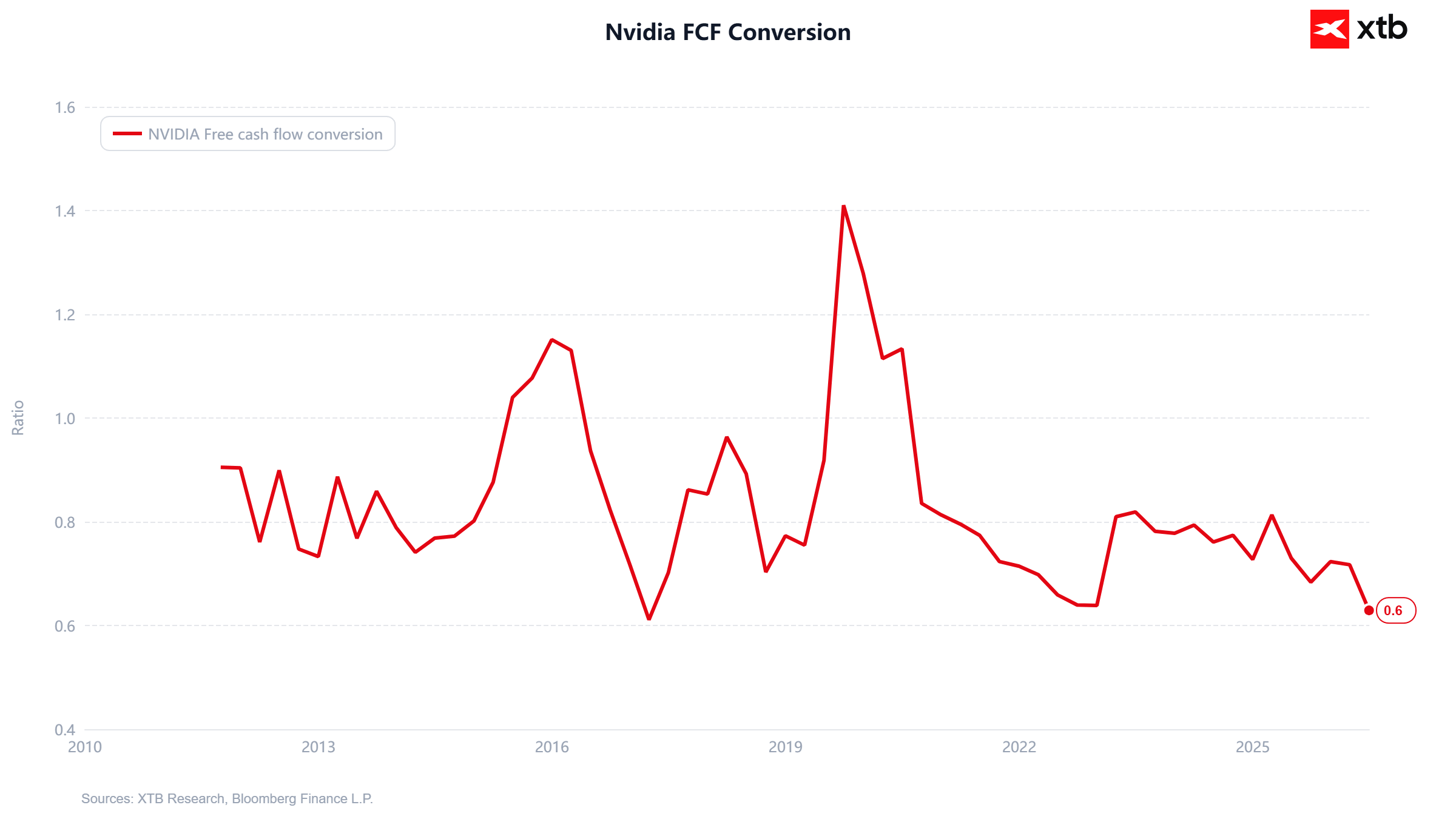
Finally, earnings forecasts and free cash flow conversion remain essential. A relatively attractive forward P/E is not sufficient on its own if cash generation weakens or the market begins to question the sustainability of future growth.
Market Outlook for the Coming Sessions
Nvidia faces a combination of company-specific uncertainty and longer-term competitive pressure.
The leadership controversy has introduced additional governance and reputational risk, but there is currently no established evidence in the supplied information that company secrets have been compromised. Investors will therefore be looking for clarity from the independent board review and any subsequent government briefings.
At the same time, Google’s expanding AI chip programme highlights the increasing competitive intensity across the semiconductor industry. Nvidia’s established ecosystem remains a major advantage, but the investment required to maintain that position could become increasingly important to future profitability and cash flow.
For the coming sessions, the market’s reaction is likely to depend on developments surrounding the investigation, regulatory commentary and any evidence that competitive pressure is beginning to affect Nvidia’s commercial outlook.
Today Markets Analysis
Nvidia’s current investment debate is about more than the personal conduct allegations surrounding its CEO. It combines leadership risk, potential regulatory consequences, valuation questions and a rapidly evolving competitive landscape.
The distinction between confirmed developments and unverified allegations is particularly important. The board has initiated an independent review, but the available information does not establish that confidential information has been compromised or that Huang faces imminent removal.
From a valuation perspective, Nvidia may appear relatively inexpensive on forward earnings, but free cash flow measures suggest a less compelling picture. Meanwhile, Google’s latest TPU developments reinforce the possibility that competition will become more intense as AI hardware becomes increasingly specialised.
The central question for investors is whether Nvidia can preserve its earnings growth, cash generation and competitive advantage while navigating the governance controversy and rising competitive pressure.
Currency Hedger View
Developments affecting major US technology companies can influence international investment flows, currency sentiment and the allocation of capital across global markets.
For businesses operating across the technology supply chain, changes in semiconductor demand, international trade restrictions and investment activity can affect revenues, supplier payments and foreign-exchange exposure.
Currency Hedger provides international businesses with access to cross-border payments, multi-currency accounts and foreign-exchange risk management solutions to help manage currency exposure and protect operating cash flow.
Manage your international currency exposure with Currency Hedger.
Open a Currency Hedger account today
Risk Disclaimer
This market analysis is provided for informational and educational purposes only and does not constitute investment advice, a recommendation, or an offer to buy or sell any financial instrument. Equity and technology-sector investments involve significant risk, and share prices can move rapidly in response to corporate developments, earnings expectations, competition, regulation and geopolitical events. Allegations discussed in this article should not be treated as established findings unless independently confirmed. Past performance is not indicative of future results. Investors should conduct their own research and consider their financial circumstances and risk tolerance before making any investment decisions.

Leave A Comment