
Currency Pairs
Currency Pairs Majors, Crosses & Exotics
Understand how currencies are paired, what differentiates major, cross and exotic currency pairs, and how businesses can manage their foreign exchange exposure.
EXPLORE CURRENCY PAIRSWhat is a currency pair?
A currency pair shows the value of one currency relative to another. Foreign exchange is always expressed as a relationship between two currencies rather than as the value of a currency in isolation.
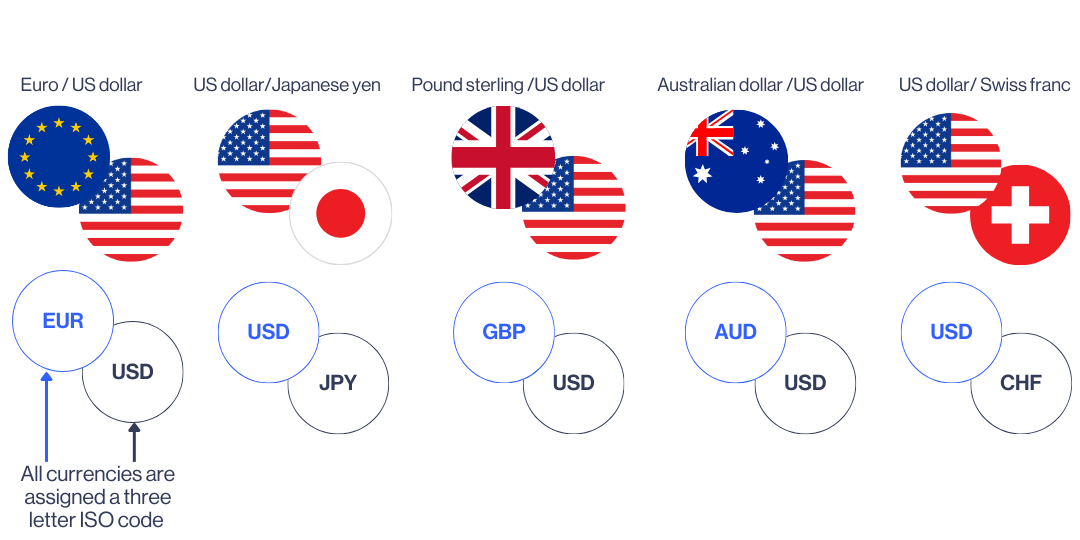
The first currency is known as the base currency and the second is the quote currency. The quoted exchange rate tells you how much of the quote currency is required to buy one unit of the base currency.
For businesses making international payments, receiving overseas revenue or managing foreign currency cash flows, movements in currency pairs can have a direct impact on costs, revenues and margins.
Base currency and quote currency
In EUR/USD, EUR is the base currency and USD is the quote currency. If EUR/USD were quoted at 1.1000, it would mean that one euro is valued at 1.10 US dollars.
This same principle applies across the foreign exchange market. Understanding the order of the currencies is important when assessing the value of an international payment or receipt.
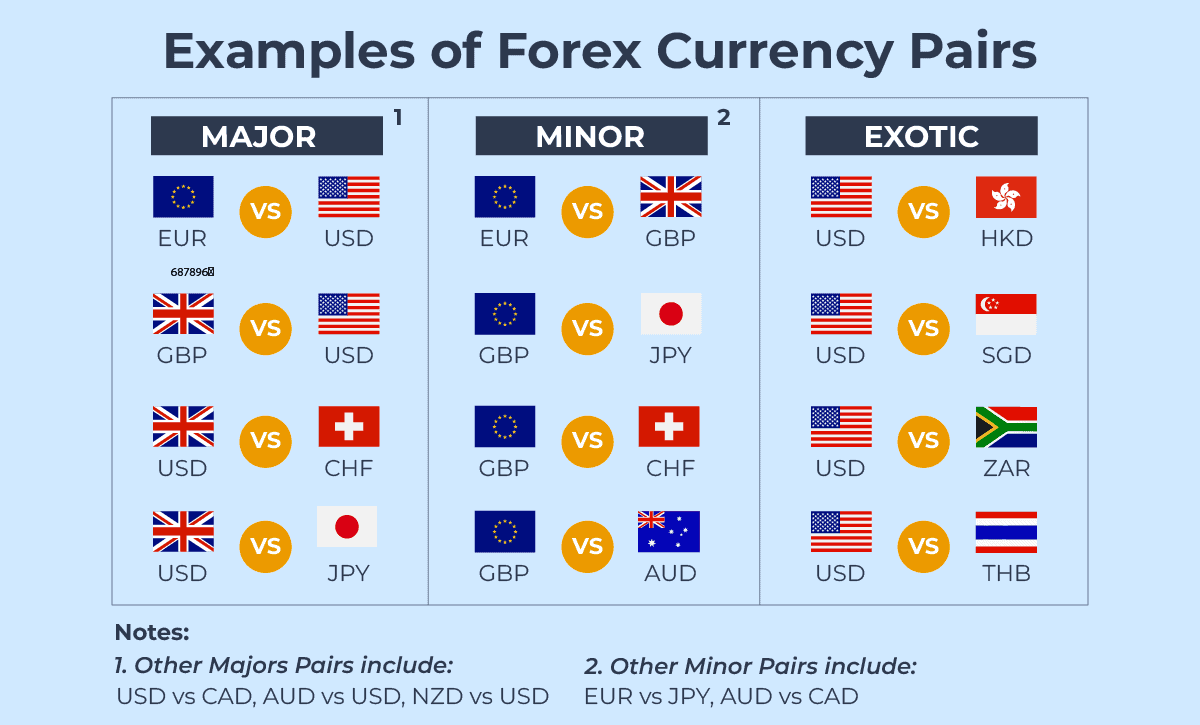
Currency pairs are commonly grouped into three broad market categories: Majors, Crosses and Exotics.
The three main currency pair categories
Currency pairs are commonly classified according to the currencies involved and their level of activity in the international foreign exchange market.
Major Currency Pairs
Major pairs traditionally include the US Dollar paired with another widely traded major currency. They are among the most actively followed currency markets.
- EUR/USD
- USD/JPY
- GBP/USD
- USD/CHF
- USD/CAD
- AUD/USD
- NZD/USD
Cross Currency Pairs
Crosses, sometimes referred to as minor currency pairs, do not include the US Dollar. They generally combine two other major currencies.
- EUR/GBP
- EUR/JPY
- GBP/JPY
- EUR/CHF
- AUD/JPY
- EUR/AUD
Exotic Currency Pairs
Exotic pairs generally combine a major currency with a currency from a smaller or emerging-market economy.
- USD/TRY
- USD/ZAR
- USD/MXN
- EUR/TRY
- USD/THB
- USD/SGD
Explore the major currency pairs
The major currency pairs are among the most widely followed FX markets globally. Each pair includes the US Dollar and another major international currency.
Select a currency pair below to learn more about its underlying currencies, international payment exposure and currency hedging considerations.
EUR/USD
Manage EUR/USD exposure associated with international payments, receipts and cross-border business activity.
TRADING EUR/USDUSD/JPY
Understand USD/JPY exposure and the potential impact of currency movements on international transactions.
TRADING USD/JPYGBP/USD
Explore GBP/USD currency exposure and deliverable FX solutions for UK and US international payments.
TRADING GBP/USDUSD/CHF
Learn about USD/CHF and how businesses can manage exposure to the US Dollar and Swiss Franc.
TRADING USD/CHFUSD/CAD
Explore USD/CAD currency exposure for international payments, receipts and cross-border business activity.
TRADING USD/CADAUD/USD
Manage AUD/USD exposure associated with international payments and future Australian Dollar requirements.
TRADING AUD/USDNZD/USD
Understand NZD/USD exposure and consider appropriate foreign exchange solutions for future transactions.
TRADING NZD/USDWhat are currency crosses?
Cross currency pairs are pairs that do not include the US Dollar. They commonly combine two major currencies, allowing businesses and market participants to consider the relative value of currencies without a direct USD component.
Examples include EUR/GBP, EUR/JPY and GBP/JPY. Crosses can be particularly relevant to businesses whose international payments involve two currencies other than USD.
What are exotic currency pairs?
Exotic currency pairs generally combine a major currency such as USD, EUR or GBP with a currency from a smaller or emerging-market economy.
Examples can include USD/TRY, USD/ZAR, USD/MXN and EUR/TRY. The availability and classification of individual pairs can vary between FX providers.
Exotic currency markets can have lower liquidity and may experience wider spreads and greater price movements than the major currency pairs. Local economic conditions, monetary policy, political developments and market liquidity can all be important considerations.
Why exotic currencies require careful consideration
When dealing with less frequently traded currencies, businesses should consider the underlying payment, settlement requirements, available liquidity and potential currency movements.
Currency Hedger can discuss your underlying FX requirement and help identify an appropriate deliverable foreign exchange solution where available.
Majors vs Crosses vs Exotics
The classification of a currency pair provides a useful starting point, but actual market conditions vary. Liquidity, transaction costs and market availability should always be considered for the specific currency and transaction.
Majors
Major pairs generally have high levels of global market participation and are among the most widely followed currency markets.
Crosses
Crosses exclude USD and allow exposure between two other major currencies, such as EUR/GBP or EUR/JPY.
Exotics
Exotic pairs generally involve a major currency and a less-traded or emerging-market currency and can present different liquidity and pricing characteristics.
Managing currency exposure beyond the major pairs
Currency Hedger helps businesses and eligible clients manage genuine underlying foreign exchange requirements through deliverable FX solutions.
Whether you are making an international payment, receiving overseas revenue or planning a future currency requirement, understanding the currency pair involved is the first step toward effective FX management.
- Deliverable foreign exchange
- Spot FX transactions
- Forward foreign exchange contracts
- International currency payments
- Currency risk management
- Support from an FX specialist
Have an international currency requirement?
Speak with a Currency Hedger FX specialist about your international payment, currency exposure or future FX requirement.
TALK TO AN FX SPECIALISTCurrency Hedger provides foreign exchange and currency risk management solutions for eligible clients with genuine underlying currency requirements. Foreign exchange transactions involve risk and the value of currencies can move against you. Forward contracts and other hedging products may not be suitable for everyone. Information on this page is provided for general information only and does not constitute financial, investment or legal advice.