



The Reserve Bank of New Zealand raised the Official Cash Rate (OCR) by 25 basis points to 2.75% on Wednesday. Annual CPI inflation accelerated to 4.1% in Q2 , largely due to higher fuel prices linked to the conflict in the Middle East. However, the RBNZ emphasized that underlying inflationary pressures remain considerably weaker. Excluding motor fuels, inflation fell to 2.9% , while core inflation, wage growth, and inflation expectations remain consistent with headline inflation returning to the 1–3% target range by mid-2027 and reaching 2% later next year.
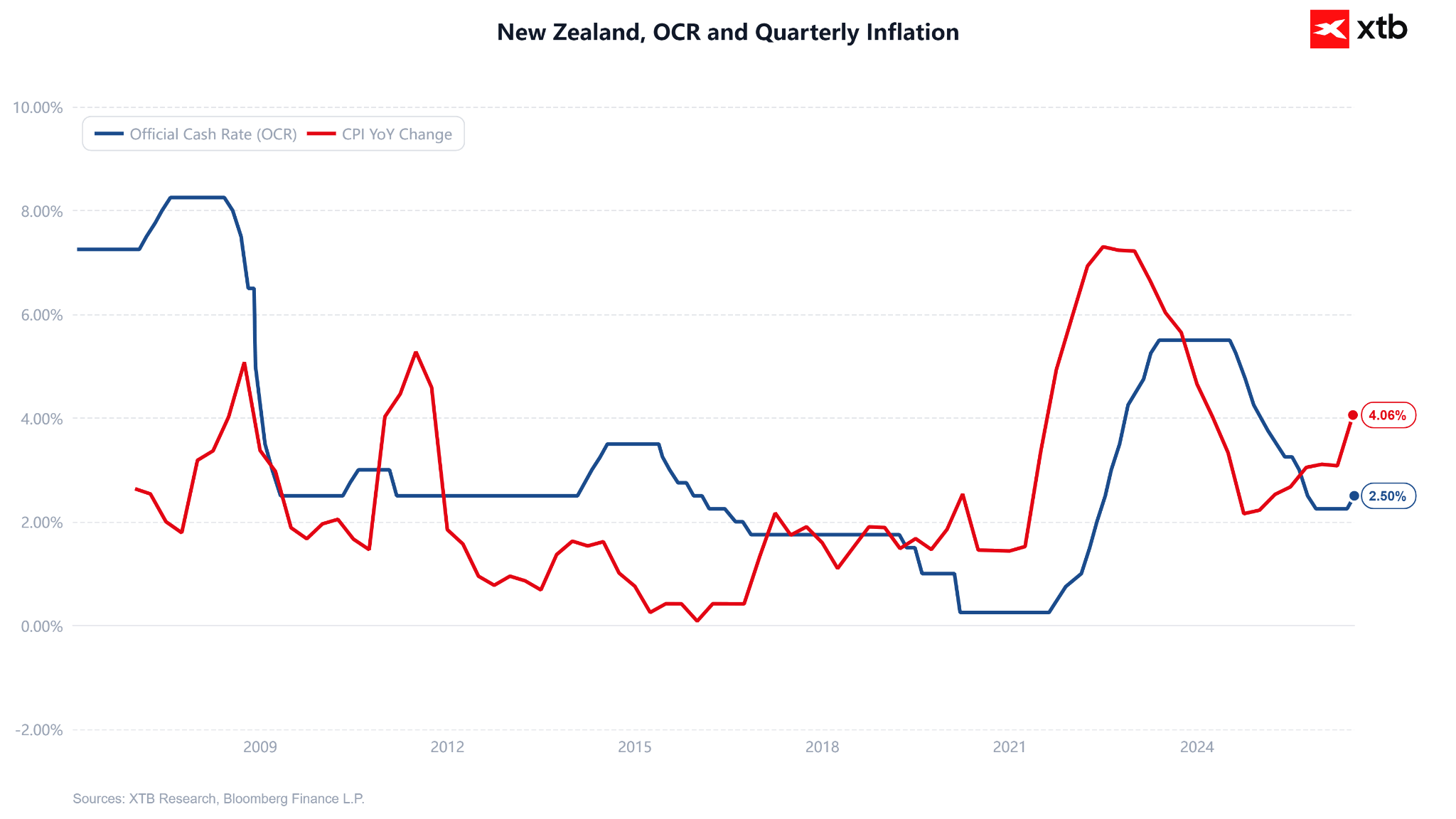
RBNZ Raises Rates to 2.75%, but Its Outlook Weighs on NZD
The macroeconomic backdrop remains mixed. The RBNZ believes New Zealand’s economic recovery has resumed following weak growth in the second quarter and expects activity to gradually broaden, supported by resilient external demand and strong export prices. Domestic conditions, however, remain considerably weaker. Subdued household spending, elevated unemployment, job insecurity, and weak house prices are weighing on consumption and residential investment, particularly in Auckland and Wellington. The central bank therefore continues to balance upside inflation risks stemming from energy prices against still-significant spare capacity in the economy.
Dovish Tone Overshadows the Rate Hike
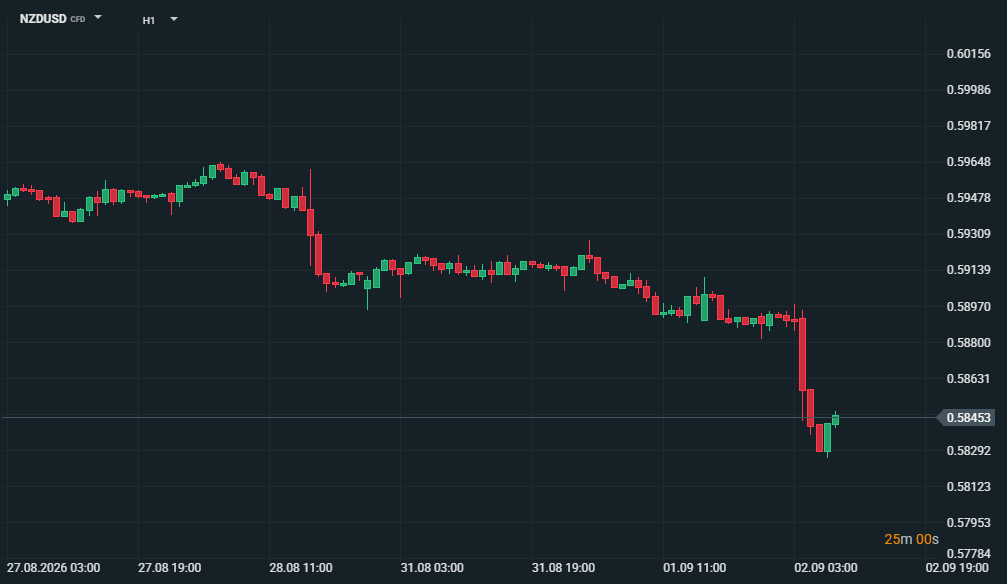
Despite the rate increase, the overall message was interpreted as relatively dovish. The RBNZ argued that gradual tightening now should reduce the risk of more aggressive rate hikes being required in the future and reiterated that the future path of the OCR is not predetermined. Four committee members assessed the risks to inflation as tilted to the upside, particularly if elevated energy and petrochemical prices become embedded in broader price-setting behavior. Two members viewed the risks as broadly balanced. Economists generally assessed the projected rate path as less aggressive than some market participants had feared, reducing expectations that the OCR could ultimately rise toward 4% . The New Zealand dollar weakened sharply following the announcement, losing almost 1.0% against the U.S. dollar . The reaction suggests that investors had been positioned for a more hawkish signal given headline inflation of 4.1%. Instead, the RBNZ emphasized a gradual approach and the temporary nature of the inflation shock. The near-term outlook for the NZD will likely depend on whether oil prices remain elevated and whether domestic inflationary pressures begin to broaden beyond fuel-related components.

Leave A Comment