

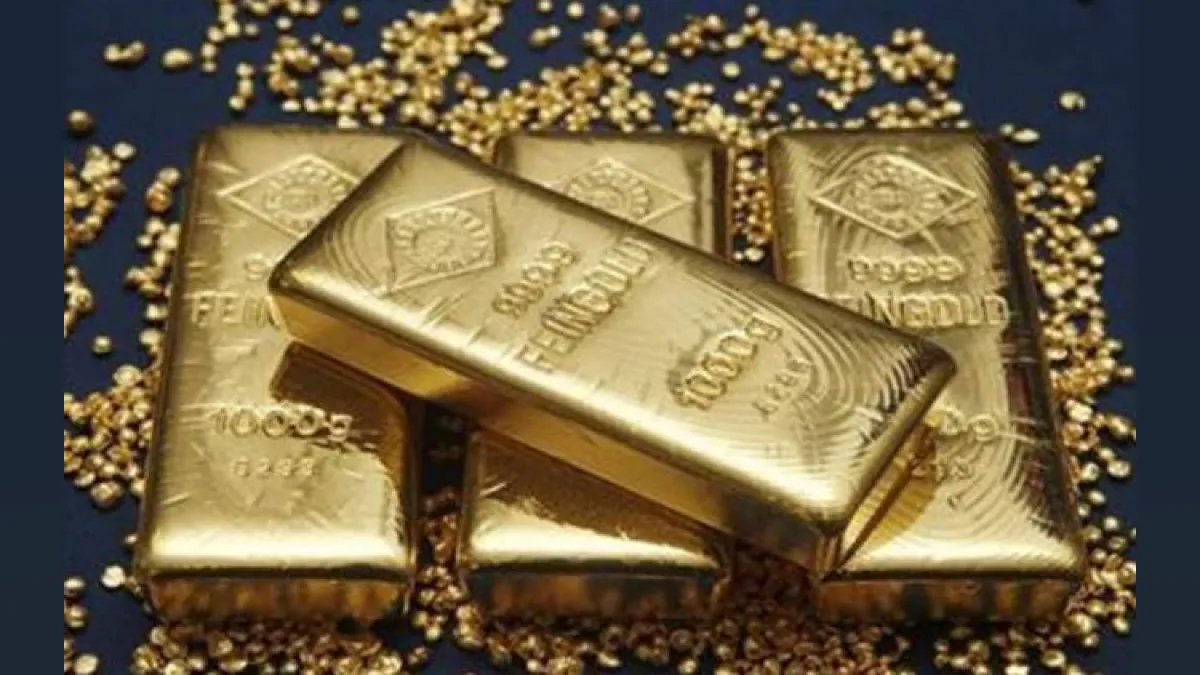
Gold is trading near $4,100 per ounce after suffering a sharp decline, with higher oil prices, rising Treasury yields and expectations for further Federal Reserve tightening creating headwinds for the non-yielding metal.
The latest pressure is coming from renewed uncertainty surrounding US-Iran negotiations and the resulting impact on energy markets. Higher oil prices are increasing concerns over inflation, while rising Treasury yields are increasing the opportunity cost of holding gold.
The market is now turning toward upcoming US economic data for further indications of how persistent inflation may be and whether additional monetary tightening could remain necessary.
Market Snapshot
| Factor | Current Situation | Potential Market Impact |
|---|---|---|
| Gold | Around $4,100/oz | Remains under pressure following the sharp decline |
| Oil Prices | Moving higher | Renewed inflation concerns could pressure bullion |
| Treasury Yields | Rising to multi-year highs | Increases opportunity cost of holding gold |
| Fed Policy | Further tightening expectations elevated | Potential headwind for non-yielding assets |
| US-Iran Talks | Uncertainty remains | Geopolitical developments could increase volatility |
| US Inflation Data | PCE report approaching | Could influence expectations for Fed policy |
| Employment Data | Nonfarm payrolls ahead | Potentially important for rate expectations |
Current Gold Price Action
Gold is holding near $4,100 per ounce after a substantial decline.
The recent selling reflects a combination of higher yields and a changing interest-rate outlook. When Treasury yields rise, gold can become less attractive relative to interest-bearing assets because bullion does not generate a yield.
The market is therefore increasingly sensitive to incoming US economic data and any evidence that inflation could remain elevated.
Higher Oil Prices Increase Inflation Concerns
Oil prices are again moving higher as uncertainty surrounding US-Iran negotiations continues.
Energy prices are particularly important for gold because a sustained increase in oil can feed into broader inflation expectations. If investors believe higher energy costs will keep inflation elevated, expectations for monetary policy can shift toward tighter conditions.
That creates a difficult environment for gold because the inflationary pressure itself can support demand for a traditional inflation hedge, while the resulting increase in interest-rate expectations can simultaneously pressure the metal.
Treasury Yields Remain a Major Headwind
US Treasury yields have moved to fresh multi-year highs as markets reassess the potential path for Federal Reserve policy.
Higher yields increase the relative attractiveness of fixed-income assets compared with gold.
The relationship is particularly important when real yields rise, because investors then face a greater opportunity cost from holding an asset that does not pay interest.
For gold to regain upward momentum, traders will therefore be watching closely for signs that Treasury yields are stabilizing or reversing.
Federal Reserve Policy Moves Back Into Focus
Expectations for further Federal Reserve tightening are becoming increasingly important for bullion.
Markets are assessing whether persistent inflationary pressure could require another rate increase following the central bank’s recent policy move.
The direction of inflation and employment data will be critical. Strong economic data combined with persistent inflation could keep rate expectations elevated, while weaker activity or softer inflation could reduce pressure for additional tightening.
Geopolitical Risk Remains a Two-Way Driver
The US-Iran situation continues to create uncertainty for both energy markets and precious metals.
Geopolitical tensions can traditionally support safe-haven demand for gold. However, if those tensions primarily produce a sustained increase in oil prices and inflation expectations, the resulting pressure on interest rates can work in the opposite direction.
Gold is therefore responding to two competing forces: safe-haven demand from geopolitical uncertainty and monetary pressure from higher yields.
US Economic Data Becomes the Next Major Catalyst
The upcoming US economic calendar provides several potential volatility triggers.
The PCE inflation report will be particularly important because it offers another indication of underlying price pressures and the potential direction of Federal Reserve policy.
The nonfarm payrolls report will provide additional information about labor-market strength.
Together, these releases could influence Treasury yields, the dollar and expectations for future interest rates — all major drivers of gold.
Bullish Sentiment
- Geopolitical uncertainty remains elevated — Continued tensions can support safe-haven demand for gold.
- Oil-driven inflation could support inflation-hedging demand — Persistent energy-price increases may encourage some investors to maintain exposure to precious metals.
- Gold remains near historically elevated levels — The broader long-term demand environment remains relevant even after the recent decline.
- Softer US data could reduce rate expectations — Weak inflation or employment figures could ease pressure from Treasury yields.
- Any decline in yields could support bullion — Lower opportunity costs would improve the relative appeal of non-yielding gold.
Bearish Sentiment
- Treasury yields are rising — Higher yields increase the opportunity cost of holding gold.
- Further Fed tightening remains a risk — Additional rate increases could maintain pressure on bullion.
- Higher oil prices are complicating the inflation outlook — Persistent energy inflation could delay monetary easing.
- Gold has already experienced significant selling — Continued liquidation could keep technical pressure on the market.
- A stronger US dollar could add another headwind — Dollar appreciation generally increases the effective cost of gold for non-dollar buyers.
Price Forecast: What Traders Are Watching
The gold market is entering a period where US inflation data, Treasury yields and Federal Reserve expectations are likely to determine the next major directional move.
The key question is whether higher oil prices produce enough additional inflation pressure to keep interest-rate expectations elevated.
If upcoming economic data shows persistent inflation and resilient employment, Treasury yields could remain elevated and continue to pressure gold.
Conversely, evidence of softer inflation or weakening economic activity could reduce expectations for additional tightening and allow gold to recover some of its recent losses.
Geopolitical developments remain another source of volatility, particularly if US-Iran negotiations affect oil supply expectations.
Supply Outlook
Gold mine supply is relatively slow to respond to short-term price movements, meaning the immediate direction of the market is likely to be driven more by investment demand, central-bank activity, ETF flows, the US dollar and interest rates than by changes in mine production.
Higher prices can encourage recycling and additional supply over time, but these factors are unlikely to be the dominant influence on the next several trading sessions.
Demand Outlook
Investment demand remains highly sensitive to the relationship between gold, Treasury yields and the dollar.
Central-bank and safe-haven demand can provide structural support, particularly while geopolitical uncertainty remains elevated.
However, higher yields can redirect capital toward interest-bearing assets, creating an important counterweight.
The market will therefore be watching whether investors use the recent decline to rebuild gold exposure or whether higher yields continue to encourage further liquidation.
Market Outlook for the Coming Sessions
Gold traders will be watching:
- US PCE inflation data
- US nonfarm payrolls
- Treasury yields
- Federal Reserve rate expectations
- US dollar direction
- Oil prices
- US-Iran negotiations
- Safe-haven flows
- Central-bank gold demand
- ETF investment flows
The immediate focus is on whether higher oil prices translate into persistent inflation pressure and higher-for-longer interest-rate expectations.
Gold can still receive support from geopolitical uncertainty, but the metal needs stabilization in yields to overcome the current monetary-policy headwind.
Currency Hedger View
Gold’s relationship with the US dollar and interest rates makes currency exposure particularly relevant for international businesses and investors.
Because gold is predominantly priced in US dollars, movements in the dollar can influence the effective cost of bullion for buyers using other currencies. At the same time, changes in US interest rates and Treasury yields can affect both gold valuations and broader currency markets.
For businesses with international payments, commodity exposure or USD-denominated transactions, the interaction between gold, the dollar, oil and interest rates can therefore have a direct impact on financial planning and transaction costs.
Currency Hedger helps businesses and individuals manage international currency requirements while understanding the wider market forces influencing exchange rates.
Analysis Louis Roche – Today Markets
Gold is currently being pressured by higher Treasury yields, renewed oil-driven inflation concerns and expectations of further Federal Reserve tightening.
The market is now moving into an important data-driven period. PCE inflation and nonfarm payrolls could influence the path of yields and the dollar, while developments in US-Iran negotiations could add further volatility through the energy market.
The key balance for gold is therefore between safe-haven demand and monetary-policy pressure. A stabilization in yields could provide room for bullion to recover, while persistent inflation and higher rate expectations would keep the market vulnerable to further selling.
Louis Roche – Today Markets

Leave A Comment