

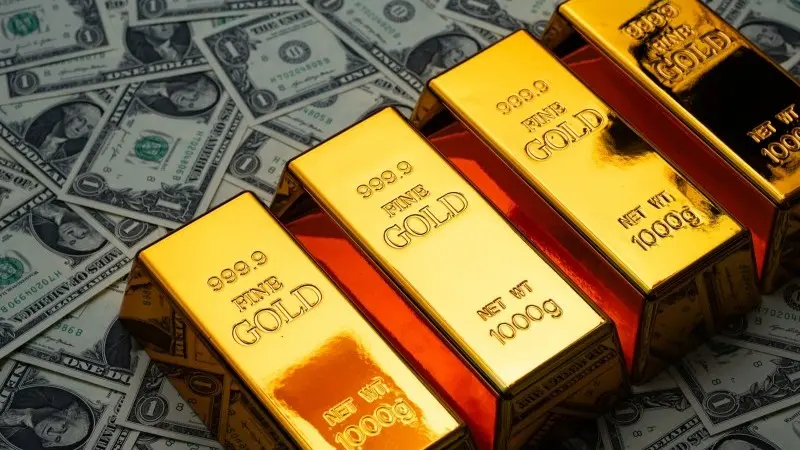
Today Markets Analysis: Gold prices struggled near $4,300 an ounce on Monday after falling for three consecutive weeks, as a sharp rise in oil prices strengthened expectations for tighter US monetary policy and reduced the appeal of non-yielding bullion.
The latest pressure on gold comes from a combination of higher energy prices, persistent inflation and increasingly hawkish Federal Reserve expectations. With markets pricing an 86% probability of a 25-basis-point Fed rate hike on Wednesday, gold is facing a difficult macroeconomic backdrop.
Oil Prices Create a New Headwind for Gold
The latest move in gold is closely linked to developments in the oil market.
Oil prices moved toward four-month highs after Saudi Arabia closed a key pipeline used to bypass the Strait of Hormuz following drone attacks. The disruption has added another layer of uncertainty to an already fragile global energy market.
The relationship with gold is important.
Higher oil prices can feed directly into inflation through transportation, energy and production costs. If markets begin to believe that the resulting inflation will remain persistent, central banks may have less room to ease monetary policy.
That is particularly significant for gold because higher interest rates increase the opportunity cost of holding an asset that does not generate interest.
Inflation Keeps the Federal Reserve in Focus
US inflation remained firm in August.
Consumer inflation held at 3.4% year-on-year, unchanged from July and broadly in line with expectations. However, monthly CPI increased 0.4%, representing the strongest monthly increase in three months.
Producer prices also accelerated during August as higher wholesale energy costs added to inflationary pressure.
At the same time, labour-market data continued to point toward resilience in employment.
The combination of persistent inflation and relatively resilient employment gives the Federal Reserve more justification to maintain a restrictive policy stance.
Fed Rate Expectations Pressure Precious Metals
Markets are currently pricing an approximately 86% probability of a 25-basis-point Fed rate increase on Wednesday.
For gold, the issue is not simply whether the Fed raises rates.
The bigger question is whether the current inflationary environment forces policymakers to maintain higher interest rates for longer.
That creates a challenging environment for precious metals.
| Gold Driver | Market Impact |
|---|---|
| Higher oil prices | Bearish |
| Rising inflation pressure | Bearish |
| Higher Fed rate expectations | Bearish |
| Strong employment data | Bearish |
| Geopolitical uncertainty | Bullish |
| Safe-haven demand | Bullish |
| Persistent global risk | Bullish |
The important point is that gold still has significant structural support from geopolitical risk, but the immediate macroeconomic environment is working against it.
Geopolitical Risk Is Not Enough — For Now
Ordinarily, escalating conflict and disruption to major energy routes would be strongly supportive for gold.
However, the market is currently dealing with an unusual situation where geopolitical risk is simultaneously pushing oil prices higher and interest-rate expectations higher.
That creates a competing force.
Gold benefits from uncertainty and safe-haven demand, but it can struggle when the inflationary consequences of that uncertainty lead investors to expect tighter monetary policy.
This is why gold has been unable to convert the latest geopolitical developments into sustained upside momentum.
What Traders Are Watching Next
The Federal Reserve decision on Wednesday is likely to dominate the near-term outlook.
Traders will be watching:
- The size of the Fed rate decision.
- The language used by policymakers.
- The Fed’s assessment of inflation.
- Any changes to the expected path of future rates.
- Oil prices and further developments around the Strait of Hormuz.
- Whether gold can regain momentum above the $4,300 area.
The key risk for gold is that another escalation in energy prices produces another upward revision to inflation and interest-rate expectations.
Conversely, any evidence that the inflationary shock is temporary could allow gold to recover as investors refocus on geopolitical and safe-haven demand.
Today Markets View
Gold is currently caught between two powerful forces.
Geopolitical instability, supply-chain disruption and heightened uncertainty remain fundamentally supportive for bullion. But those same geopolitical developments are pushing energy prices higher, potentially creating another inflationary impulse that could keep the Federal Reserve more restrictive.
Louis Roche, Analyst at Today Markets, said:
“Gold is facing an unusual macroeconomic conflict. Geopolitical risk normally creates a straightforward safe-haven bid, but when that risk simultaneously drives oil prices and inflation expectations higher, it can strengthen the case for tighter monetary policy. For gold, the next major question is whether safe-haven demand can outweigh the pressure created by higher real-rate expectations.”
For traders, the Fed decision and the trajectory of oil prices may therefore prove more important than geopolitical headlines alone.
Bottom Line
Gold remains under pressure near $4,300 an ounce after three consecutive weekly declines.
The combination of higher oil prices, persistent US inflation, resilient employment and an 86% probability of a Fed rate hike is currently limiting the upside for bullion.
The medium-term safe-haven case remains intact, but gold needs either a moderation in inflation expectations or a decline in US rate expectations to regain stronger upward momentum.
Analysis by Louis Roche, Analyst, Today Markets.

Leave A Comment