


Today Markets IQ – Geopolitical and Commodity Market Analysis
Ukraine has submitted a proposal to international partners for a potential Black Sea ceasefire aimed at securing the safe export of food products, introducing a potentially significant development for global energy, agricultural and financial markets.
Ukrainian Foreign Minister Andrii Sybiha announced that Kyiv had put forward the proposal, while indicating that Russia wants the potential agreement to include oil transportation. Ukraine, however, has stressed that Russian oil shipments could only be included within a broader energy ceasefire agreement.
The distinction is important. Kyiv appears unwilling to provide separate security guarantees for Russian oil transportation without corresponding restrictions on attacks against energy infrastructure.
A credible agreement could reduce the geopolitical risk premium affecting Black Sea shipping, improve Ukrainian agricultural export prospects and ease concerns over energy infrastructure. However, the proposal does not yet represent an agreed ceasefire, and any market reaction will depend on whether negotiations produce enforceable commitments.
For traders, the most immediate areas of interest are Brent and WTI crude oil, wheat, corn, sunflower oil, European natural gas, shipping costs and regional currencies.
Market Snapshot
| Market | Potential Reaction | Main Driver |
|---|---|---|
| Brent crude oil | Bearish pressure | Reduced risk to Russian oil transportation |
| WTI crude oil | Potentially bearish | Lower geopolitical risk premium |
| Wheat | Bearish pressure | Improved Ukrainian export availability |
| Corn | Bearish pressure | Greater Black Sea shipping capacity |
| Sunflower oil | Bearish pressure | Potential increase in export availability |
| European natural gas (TTF) | Potentially bearish | Reduced energy infrastructure risk |
| Maritime shipping | Lower costs | Improved navigation security |
| European equities | Potentially bullish | Reduced regional geopolitical risk |
| Polish zloty | Potentially bullish | Improving regional investor sentiment |
These are potential market implications, not confirmed price movements or forecasts. The proposal has not yet established a functioning ceasefire.
Current Market Reaction: Wheat Remains Largely Unmoved
Despite the geopolitical significance of the announcement, Chicago wheat futures have shown virtually no immediate reaction and continue to consolidate around late-June levels, near 590 cents per bushel according to the supplied chart commentary.
Chart reference supplied with the market update: Chicago Wheat, daily timeframe.
Chicago wheat futures have shown virtually no reaction to Ukraine’s announcement and continue to consolidate around late-June levels, near $590 cents per bushel.
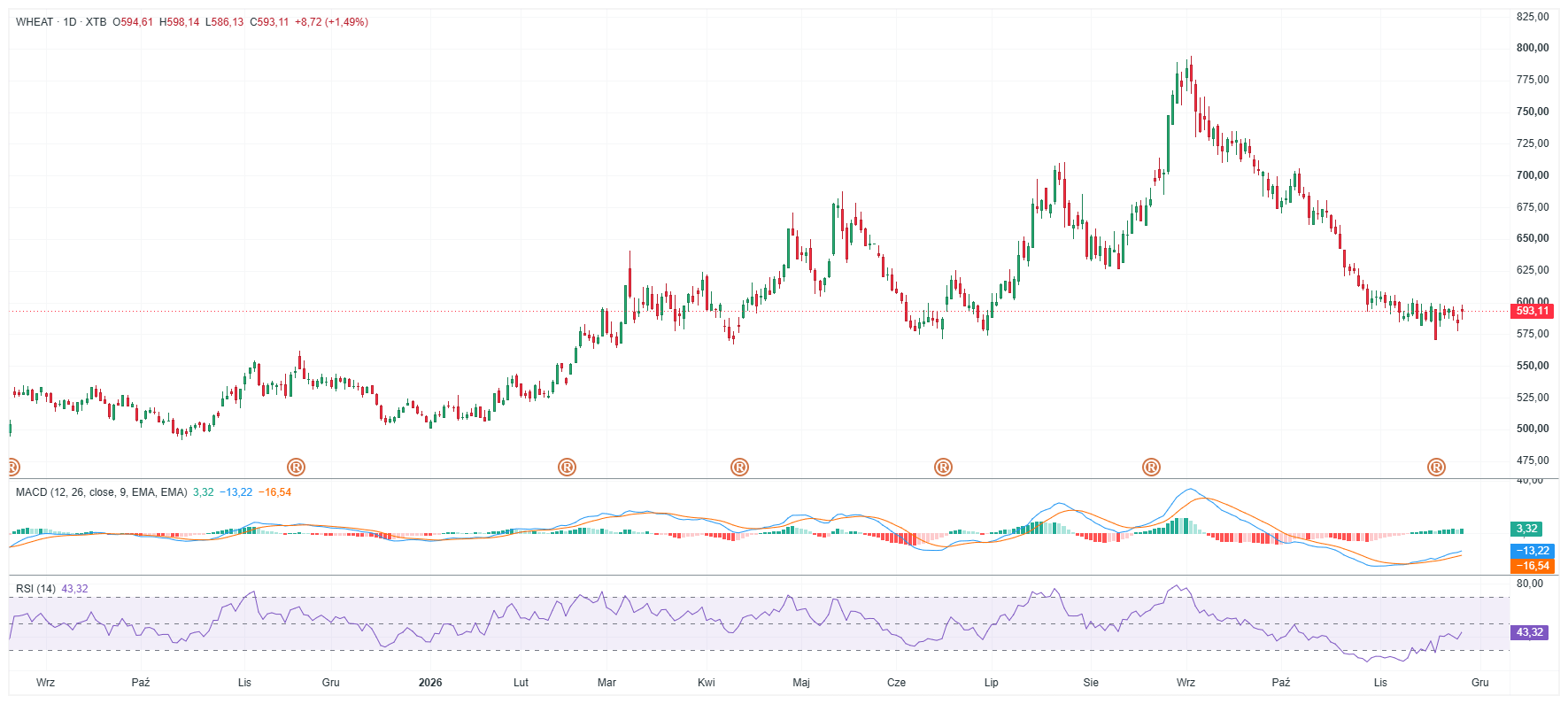
The limited response suggests that traders are not yet pricing in a substantial improvement in Black Sea export conditions.
This is understandable given that a proposal is materially different from an implemented agreement. Market participants will require greater clarity over the participating parties, the geographical scope of the ceasefire, enforcement arrangements and the security guarantees available to commercial shipping.
For agricultural markets, the potential implications are nevertheless significant. Ukraine is an important exporter of wheat, corn and sunflower oil, and improved access to Black Sea ports could increase the availability of these commodities on international markets.
Until there is evidence of an operational agreement, however, the immediate supply and demand balance remains unchanged.
Energy Markets: Crude Oil Faces Potential Downside Pressure
Crude oil is one of the markets most directly exposed to the proposed agreement.
Brent and WTI could come under pressure if a broader ceasefire reduces the likelihood of attacks on tankers, export terminals and Russian energy infrastructure.
Russia remains an important participant in international energy markets, and any improvement in the security of its oil transportation routes could reduce concerns over potential export disruptions.
However, the distinction between shipping security and additional oil supply is important. A ceasefire that protects transportation does not automatically mean that more Russian crude will enter the global market.
The extent of any price reaction would depend on whether the agreement includes restrictions on attacks against energy infrastructure, whether existing export routes are affected and whether commercial shipping operators are prepared to resume or expand activity.
For crude traders, the proposal introduces a potential reduction in geopolitical risk, but its impact on actual supply availability remains uncertain.
Agricultural Commodities: Wheat, Corn and Sunflower Oil in Focus
The agricultural sector could experience some of the most direct consequences if the proposed Black Sea agreement becomes operational.
Ukraine’s ability to export agricultural commodities is closely linked to the security and availability of its maritime transport routes.
A broader improvement in Black Sea shipping conditions could increase export capacity and improve the flow of agricultural products into international markets.
Wheat
Wheat futures could face downward pressure if Ukrainian exports increase and additional supplies become available to international buyers.
The Black Sea region is an important source of internationally traded wheat, meaning changes in export capacity can influence global prices, particularly when buyers have limited alternative supply options.
However, the current lack of a significant reaction in Chicago wheat suggests traders are waiting for tangible progress before adjusting their expectations.
Corn
Corn could also face pressure if improved shipping security allows Ukraine to expand exports.
Greater availability from the Black Sea could increase competition for exporters elsewhere and potentially influence international export premiums.
The extent of the effect would depend on the volume of shipments restored and the pace at which commercial trade returns to normal.
Sunflower Oil
Sunflower oil is another commodity to watch closely.
Ukraine is an important participant in the global sunflower oil trade. Improved access to maritime export routes could increase availability, placing pressure on international prices if additional supplies reach buyers.
The market will be particularly sensitive to whether the agreement covers the export infrastructure and transport arrangements required to move agricultural products safely.
European Natural Gas: TTF Could Benefit From Lower Geopolitical Risk
European natural gas prices could also respond positively to a reduction in geopolitical tensions.
The potential for a broader energy ceasefire could reduce concerns over attacks on energy infrastructure and transportation networks, improving confidence in the security of regional energy supply.
This could place downward pressure on European natural gas benchmarks, including Dutch TTF.
However, a Black Sea ceasefire would not automatically restore Russian gas deliveries to Europe. The proposed agreement is primarily concerned with shipping and energy security, and any change in gas supply would depend on separate political, commercial and infrastructure arrangements.
Traders should therefore distinguish between a reduction in geopolitical risk and an actual increase in available European gas supplies.
Maritime Shipping and Insurance Costs
Shipping and marine insurance could be among the earliest areas to benefit from a credible agreement.
Black Sea navigation has been exposed to military risks, creating additional costs and uncertainty for shipowners, operators and insurers.
If a ceasefire provides credible security guarantees, maritime insurance premiums could decline as the perceived risk of operating in the region improves.
Lower insurance costs and improved shipping confidence could encourage greater commercial activity, helping agricultural exporters move products more efficiently.
The extent of any reduction would depend on the reliability of the agreement, its enforcement and whether insurers consider the security improvements sufficient to change their risk assessments.
European Stock Markets and Regional Currencies
A reduction in geopolitical tensions could improve investor sentiment across European financial markets.
European equities may benefit from lower perceived regional risk, particularly if investors believe that improved shipping security will support trade, reduce energy uncertainty and improve economic confidence.
Regional currencies could also respond positively.
The Polish zloty is one currency to monitor, given Poland’s geographical proximity to Ukraine and its exposure to regional geopolitical developments.
A credible reduction in tensions could encourage greater investor appetite for regional assets, although currency movements would continue to be influenced by interest-rate expectations, the US dollar and broader risk sentiment.
Importantly, markets may react differently to the announcement itself and to evidence of actual progress in negotiations.
Bullish Sentiment
- Improved Black Sea shipping security: A credible agreement could reduce risks for commercial vessels and support the restoration of normal maritime activity.
- Lower insurance costs: Reduced security concerns could encourage marine insurers to reassess the risks associated with Black Sea operations.
- European investor confidence: A reduction in geopolitical tensions could improve sentiment towards European equities and regional currencies.
- Energy infrastructure protection: A broader energy ceasefire could reduce the risk of attacks on critical production and export infrastructure.
- Improved agricultural trade flows: More reliable shipping access could support Ukrainian exporters and improve the efficiency of international agricultural trade.
Bearish Sentiment
- Potential increase in agricultural exports: Greater Ukrainian wheat, corn and sunflower oil availability could place downward pressure on international prices.
- Lower crude oil risk premium: Reduced threats to Russian oil transportation could weaken the geopolitical premium in Brent and WTI.
- European natural gas sentiment: Reduced energy infrastructure risks could place pressure on European gas benchmarks.
- Increased export competition: Ukrainian agricultural shipments could increase competition for other international exporters.
- Uncertainty surrounding negotiations: If the proposal fails to progress, markets could reverse any initial optimism.
- No confirmed supply expansion: The proposal does not itself guarantee higher oil or agricultural exports, meaning expectations could become detached from actual market fundamentals.
Price Forecast – What Traders Are Watching
The immediate outlook across the affected markets will depend on whether Ukraine’s proposal develops into a credible and enforceable agreement.
For crude oil, traders will focus on whether Russian oil transportation becomes part of a broader energy ceasefire. Any reduction in the threat to tankers and export infrastructure could weaken the geopolitical risk premium, although the impact on physical supply would need to be assessed separately.
For wheat, corn and sunflower oil, the key consideration is whether Ukrainian exports can increase through Black Sea ports. Confirmation of improved shipping access could create additional supply pressure, particularly if export volumes recover significantly.
European natural gas traders will monitor whether the negotiations extend to energy infrastructure protection. A reduction in security risks could improve sentiment, but the proposal should not be interpreted as confirmation that Russian gas supplies to Europe will resume.
Shipping companies and insurers will be watching for concrete security guarantees before changing their operating and pricing assumptions.
The Polish zloty and European equities could benefit from improved investor confidence, but any sustained move would require progress beyond the initial announcement.
Market Outlook for the Coming Sessions
The proposed Black Sea ceasefire introduces a potentially important geopolitical development for global commodity markets, but its immediate financial impact is likely to remain limited until negotiations produce clearer commitments.
The most direct potential downside exposure is in agricultural commodities, particularly wheat, corn and sunflower oil, where improved Ukrainian export capacity could increase international availability.
Brent and WTI could also face pressure if the agreement reduces threats to Russian oil transportation and energy infrastructure. However, the extent of the reaction will depend on whether the proposal produces actual changes to shipping security and physical export flows.
European natural gas, shipping insurance, regional equities and currencies could also respond to a reduction in geopolitical risk.
For the coming sessions, traders should focus on three developments:
- Whether Russia accepts the proposed framework and agrees to meaningful restrictions on attacks.
- Whether oil transportation is incorporated into a wider energy ceasefire.
- Whether commercial shipping operators and insurers receive sufficient guarantees to resume or expand Black Sea activity.
Overall, the proposal introduces a potentially bearish catalyst for crude oil and Black Sea agricultural commodities, while offering a possible positive development for European risk sentiment. However, until a formal agreement is reached and implemented, the market impact remains conditional rather than confirmed.
Today Markets IQ Analysis
This report is provided by Today Markets IQ, powered by Octalas Market Intelligence, with market commentary and research contributed by Currency Hedger.
Explore Our Services & Platforms
Free Multi Currency Account
Free AI Market Analysis
Deliverable FX Services
Disclaimer: This material is provided for informational and educational purposes only and does not constitute investment advice, financial advice, trading recommendations or an offer to buy or sell any financial instrument. Commodity, currency and equity markets involve substantial risk and may not be suitable for all investors. Geopolitical developments and proposed agreements may change rapidly, and market reactions are not guaranteed. Readers should conduct their own research and seek independent professional advice where appropriate before making investment decisions.

Leave A Comment