

NZD/USD treads water above 0.5850 following China’s Trade Balance data

April 14, 2026
  • NZD/USD remains steady following the release of China’s Trade Balance data for March.
  • Market sentiment improves as reports suggest further US–Iran talks to secure a longer-term ceasefire.
  • US Vice President JD Vance signaled ongoing diplomacy and a potential path toward US–Iran de-escalation.

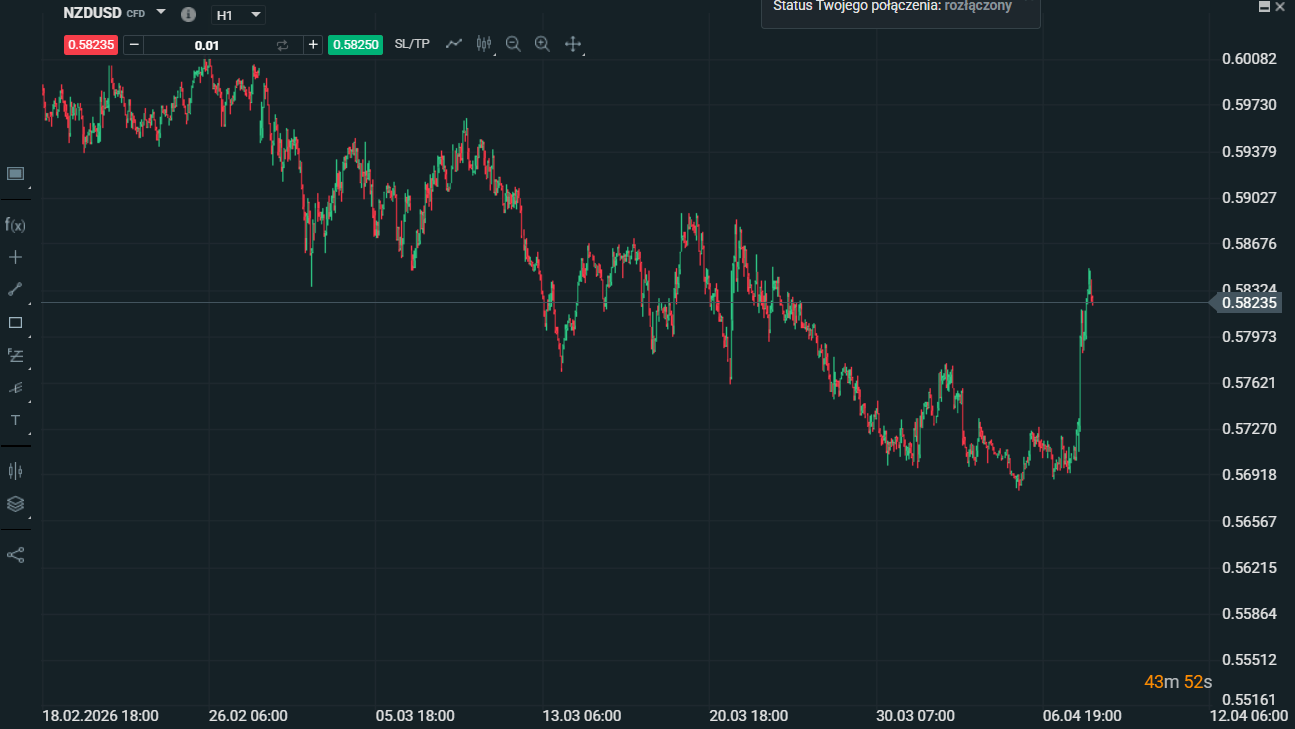
NZD/USD inches lower after registering 0.5% gains in the previous day, trading around 0.5860 during the Asian hours on Tuesday. The pair remains subdued following the release of China’s Trade Balance data for March. It is important to note that any change in the Chinese economy could impact the NZD as China and New Zealand are close trade partners.

In Chinese Yuan (CNY) terms, arrived at CNY354.75 billion, narrowing sharply from the previous figure of CNY1.5 trillion. Exports fell 0.7% year-over-year (YoY) in March from a 19.2% increase seen in January-February. The country’s imports jumped by a whopping 23.8% YoY in the same period vs. 17.1% recorded previously.

However, the downside of the NZD/USD pair could be restrained as the US Dollar USD) may struggle amid easing risk aversion, which could be attributed to the reports that the United States (US) and Iran may hold further talks to secure a longer-term ceasefire before the current two-week truce ends.

US President Donald Trump said that Iran had made contact and is now looking to resume negotiations. Vice President JD Vance also indicated ongoing diplomatic efforts and a possible path toward US-Iran conflict de-escalation. Vance stated that recent discussions over the weekend were constructive, providing US officials with deeper insight into Iran’s negotiating stance.

Markets scale back hawkish Federal Reserve (Fed) bets, with easing inflation risks tied to a potential long-term US–Iran ceasefire and a possible reopening of the Strait of Hormuz, which has pressured oil prices.

Fed Governor Stephen Miran said the Iran-related energy shock has not yet affected long-term inflation expectations, adding he expects price pressures to return to the central bank’s target within a year.

NZD/USD gathers strength above 0.5800 on RBNZ hawkish hold

April 9, 2026
  • NZD/USD edges higher to around 0.5830 in Thursday’s early European session.
  • RBNZ’s Breman said the country could see stronger growth if the Middle East conflict ends soon.
  • Iran’s parliamentary speaker stated that the US had breached the terms of the ceasefire deal.

The NZD/USD pair gains ground to near 0.5830 during the Asian trading hours on Thursday. The New Zealand Dollar (NZD) strengthens against the US Dollar (USD) following a hawkish pause from the Reserve Bank of New Zealand (RBNZ).

As widely expected, New Zealand’s central bank decided to hold the Official Cash Rate (OCR) steady at 2.25% at its April policy meeting on Wednesday. RBNZ Governor Anna Breman said during the press conference that higher oil prices are reducing household purchasing power and business profit margins, leading to a cautious “wait and see” stance.

On Thursday, Breman said that the domestic economy could see stronger growth this year if there was a swift resolution to the conflict in the Middle East. She further stated that the previous rate cuts were still providing some stimulus.

Escalating tensions in the Middle East could provide some support to the Greenback as a safe-haven currency. Iran’s parliamentary speaker, Mohammad Bagher Ghalibaf, stated on Wednesday that the US had breached the terms of the ceasefire deal. His remarks came after Israel launched a large-scale campaign across Lebanon, killing over 250 people as a result. 

US President Donald Trump and Israeli Prime Minister Benjamin Netanyahu stated that the ceasefire between the US and Iran does not include operations against Hezbollah in Lebanon.

War-Related Shifts in The Forex Market – USD Plumets, AUD, NDZ and CHF Rebound

April 8, 2026

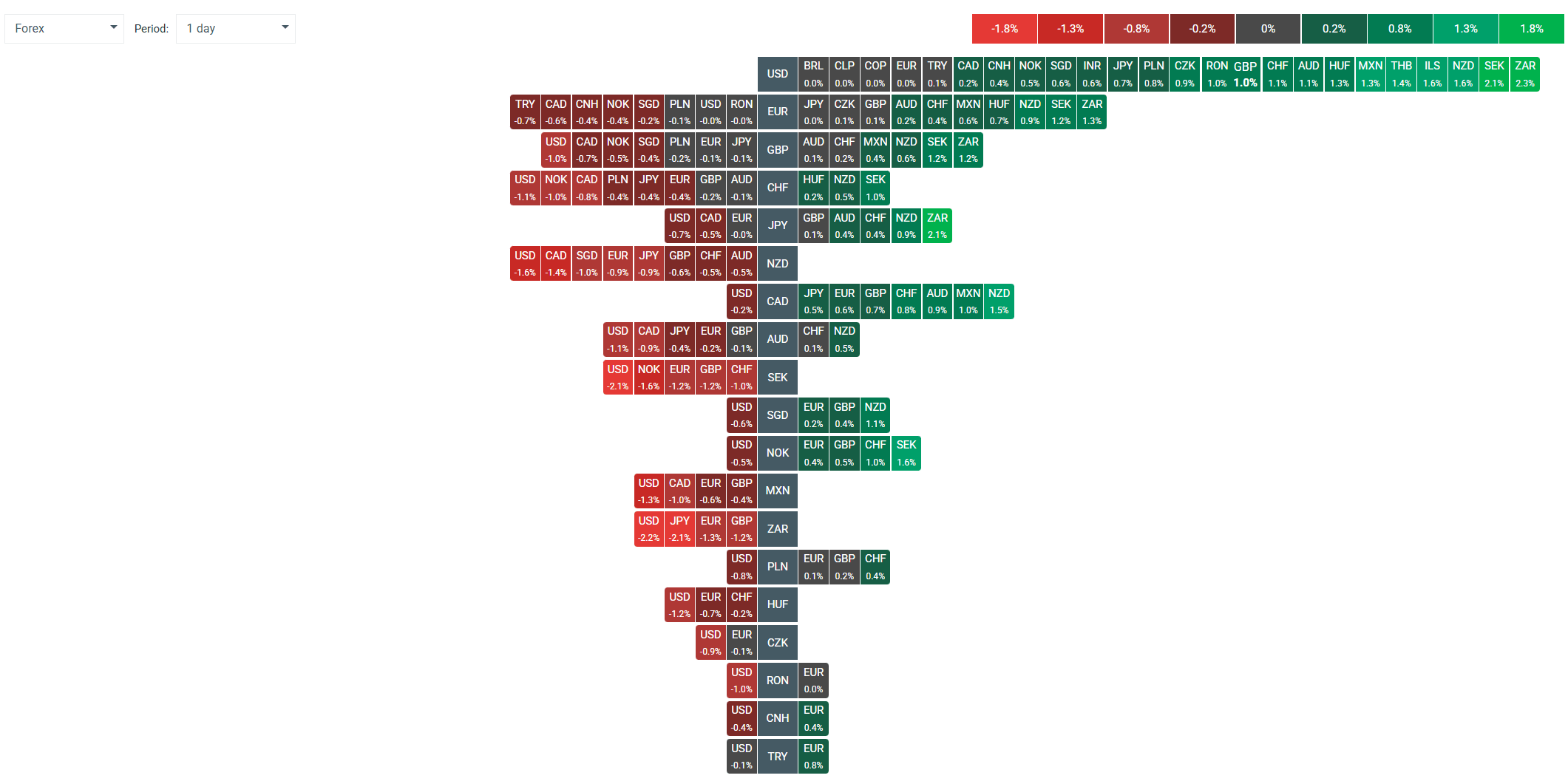
The two-week suspension of U.S. military operations against Iran triggered a sharp shake-up in the FX market today, reversing much of the movement seen in recent weeks. Across a broad range of currencies, cyclical currencies are the most actively bought, with the NZD, SEK, and ZAR leading the way, while the USD and CAD are at the very bottom of the strength rankings. Pairs such as NZDUSD, AUDUSD, and GBPUSD are rebounding sharply, benefiting from the simultaneous rise in U.S. index futures and the steep sell-off in oil following the largest one-day drop in crude prices in years. The dollar index is sliding by about 0.9%, which, amid a sharp rebound in risk appetite on the stock markets, is weakening demand for safe-haven assets and pushing defensive positions in the USD—and to some extent in the JPY—to the sidelines.

Today’s reaction follows the pattern seen in recent weeks, in which shifts in the intensity of the conflict with Iran quickly translate into movements among the dollar, the yen, oil, and gold, increasing volatility in major currency pairs. Above is a heatmap of volatility in the FX market. Source: xStation

However, the biggest beneficiary of today’s combination of a hawkish central bank and global de-escalation remains the kiwi: following the RBNZ’s decision, NZD/USD rose temporarily by as much as 2% to around 0.5844, and is currently holding gains of around 1.7% at an exchange rate of approximately 0.5824. Investors interpreted the bank’s statement as a “hawkish pause”—the RBNZ clearly signaled its readiness for rapid rate hikes if inflation spreads beyond the energy sector and begins to affect wages and price expectations. At the same time, the bank emphasized that the supply shock linked to the earlier rise in oil prices is temporary, and that weaker domestic demand and rising spare capacity limit the risk of a second round of inflation. In this environment, the NZD benefits in two ways—as a currency with a relatively high interest rate premium and as a classic representative of the risk-on basket, which is now returning to favor following the suspension of U.S.-Iran hostilities. If the window for peace talks in Islamabad does not close too abruptly, the NZD’s current edge over the USD may hold, though ongoing instability in the region and the risk of a sudden escalation still call for caution when extending positions. 

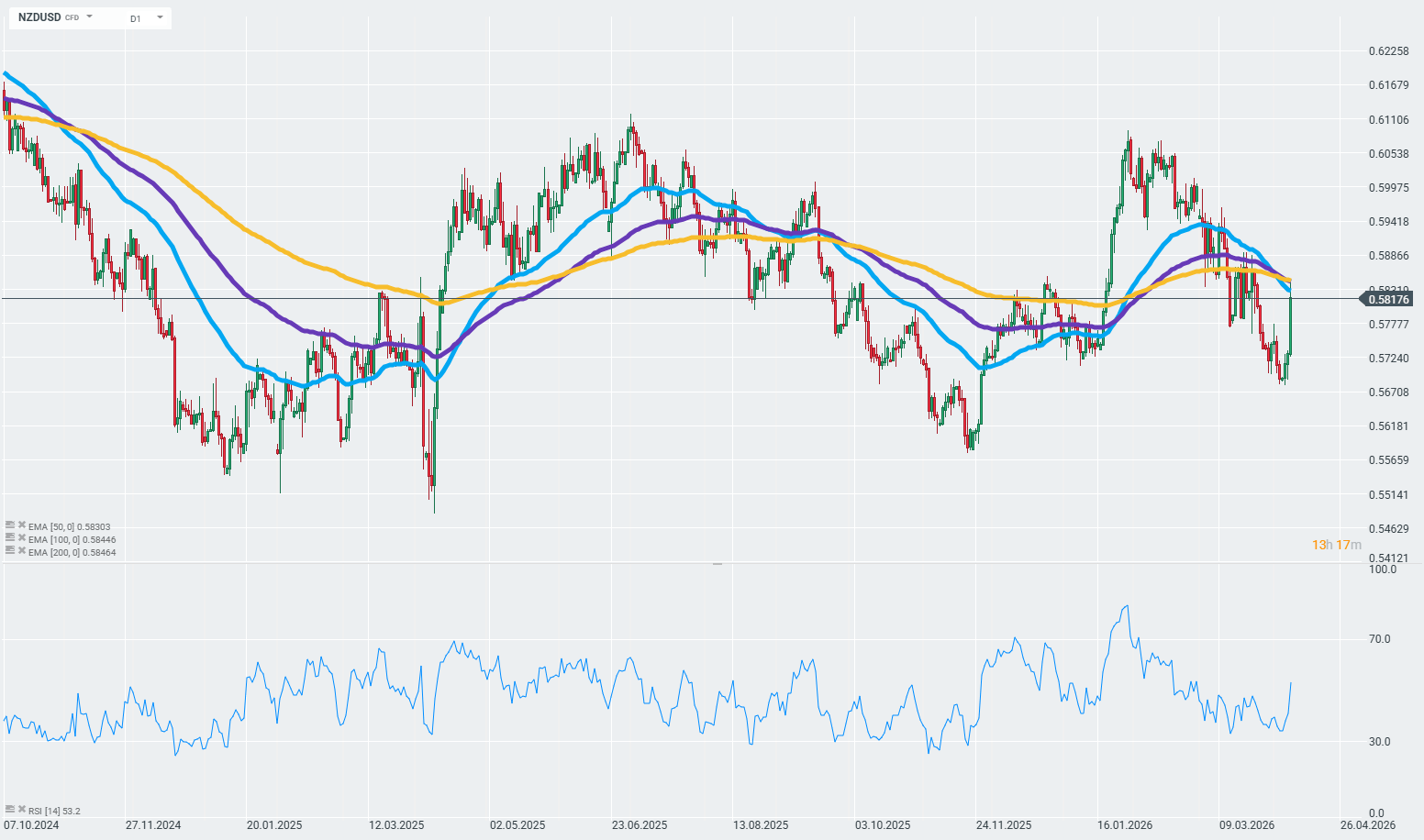
The NZDUSD pair tested an important long-term control point marked by the 200-day EMA today. The retest has so far proved unsuccessful.

Source: xStation

The material on this page does not constitute financial advice and does not take into account your level of understanding, investment objectives, financial situation or any other specific needs. All information provided, including opinions, market research, mathematical results and technical analyzes published on the Website or transmitted To you by other means, it is provided for information purposes only and should in no way be construed as an offer or solicitation for a transaction in any financial instrument, nor should the information provided be construed as advice of a legal or financial nature on which any investment decisions you make should be based exclusively To your level of understanding, investment objectives, financial situation, or other specific needs, any decision to act on the information published on the Website or sent to you by other means is entirely at your own risk if you In doubt or unsure about your understanding of a particular product, instrument, service or transaction, you should seek professional or legal advice before trading. Investing in CFDs carries a high level of risk, as they are leveraged products and have small movements Often the market can result in much larger movements in the value of your investment, and this can work against you or in your favor. Please ensure you fully understand the risks involved, taking into account investments objectives and level of experience, before trading and, if necessary, seek independent advice.

NZD/USD – Hawkish RBNZ Decision And TACO Trade Support The NZD

April 8, 2026

NZDUSD gained as much as 2.00% following the RBNZ decisionsupported both by the more hawkish tone of the central bank and the global move after the de-escalation of US–Iran tensions. The kiwi reached around 0.5844 (currently 0.5824). Investors interpreted the decision as a hawkish pause. The RBNZ emphasized that if inflationary pressure spreads beyond energy and begins to affect wages, pricing behavior, or inflation expectations, decisive and rapid rate hikes may be necessary.

The core message from the RBNZ is that the inflation outlook has worsened, even if growth conditions have not improved. The bank indicated that the conflict in the Middle East has significantly altered the outlook through supply chain disruptions and rising oil and fuel prices, which will translate into higher inflation in the short term. Official forecasts point to inflation at 3.0% in March and 4.2% in June, above the 1–3% target range, with key transmission channels including transport, airfares, and food.

At the same time, the RBNZ does not want to overreact to what may be a temporary supply shock. The bank stressed that the situation differs from 2022, as demand in the economy is currently much weaker and spare capacity should limit second-round inflation effects. This is important because domestic activity remains weak: GDP growth is minimal, financial conditions have tightened, and mortgage rates have increased. In other words, the RBNZ faces a difficult trade-off between rising inflation and a still fragile recovery.

Therefore, the decision was perceived as hawkish despite no rate hike. The committee considered more preemptive action to prevent inflation expectations from becoming unanchored but ultimately chose to wait for more data. There are also growing expectations that July could be the first possible timing for rate hikes if inflation pressures persist.

The market backdrop further strengthened the NZD move. The two-week US–Iran ceasefire triggered a strong risk-on move — US500 futures rose around 2.5%, oil prices declined, and the dollar weakened. This supported cyclical currencies, with the NZD standing out thanks to an additional domestic catalyst. At the time of writing, NZDUSD is gaining 1.67%.

The material on this page does not constitute financial advice and does not take into account your level of understanding, investment objectives, financial situation or any other specific needs. All information provided, including opinions, market research, mathematical results and technical analyzes published on the Website or transmitted To you by other means, it is provided for information purposes only and should in no way be construed as an offer or solicitation for a transaction in any financial instrument, nor should the information provided be construed as advice of a legal or financial nature on which any investment decisions you make should be based exclusively To your level of understanding, investment objectives, financial situation, or other specific needs, any decision to act on the information published on the Website or sent to you by other means is entirely at your own risk if you In doubt or unsure about your understanding of a particular product, instrument, service or transaction, you should seek professional or legal advice before trading. Investing in CFDs carries a high level of risk, as they are leveraged products and have small movements Often the market can result in much larger movements in the value of your investment, and this can work against you or in your favor. Please ensure you fully understand the risks involved, taking into account investments objectives and level of experience, before trading and, if necessary, seek independent advice.

NZD/USD sticks to gains near two-week top, around 0.5800 after RBNZ leaves rates unchanged

April 8, 2026
  • NZD/USD catches aggressive bids as the US-Iran ceasefire news weighs heavily on the USD.
  • The RBNZ leaves interest rates unchanged, doing little to influence the NZD or spot prices.
  • Traders now look to the RBNZ’s post-meeting press conference for short-term impetuses.

The NZD/USD pair turns positive for the third straight day following a modest Asian session dip to the 0.5700 mark and rallies to a nearly two-week top on Wednesday in reaction to the US-Iran ceasefire news. Spot prices stick to strong intraday gains above the 0.5800 mark and move little following the Reserve Bank of New Zealand (RBNZ) policy decision.

As was widely anticipated, the RBNZ decided to leave the Official Cash Rate (OCR) unadjusted at 2.25% for the second meeting in a row amid uncertainties over the economic and inflation outlook due to the Iran war. The announcement, however, does little to influence the New Zealand Dollar (NZD) or the NZD/USD pair as traders now look to RBNZ Governor Dr. Anna Breman’s comments during the post-meeting press conference for some meaningful impetus.

In the meantime, positive geopolitical developments remain supportive of the upbeat market mood, which undermines the US Dollar’s (USD) reserve currency status and acts as a tailwind for the NZD/USD pair. US President Donald Trump announced that he will suspend planned military strikes against Iran for two weeks, provided Tehran agrees to an immediate and safe opening of the Strait of Hormuz. Moreover, Iran’s Foreign Minister, Seyed Abbas Araghchi, said in a statement that Tehran will cease its defensive operations if attacks against the country are halted.

Iran’s foreign minister further added that safe passage through the key waterway will be possible for a period of two weeks, triggering a steep decline in Crude Oil prices and easing inflationary concerns. This tempers market bets for a rate hike by the US Federal Reserve (Fed), which, along with the risk-on impulse, continues to weigh on the safe-haven US Dollar (USD) and offers support to the NZD/USD pair.

NZD/USD weakens to near 0.5700 amid Middle East tensions, traders await RBNZ rate decision

April 7, 2026
  • NZD/USD softens to near 0.5700 in Tuesday’s Asian session. 
  • Trump insisted on Hormuz opening as he escalated Iran threats. 
  • The RBNZ rate decision will be in the spotlight later on Wednesday, with no change in rate expected. 

The NZD/USD pair attracts some sellers to around 0.5700 during the Asian trading hours on Tuesday. The US Dollar (USD) strengthens against the New Zealand Dollar (NZD) as heightened uncertainty in the Middle East boosts demand for a safe-haven currency. 

US President Donald Trump said on Monday that freedom of navigation through the Strait of Hormuz would be part of any deal to end the Middle East war and escalated threats to attack key Iranian infrastructures if his terms aren’t met before a Tuesday deadline at 8 p.m. Eastern Time (00:00 GMT Wednesday), per Bloomberg. 

Iran has also retaliated by saying that it will respond to Trump’s threats by ramping up its own attacks on energy infrastructure in the Gulf. Rising tensions in the Middle East could provide some support to the Greenback and act as a headwind for the pair in the near term. 

However, the downbeat US economic data might cap the upside for the USD. The US Services Purchasing Managers Index (PMI) declined to 54.0 in March from 56.1 in February, the Institute for Supply Management (ISM) showed on Monday. This reading came in below the market consensus of 55.0. 

The Reserve Bank of New Zealand (RBNZ) is expected to keep interest rates unchanged at its April meeting on Wednesday and restate its willingness to look through the initial inflationary impact of surging fuel prices that threaten a stuttering recovery. Governor Anna Breman will hold a press conference after the policy meeting. Markets and analysts anticipate a potential rate hike to 2.50% by the end of 2026. 

NZD/USD rebounds from four-month low; retakes 0.5700 as ceasefire talks weigh on USD

April 6, 2026
  • NZD/USD rebounds after retesting a four-month trough during the Asian session on Monday.
  • Reports of a push for a US-Iran ceasefire weigh on the USD and lend some support to spot prices.
  • Geopolitical risks remain in play, warranting caution before positioning for any further recovery.

The NZD/USD pair attracts some buyers near the 0.5680 region, or over a four-month trough retested during the Asian session on Monday, and for now, seems to have snapped a two-day losing streak. Spot prices currently trade just above the 0.5700 mark, up nearly 0.25% for the day, though the upside potential seems limited.

Bloomberg, citing Axios, reported that the US, Iran, and regional mediators are discussing terms for a possible 45-day ceasefire that could lead to an end of fighting. The headlines offer a temporary respite to the fragile global risk sentiment and undermine the US Dollar’s (USD) global reserve currency status, which turns out to be a key factor lending some support to the NZD/USD pair. Investors, however, remain on edge amid persistent geopolitical uncertainties.

US President Donald Trump threatened to destroy Iran’s civilian infrastructure, including power plants and bridges, if Tehran does not meet his deadline to reopen the Strait of Hormuz by Tuesday. Iran, on the other hand, outlined a new condition and said that the transit through the strategic waterway could resume if part of the revenue is allocated to compensate Iran for war-related damages. Moreover, chances of a deal over the next 48 hours remain low.

Meanwhile, investors remain worried that the war-driven surge in energy prices would rekindle inflationary pressures and force major central banks, including the US Federal Reserve (Fed), to adopt a more hawkish stance. In fact, traders are now pricing in a greater probability that the Fed will raise borrowing costs in 2026, which could act as a tailwind for the USD. This might cap the upside for the NZD/USD pair and warrants some caution for bullish traders.

Traders now look forward to the release of the US ISM Services PMI for some impetus later during the North American session amid thin liquidity on the back of the Easter Monday Holiday in many global financial markets. Nevertheless, the fundamental backdrop makes it prudent to wait for some follow-through buying before confirming that the NZD/USD pair has formed a near-term bottom and positioning for any further appreciating move.

NZD/USD declines to near 0.5700 on weak Chinese PMI, US NFP data looms.

April 3, 2026
  • NZD/USD drifts lower to near 0.5710 in Friday’s Asian session. 
  • China’s RatingDog Services PMI eased to 52.1 in March, weaker than expected. 
  • The US March jobs data will be the highlight on Friday.

The NZD/USD pair extends the decline to a near four-month low around 0.5710 during the Asian trading hours on Friday. The New Zealand Dollar (NZD) softens against the US Dollar (USD) on the downbeat Chinese economic data and heightened geopolitical tensions in the Middle East. Trading volumes are likely to be thin due to the Good Friday holiday.

Data released by RatingDog on Friday showed that China’s Services Purchasing Managers’ Index (PMI) declined to 52.1 in March from 56.7 in February. This figure came in below the market consensus of 53.7. The China-proxy Kiwi edges lower following the weaker Chinese data. 

Additionally, escalating tensions between the US and Iran could boost a safe-haven currency such as the Greenback and create a headwind for the pair. US President Donald Trump pressures Iran “to make a deal” after a military strike destroys a bridge near Tehran. Meanwhile, Iran’s foreign minister Abbas Araghchi stated that Washington’s recent strikes on civilian infrastructure will not force the country to back down. 

Traders will closely monitor the US March jobs data later on Friday. The US economy is expected to see 60,000 job additions in March, while the Unemployment Rate is estimated to hold steady at 4.4% during the same period. Any signs of a weakening in the US labor market could drag the USD lower in the near term.