

Currency Talk – GBP/USD, GBP/JPY USD/CHF

April 14, 2026

This analysis from the Overbalance series aims to identify three financial instruments, analyzed primarily on the daily/four-hour (D1/H4) timeframe. The analysis uses only the Overbalance methodology, which helps determine where a trend may continue or where a reversal might occur.
Today’s analysis covers three instruments, evaluated solely in terms of 1:1 correction structures.

GBPUSD
GBPUSD prices have been trending downward for quite some time, but on April 8, the 1:1 geometry was negated, which, according to the Overbalance methodology, paves the way for a larger correction or even a shift to an uptrend. Currently, the 1.3360–1.3355 zone should be treated as key support, where both the polarity of the negated downward geometry and the lower boundary of the local 1:1 upward pattern are located. As long as the price remains above this zone, the bullish sentiment prevails. Only a drop below 1.3355 could push the market back toward declines.

GBPUSD – H4 chart. Source: xStation

GBPJPY
GBPJPY has been in an uptrend for some time now. The last two corrections were of identical magnitude, as indicated by the green rectangles, confirming the market’s rhythm in line with the Overbalance methodology. Currently, the price is trading near local highs. In the event of a correction, the key support level remains at 212.33, derived from the 1:1 ratio. At this point, there are no clear supply signals, so the base case scenario remains a continuation of the uptrend.

GBPJPY – H4 timeframe. Source: xStation

USDCHF
The USDCHF pair rebounded from key resistance at the 0.8042 level, which stems from the largest corrective pattern within the downtrend that has been ongoing since January 2025. Additionally, the price fell below the 0.7902 level, which is the upper boundary of a smaller 1:1 pattern; according to the Overbalance methodology, this supports the scenario of further declines toward the January lows. To signal a shift to an uptrend, prices would need to break above the 0.8042 level; however, this is not the base case scenario at this time.

USDCHF – H4 timeframe. Source: xStation

The material on this page does not constitute financial advice and does not take into account your level of understanding, investment objectives, financial situation or any other specific needs. All information provided, including opinions, market research, mathematical results and technical analyzes published on the Website or transmitted To you by other means, it is provided for information purposes only and should in no way be construed as an offer or solicitation for a transaction in any financial instrument, nor should the information provided be construed as advice of a legal or financial nature on which any investment decisions you make should be based exclusively To your level of understanding, investment objectives, financial situation, or other specific needs, any decision to act on the information published on the Website or sent to you by other means is entirely at your own risk if you In doubt or unsure about your understanding of a particular product, instrument, service or transaction, you should seek professional or legal advice before trading. Investing in CFDs carries a high level of risk, as they are leveraged products and have small movements Often the market can result in much larger movements in the value of your investment, and this can work against you or in your favor. Please ensure you fully understand the risks involved, taking into account investments objectives and level of experience, before trading and, if necessary, seek independent advice.

JPY strengthens to 159.00 against USD; bulls lack conviction amid Hormuz risks

April 14, 2026
  • USD/JPY attracts some follow-through sellers as hopes for Iran diplomacy weigh on the US Dollar.
  • The uncertainty over the Fed’s future interest rate moves dragged the USD to a fresh low since March.
  • Economic concerns stemming from the instability in the Strait of Hormuz might cap the JPY upside.

The USD/JPY pair is seen extending the previous day’s modest pullback from the 159.85 region and drifting lower during the Asian session on Tuesday. Spot prices drop to the 159.00 mark in the last hour, though the downside potential seems limited amid mixed fundamental cues.

Despite failed US-Iran peace talks over the weekend, investors seem hopeful that the door for Iran diplomacy remains open and that negotiations will continue. In fact, US Vice President JD Vance suggested that meaningful progress has been made even as talks have yet to deliver a breakthrough. The optimism, in turn, dents the US Dollar’s (USD) reserve currency status and turns out to be a key factor exerting pressure on the USD/JPY pair.

Adding to this, the uncertainty over inflationary pressures and future interest rate moves by the US Federal Reserve (Fed) has dragged the USD to a fresh low since early March. Data released on Friday showed that inflation in the US surged by the most in nearly four years. This led investors to shift focus to potential rate hikes this year. However, traders are yet to completely abandon rate cut bets amid signs of a de-escalation in geopolitical tensions.

Meanwhile, the Japanese Yen (JPY) might struggle to attract any meaningful buyers amid economic concerns stemming from external energy shocks due to the instability in the Strait of Hormuz. US President Donald Trump said that the U.S. Navy blockade of the strategic waterway has officially started and vowed to destroy Iranian warships that get near. Iran responded with threats on all ports in the Persian Gulf and the Gulf of Oman.

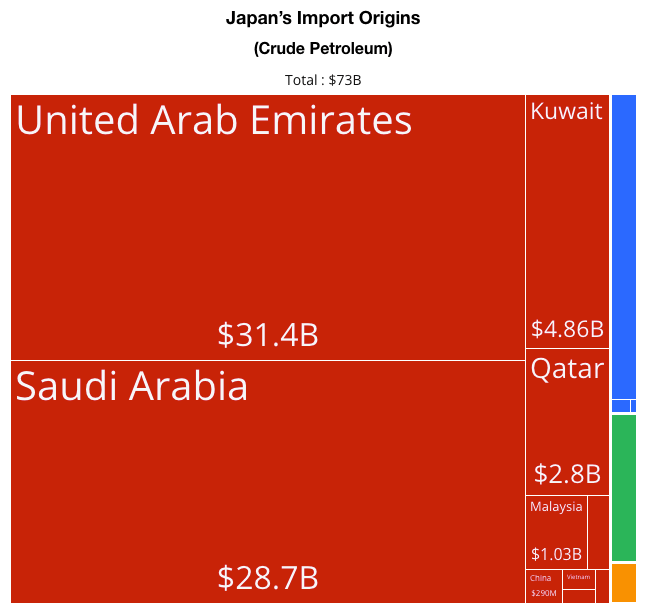
Given that Japan depends mostly on oil imports from the Middle East, the uncertainty continues to fuel worries that the economy will come under substantial strain in the foreseeable future. This might hold back traders from placing aggressive bullish bets around the JPY and help limit deeper losses for the USD/JPY pair. That said, speculations that Japanese authorities would step in to stem any further JPY weakness might cap the currency pair.

Japanese Yen Price Today

The table below shows the percentage change of Japanese Yen (JPY) against listed major currencies today. Japanese Yen was the strongest against the Australian Dollar.

USDEURGBPJPYCADAUDNZDCHF
USD-0.02%-0.02%-0.14%-0.03%0.21%0.14%-0.06%
EUR0.02%0.01%-0.11%0.02%0.23%0.15%-0.04%
GBP0.02%-0.01%-0.11%-0.00%0.21%0.15%-0.06%
JPY0.14%0.11%0.11%0.12%0.36%0.29%0.09%
CAD0.03%-0.02%0.00%-0.12%0.23%0.19%-0.03%
AUD-0.21%-0.23%-0.21%-0.36%-0.23%-0.06%-0.27%
NZD-0.14%-0.15%-0.15%-0.29%-0.19%0.06%-0.20%
CHF0.06%0.04%0.06%-0.09%0.03%0.27%0.20%

The heat map shows percentage changes of major currencies against each other. The base currency is picked from the left column, while the quote currency is picked from the top row. For example, if you pick the Japanese Yen from the left column and move along the horizontal line to the US Dollar, the percentage change displayed in the box will represent JPY (base)/USD (quote).

AUD/JPY hovers around 112.50 after paring latest losses

April 13, 2026
  • AUD/JPY may further struggle as the Australian Dollar faces challenges due to increased risk aversion.
  • US Vice President JD Vance confirmed US–Iran talks in Islamabad ended without a deal after 21 hours of negotiations.
  • Japan’s 10-year bond yield rose to 2.47% as oil surged after US–Iran talks collapsed.

AUD/JPY pares its daily losses but remains in the negative territory, trading around 112.40 during the Asian hours on Monday. The currency cross faced challenges as the Australian Dollar (AUD) weakened as risk aversion increased after US Vice President JD Vance said Washington and Tehran failed to reach a peace agreement in Islamabad following 21 hours of talks.

US President Donald Trump said Washington would begin blockading all ships entering or leaving the Strait of Hormuz, while US Central Command (CENTCOM) confirmed operations targeting maritime traffic to and from Iranian ports from 10 AM ET (14:00 GMT) Monday.

Rising energy costs have also fueled inflation concerns, with Australia’s monthly inflation gauge hitting a record 1.3% in March, signaling renewed price pressures since late 2025. The Reserve Bank of Australia (RBA) has already raised rates by 50 basis points to 4.10%, and markets now expect another hike in May.

The downside of the EUR/JPY cross could be restrained as the Japanese Yen (JPY) struggles with stagflation concerns amid rising oil prices. Rising energy costs fueled expectations of a near-term Bank of Japan (BoJ) rate hike.

The BoJ is set to hold its next policy decision on April 28, where officials will evaluate whether elevated global energy and commodity prices justify tightening. Japan’s 10-year government bond yield rose to around 2.47% on Monday as oil prices surged following the breakdown of US–Iran peace talks.

The Sakura Report showed board members balancing upside inflation risks against downside growth risks following the April 6 branch managers’ meeting. All nine regions maintained that their economies were either “recovering moderately,” “picking up,” or “picking up moderately.”

EUR/JPY holds losses near 186.50 as US–Iran talks fail

April 13, 2026
  • EUR/JPY struggles as the Euro faces challenges on increased risk aversion.
  • US Vice President JD Vance confirmed that US–Iran talks in Islamabad ended without a deal.
  • Rising energy costs boosted expectations of a near-term Bank of Japan rate hike.

EUR/JPY pares its daily losses but remains in the negative territory, trading around 186.60 during the Asian hours on Monday. The currency cross faced challenges as the risk-sensitive Euro (EUR) lost ground following the failure of the United States (US)-Iran peace talks. US Vice President JD Vance confirmed that the US–Iran talks in Islamabad ended without a deal following 21 hours of negotiations.

US President Donald Trump said Washington would begin blockading all ships entering or leaving the Strait of Hormuz, while US Central Command (CENTCOM) confirmed operations targeting maritime traffic to and from Iranian ports from 10 AM ET (14:00 GMT) on Monday.

Nordea’s Jan von Gerich and Tuuli Koivu, in their pre-ceasefire European Central Bank (ECB) outlook, projected four 25-basis-point rate hikes starting in June. While they now see downside risks to this view, they emphasize that broader price pressures persist and that even a resolution to the conflict would not eliminate the need for ECB tightening.

The downside of the EUR/JPY cross could be restrained as the Japanese Yen (JPY) struggles on stagflation concerns amid rising oil prices. Rising energy costs fueled expectations of a near-term Bank of Japan (BoJ) rate hike. The BoJ is set to hold its next policy decision on April 28, where officials will evaluate whether elevated global energy and commodity prices justify tightening.

The Sakura Report showed board members balancing upside inflation risks against downside growth risks following the April 6 branch managers’ meeting. All nine regions maintained that their economies were either “recovering moderately,” “picking up,” or “picking up moderately.”

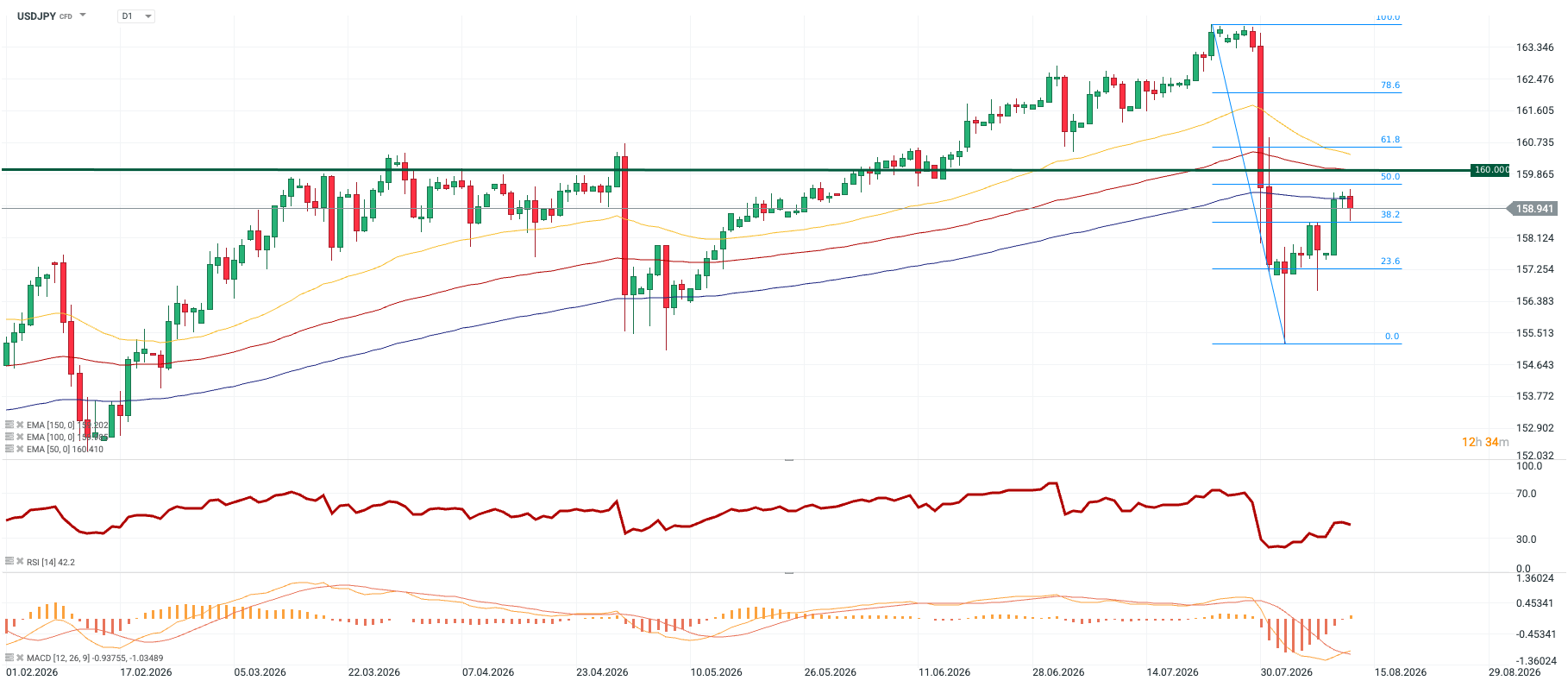
USD/JPY – Price Strength beyond 160.00 awaited amid bullish technical setup

April 13, 2026
  • USD/JPY struggles to build on modest Asian session gains as intervention fears limit JPY losses.
  • The fundamental backdrop favors the USD bulls and backs the case for further gains for the pair.
  • The technical setup also suggests that the path of least resistance for spot prices is to the upside.

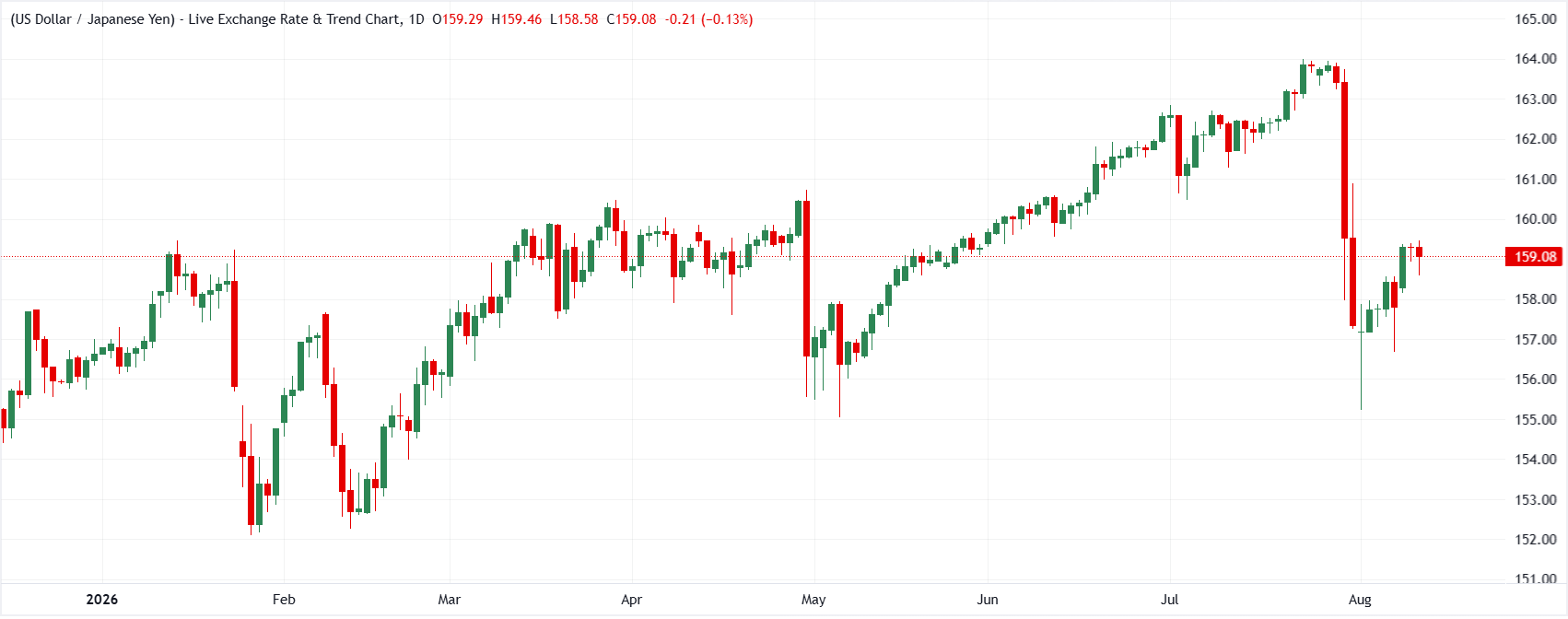
The USD/JPY pair builds on gains from the past two days and opens with a bullish gap at the start of the new week, rising to the 159.85 region during the Asian session. However, intervention fears keep a lid on any further appreciation for spot prices.

Failed US-Iran peace talks trigger a fresh wave of the global risk-aversion trade and benefit the US Dollar’s (USD) reserve currency status. Adding to this, rallying Crude Oil prices fuel inflationary fears and reaffirm hawkish US Federal Reserve (Fed) expectations, which further underpins the buck and offers support to the USD/JPY pair.

The Japanese Yen (JPY), on the other hand, is weighed down by economic concerns stemming from imported energy shocks due to the Middle East conflict. However, speculations that authorities would step in to stem further JPY weakness hold back bearish traders from placing aggressive bets and cap gains for the USD/JPY pair.

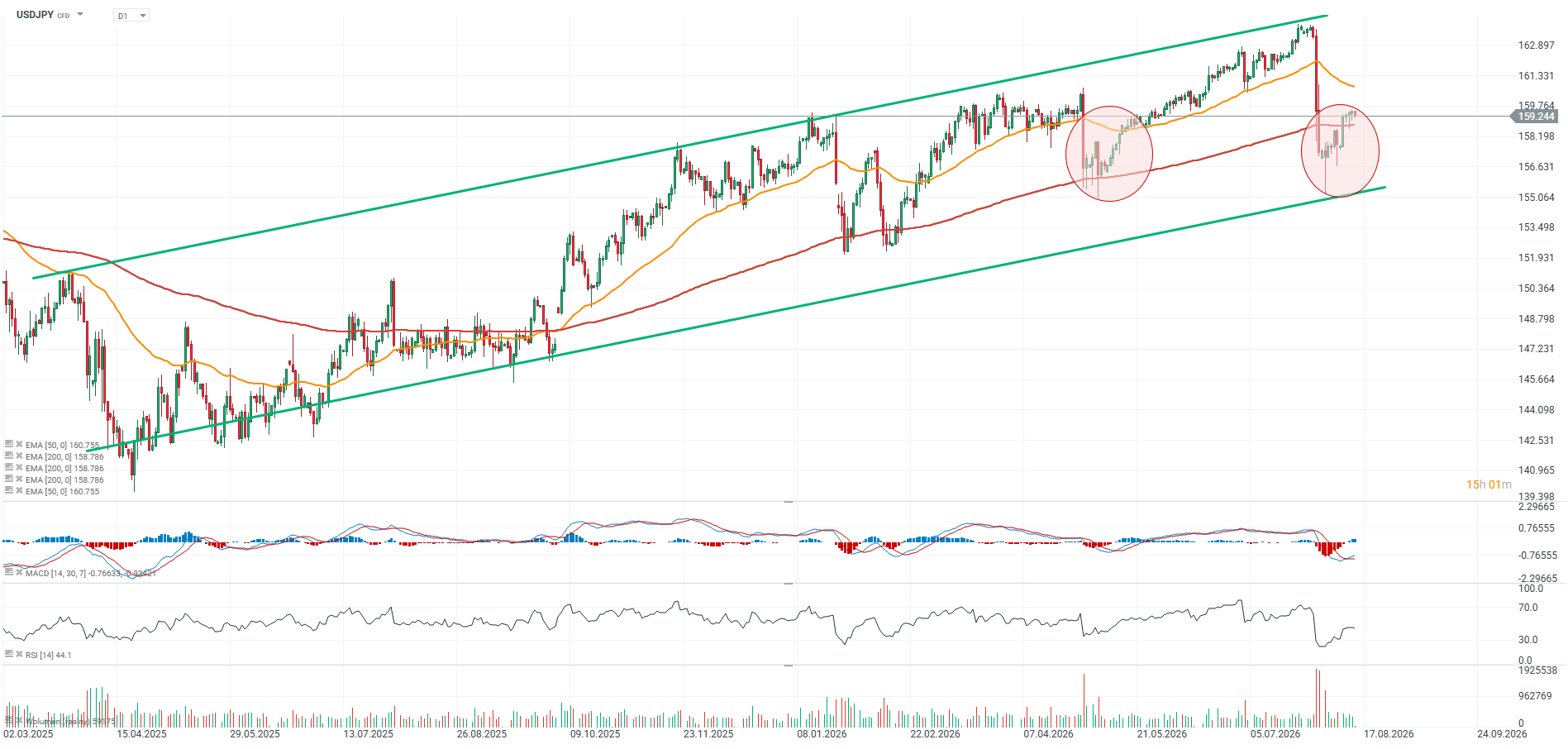
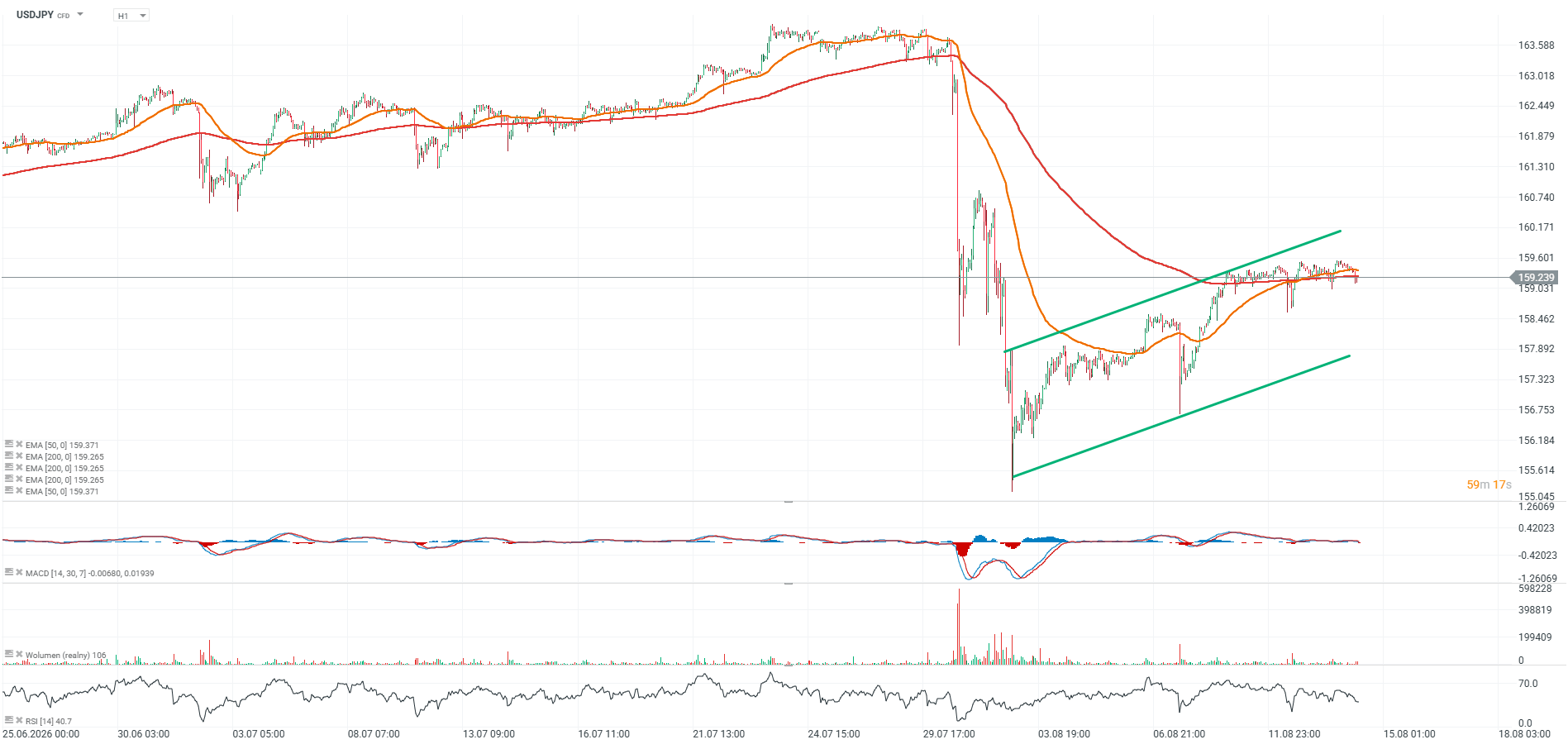
Spot prices retain a bullish bias following last week’s resilience below the 158.25-158.20 horizontal support. Furthermore, the USD/JPY pair holds comfortably above the 200-period Simple Moving Average (SMA). The Relative Strength Index (RSI) near 63 suggests firm upside momentum without yet signaling overbought conditions.

Adding to this, the Moving Average Convergence Divergence (MACD) turns increasingly positive, hinting that buyers retain control for now. The USD/JPY bulls, however, might await a sustained strength and acceptance above the 160.00 psychological mark before positioning for an extension of a three-day-old appreciating move.

On the downside, initial support is reinforced by the 200-period SMA at 158.56, which underpins the broader uptrend and would be the first level watched in the event of a corrective pullback. This is followed by the 158.25-158.20 support and the 158.00 mark, which, if broken, could turn the USD/JPY pair vulnerable.

USD/JPY 4-hour chart

Chart Analysis USD/JPY

EUR/JPY Price Eyes upper ascending channel boundary near 186.50

April 10, 2026
  • EUR/JPY may rise toward the 186.50 level near the ascending channel’s upper boundary.
  • The Relative Strength Index stands at 65.55, indicating strong upward momentum.
  • The initial support appears at the nine-day EMA of 184.94.

EUR/JPY extends its gains for the second successive day, trading around 186.10 during the Asian hours on Friday. The technical analysis of the daily chart indicates the currency cross is trending higher within an ascending channel, signaling a persistent bullish bias.

The EUR/JPY cross extends its advance above both the nine-day and 50-day Exponential Moving Averages (EMAs), which reinforce a constructive bullish bias. The rising Relative Strength Index (RSI) at 65.55 sits just below overbought territory, suggesting firm upward momentum.

The EUR/JPY cross may target the immediate resistance at the upper boundary of the ascending channel around 186.50. A break above the channel would reinforce the bullish outlook and open the door toward the all-time high of 186.88, recorded on January 23.

On the downside, the primary support lies at the nine-day EMA of 184.94. A move below this level could weaken the short-term price momentum, exposing the 50-day EMA at 183.76, followed by the channel’s lower boundary around 183.60. A break below this confluence support zone would cause the emergence of the bearish bias and open the doors for the EUR/JPY cross to navigate the region around a four-month low of 180.81, recorded on February 12.

EUR/JPY: Daily Chart

(The technical analysis of this story was written with the help of an AI tool.)

Euro Price Today

The table below shows the percentage change of Euro (EUR) against listed major currencies today. Euro was the strongest against the Australian Dollar.

USDEURGBPJPYCADAUDNZDCHF
USD0.03%0.07%0.10%0.04%0.19%0.17%0.05%
EUR-0.03%0.05%0.09%-0.01%0.17%0.14%0.02%
GBP-0.07%-0.05%0.04%-0.03%0.11%0.10%-0.10%
JPY-0.10%-0.09%-0.04%-0.07%0.09%0.03%-0.15%
CAD-0.04%0.00%0.03%0.07%0.13%0.12%-0.07%
AUD-0.19%-0.17%-0.11%-0.09%-0.13%-0.02%-0.22%
NZD-0.17%-0.14%-0.10%-0.03%-0.12%0.02%-0.20%
CHF-0.05%-0.02%0.10%0.15%0.07%0.22%0.20%

The heat map shows percentage changes of major currencies against each other. The base currency is picked from the left column, while the quote currency is picked from the top row. For example, if you pick the Euro from the left column and move along the horizontal line to the US Dollar, the percentage change displayed in the box will represent EUR (base)/USD (quote).

Currency Talk – EUR/CAD NZD/USD, USD/JPY

April 9, 2026

The Overbalance analysis aims to identify three financial instruments, analyzed primarily on the daily/four-hour (D1/H4) timeframe. The analysis uses only the Overbalance methodology, which helps determine where a trend may continue or where it may reverse.
Today’s analysis covers three instruments, evaluated solely in terms of 1:1 correction structures.

EURCAD
At the end of March, EURCAD prices broke out of a major 1:1 downtrend pattern at the 1.5948 level, paving the way for further gains. We are currently seeing a continuation of the uptrend, and counting from the March 9 low, we can identify a local 1:1 uptrend pattern. In the event of a correction, the key short-term support remains at the 1.6020 level, where the lower boundary of this pattern is located. Conversely, only a return of the price below 1.5948 could suggest a shift to a downtrend. For now, sentiment remains bullish.

EURCAD – H4 timeframe. Source: xStation

NZDUSD
Since February of this year, NZDUSD has been trending downward, with the market repeatedly forming corrections of similar magnitude. We are currently observing a test of the key resistance level resulting from the 1:1 Fibonacci retracement at 0.5828. A sustained break below this level could lead to a shift in sentiment toward an uptrend. On the other hand, defending this level and keeping the price within the downtrend could result in a return to declines and a test of recent lows at 0.5680. The current zone is of critical importance in the short term.

NZDUSD – H4 chart. Source: xStation

USDJPY
Since mid-February, USDJPY has been in a strong uptrend. Recently, one of the larger corrections occurred, covering a range of approximately 240 pips. The current correction has the same range as the previous one, marked in green, which allows us to identify key support at the 158.10 level, based on a 1:1 ratio. If this level holds, there is a chance for the uptrend to resume and for new highs to be tested. Conversely, a break below this level could lead to a trend reversal and a deepening of the decline.

USDJPY – H4 chart. Source: xStation

The material on this page does not constitute financial advice and does not take into account your level of understanding, investment objectives, financial situation or any other specific needs. All information provided, including opinions, market research, mathematical results and technical analyzes published on the Website or transmitted To you by other means, it is provided for information purposes only and should in no way be construed as an offer or solicitation for a transaction in any financial instrument, nor should the information provided be construed as advice of a legal or financial nature on which any investment decisions you make should be based exclusively To your level of understanding, investment objectives, financial situation, or other specific needs, any decision to act on the information published on the Website or sent to you by other means is entirely at your own risk if you In doubt or unsure about your understanding of a particular product, instrument, service or transaction, you should seek professional or legal advice before trading. Investing in CFDs carries a high level of risk, as they are leveraged products and have small movements Often the market can result in much larger movements in the value of your investment, and this can work against you or in your favor. Please ensure you fully understand the risks involved, taking into account investments objectives and level of experience, before trading and, if necessary, seek independent advice.

JPY moves away from three-week top as tenuous US-Iran ceasefire benefits USD

April 9, 2026
  • USD/JPY regains positive traction following the overnight fall to a nearly three-week low.
  • The fragile US-Iran ceasefire helps revive the USD demand and lend support to spot prices.
  • Economic concerns stemming from Middle East conflicts weigh on the JPY and favor bulls.

The USD/JPY pair builds on the previous day’s modest bounce from sub-158.00 levels, or a nearly three-week low, and gains some positive traction during the Asian session on Thursday. Spot prices climb back closer to the 159.00 mark in the last hour and draw support from a combination of factors.

Investors turned skeptical about the durability of a fragile US-Iran ceasefire after Israel launched its largest assault on Lebanon. Adding to this, Iran reportedly is considering the possibility of withdrawing from the ceasefire agreement following what it said was an Israeli ceasefire violation in Lebanon. This keeps a lid on the optimism and benefits the US Dollar’s (USD) global reserve currency status, which, in turn, acts as a tailwind for the USD/JPY pair.

Meanwhile, Iran’s Islamic Revolutionary Guard Corps (IRGC) claimed that shipping through the critical Strait of Hormuz was halted minutes after Israel’s large-scale attack on Lebanon. Given Japan’s dependence on oil imports from the Middle East, the latest developments revive concerns that the economy will come under substantial strain in the foreseeable future. This further undermines the Japanese Yen (JPY) and lends additional support to the USD/JPY pair.

The USD bulls, however, seem hesitant on the back of the US Federal Reserve’s (Fed) dovish outlook. In fact, Minutes of the March FOMC meeting released on Wednesday showed that the central bank still sees interest rate cuts in the future if inflation were to decline in line with expectations. This, in turn, could limit any further appreciation for the USD/JPY pair as traders now look forward to the crucial US inflation data for some meaningful impetus.

The US Personal Consumption Expenditures (PCE) Price Index is due later during the North American session. The focus will then shift to the US Consumer Price Index (CPI) report on Friday, which will play a key role in influencing market expectations about the Fed’s policy outlook and drive the USD demand. Apart from this, geopolitical headlines should contribute to infusing volatility in the global financial markets and around the USD/JPY pair.