

Currency Hedger No Comments

USD/CAD Price Forecast: Bulls hesitant above 1.3600 as Oil prices counter USD strength

  • USD/CAD stalls a two-day-old recovery move from a nearly two-month trough amid mixed cues.
  • Elevated Oil prices underpin the Loonie, while rising US-Iran tensions benefit the safe-haven USD.
  • The technical setup, too, warrants some caution before positioning for any meaningful upside.

The USD/CAD pair struggles to capitalize on a two-day-old recovery move from the 1.3550 area, or its lowest level since March 10, and oscillates in a range during the Asian session on Tuesday. Spot prices currently trade around the 1.3620 area amid a combination of diverging forces.

The risk of a further escalation of tensions in the Middle East amid the US-Iran standoff over the Strait of Hormuz acts as a tailwind for Crude Oil prices, which is seen underpinning the commodity-linked Loonie. This, along with the lack of follow-through US Dollar (USD) buying, keeps a lid on the USD/CAD pair. However, persistent geopolitical uncertainties and hawkish US Federal Reserve (Fed) expectations favor the USD bulls, backing the case for a further appreciating move for the currency pair.

The USD/CAD pair is holding a mildly bearish near-term bias as it remains capped beneath the 100-period Simple Moving Average (SMA) on the 4-hour chart. The said hurdle at 1.3650 coincides with the 23.6% Fibonacci retracement level of the late March-early May downfall and should act as a pivotal point. Momentum indicators are mixed, with the Relative Strength Index nearing the neutral territory at 51 and the Moving Average Convergence Divergence (MACD) marginally positive.

The technical setup, in turn, hints at fading downside pressure but not yet a clear bullish reversal while the USD/CAD pair trades below the aforementioned confluence hurdle. A sustained strength beyond, however, should pave the way for further gains towards the 38.2% retracement at 1.3710 and the 50.0% level at 1.3758. The momentum could extend further towards the 61.8% level at 1.3806, which is the prevailing supply zone on the topside.

On the downside, the next meaningful support aligns with the recent swing low around 1.3553, where buyers may attempt to rebuild a base should selling pressure resume.

(The technical analysis of this story was written with the help of an AI tool.)

USD/CAD 4-hour chart

Chart Analysis USD/CAD
Currency Hedger No Comments

AUD/JPY trims losses near 112.50 as RBA hikes official cash rate to 4.35%

  • AUD/JPY recovers modestly to around 112.65 in Tuesdayโ€™s early European session. 
  • RBA lifted the Official Cash Rate to 4.35% from 4.1% at its May meeting on Tuesday. 
  • Traders remain on edge over the potential for Japanese authorities to step back into the market after last weekโ€™s intervention.

The AUD/JPY cross pares losses near 112.65 during the early European trading hours on Tuesday. The Australian Dollar (AUD) edges slightly higher after the Reserve Bank of Australia (RBA) interest rate decision. Traders await Governor Michele Bullockโ€™s press conference at 04:30 GMT for fresh impetus. 

As widely expected, the Australian central bank on Tuesday decided to raise the Official Cash Rate (OCR) by 25 basis points (bps) to 4.35% from 4.10% after concluding its May monetary policy meeting. According to the RBA Monetary Policy Statement, the central bank noted a significant increase in uncertainty over the domestic economic outlook and inflation.

The fallout from the Iran war will slash half a percentage point off economic growth in 2026 against the pre-conflict forecasts in February, as annual growth halves to 1.3% this year.

On the JPYโ€™s front, markets remain on high alert following suspected interventions by Japanese authorities. Japanese Finance Minister Satsuki Katayama said Japan can take action against speculative foreign-exchange movements.

There was no official confirmation, but there were plenty of unofficial signals – including a โ€œfinal warningโ€ from a top official: the Ministry of Finance (MoF) and the Bank of Japan (BoJ) intervened in the foreign exchange market on Friday to strengthen the Japanese yen. The big question now is: How long will the JPYโ€™s strength last?โ€ said Commerzbankโ€™s Thu Lan Nguyen. 

Currency Hedger No Comments

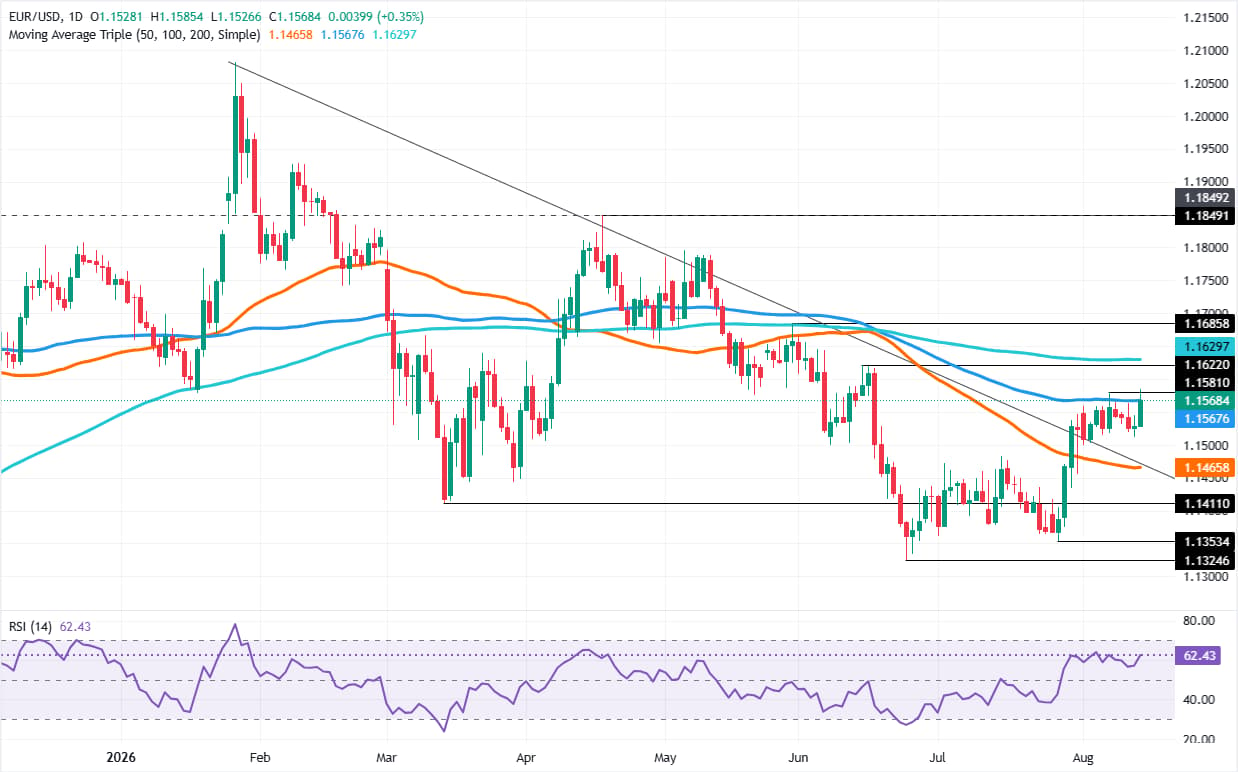
EUR/USD Price Forecast: Tests 50-day EMA support after slipping below 1.1700

  • EUR/USD tests immediate support at the 50-day EMA near 1.1682.
  • The 14-day Relative Strength Index nears 50 underscores neutral momentum.
  • The immediate barrier lies at the nine-day EMA around 1.1706.

EUR/USD moves little after two days of losses, trading around 1.1690 during the Asian hours on Tuesday. The daily chart technical analysis indicates a potential for a bearish reversal, as the pair is testing the lower boundary of the ascending channel.

However, a neutral near-term stance prevails asย the EUR/USD pairย hovers just above the 50-period Exponential Moving Average (EMA) but is capped by the nine-period EMA. This tight EMA split suggests consolidation rather than a clear trend.

The 14-day Relative Strength Index near 50 reinforces the idea of balanced momentum after the recent recovery.

The EUR/USD pair is testing the immediate support at the 50-day EMA of 1.1682, aligned with the lower ascending channel boundary. A sustained break below the channel would put downward pressure on the pair to navigate the region around the nine-month low of 1.1411, recorded on March 13.

On the upside, the immediate barrier lies at the nine-day EMA of 1.1706. A break above the short-term average would support the pair to the 11-week high of 1.1849, reached on April 17, followed by the upper boundary of the ascending channel around 1.1960. Further advances above the channel would lead the pair to explore the region around 1.2082, the highest since June 2021, reached on January 27.

EUR/USD: Daily Chart

Euro Price Today

The table below shows the percentage change of Euro (EUR) against listed major currencies today. Euro was the strongest against the New Zealand Dollar.

USDEURGBPJPYCADAUDNZDCHF
USD-0.01%0.00%-0.03%-0.04%0.04%0.05%-0.04%
EUR0.01%0.00%-0.02%-0.03%0.04%0.05%-0.01%
GBP-0.01%-0.00%-0.02%-0.05%0.05%0.05%-0.02%
JPY0.03%0.02%0.02%-0.01%0.06%0.08%0.03%
CAD0.04%0.03%0.05%0.01%0.08%0.08%0.02%
AUD-0.04%-0.04%-0.05%-0.06%-0.08%0.02%-0.04%
NZD-0.05%-0.05%-0.05%-0.08%-0.08%-0.02%-0.07%
CHF0.04%0.01%0.02%-0.03%-0.02%0.04%0.07%

The heat map shows percentage changes of major currencies against each other. The base currency is picked from the left column, while the quote currency is picked from the top row. For example, if you pick the Euro from the left column and move along the horizontal line to the US Dollar, the percentage change displayed in the box will represent EUR (base)/USD (quote).

Currency Hedger No Comments

GBP remains on the back foot against firmer USD amid Mideast crisis

  • GBP/USD attracts some sellers for the third straight day as renewed US-Iran tensions benefit the USD.
  • Rising Oil prices fuel inflationary concerns and temper Fed rate cut bets, further underpinning the buck.
  • The BoEโ€™s more hawkish outlook could offer some support to the GBP and help limit losses for the pair.

The GBP/USD pair trades with a negative bias for the third straight day on Tuesday, though it lacks follow-through selling and holds above the 1.3500 psychological mark during the Asian session. Moreover, the mixed fundamental backdrop warrants some caution before positioning for an extension of the recent pullback from the 1.3655-1.3660 area, the highest level since February 16, touched last Friday.

The US Dollar (USD) attracts safe-haven flows amid the US-Iran standoff over the Strait of Hormuz and diminishing odds for a rate cut by the US Federal Reserve (Fed) in 2026. A firmer USD, in turn, is seen as a key factor exerting some pressure on the GBP/USD pair. However, the Bank of England’s (BoE) relatively more hawkish stance acts as a tailwind for theย British Poundย (GBP) and helps limit the downside for spot prices.

In the latest developments, Reuters reported that there was a fire and an explosion on a South Korean-flagged vessel in the strait. US President Donald Trump warned that Iran would be blown off the face of the earth if it attacks American vessels. Meanwhile, Iran attacked the United Arab Emirates (UAE) with a barrage of missiles and drones after the US announced a program called Project Freedom to guide ships stranded in the Gulf.

This raises the risk of a further escalation of tensions in the Middle East and triggers a fresh leg up in Crude Oil prices, fueling inflationary concerns and bets for more hawkish central banks, including the USย Federal Reserveย (Fed). Theย outlookย further underpins the USD and weighs on the GBP/USD pair. Meanwhile, theย BoEย signaled that rate hikes could be appropriate if inflation remains persistent, which should support spot prices.

Traders now look forward to Tuesday’s US economic docket โ€“ featuring the release of US ISM Services PMI, JOLTS Job Openings, andย New Home Salesย data. This, along with speeches from influential FOMC members, might provide some impetus to the buck and the GBP/USD pair. The focus, however, remains glued to the US Nonfarm Payrolls (NFP) report on Friday and geopolitical headlines, which might continue to infuse volatility.

Currency Hedger No Comments

NZD/USD struggles above mid-0.5800s as Iran tensions and Fed outlook support USD

  • NZD/USD attracts sellers for the third straight day as Mideast tensions benefit the safe-haven USD.
  • Rising Oil prices fuel inflationary concerns and hawkish Fed bets, which further underpin the buck.
  • Hawkish RBNZ expectations could offer some support to the NZD and help limit losses for the pair.

The NZD/USD pair remains under some selling pressure for the third consecutive day and trades around the 0.5865-0.5860 area during the Asian session on Tuesday. Spot prices seem vulnerable to extend the previous day’s retracement slide from the 0.5925 horizontal resistance, or over a two-week high, as rising geopolitical tensions continue to underpin the US Dollar (USD).

In the latest developments, US President Donald Trump told Foxย Newsย on Monday that Iran will be blown off the face of the earth if they attack US vessels engaged in Project Freedom โ€“ aimed at guiding ships stranded in the Strait of Hormuz. Elsewhere, the United Arab Emirates (UAE) reported that its air defenses had engaged with missile attacks and incoming drones from Iran. This comes on top of the lack of progress in US-Iran peace talks and keeps geopolitical risks in play, which is seen acting as a tailwind for the safe-haven USD and exerting pressure on the NZD/USD pair.

Meanwhile, the US-Iran standoff led to the overnight rise in Crude Oil prices, reviving inflationary concerns and bets for more hawkish central banks, including the USย Federal Reserveย (Fed). Theย outlookย remains supportive of elevated US Treasury bond yields and turns out to be another factor further benefiting the buck. Meanwhile, expectations that the Reserve Bank of New Zealand (RBNZ) would maintain a cautious stance or consider tightening to bring inflation back to the 2% midpoint could support the New Zealand Dollar (NZD) and limit losses for the NZD/USD pair.

Even from a technical perspective, the recent repeated failures near the 0.5920-0.5925 supply zone validate the negative outlook and suggest that the path of least resistance for spot prices is to the downside. However, last week’s resilience below the 200-day Simple Moving Average (SMA) makes it prudent to wait for strong follow-through selling before positioning for any further losses. Traders now look to the US macro data โ€“ ISM Services PMI, JOLTS Job Openings, andย New Home Sales. This, along with speeches by FOMC members, might influence the USD andย the NZD/USD pair.

Currency Hedger No Comments

Japanese Yen steadies on Middle East tensions, intervention caution

  • USD/JPY trades on a flat note near 157.25 in Tuesdayโ€™s early Asian session.
  • Rising tensions in the Middle East could boost the US Dollar.
  • Markets remain on high alert following suspected interventions by Japanese authorities.

The USD/JPY pair holds steady around 157.25 during the Asian trading hours on Tuesday. The latest developments in the Middle East send oil prices higher, sparking further fears of instability in the region. The US April ISM Services Purchasing Managers Index (PMI) report will be published due later on Tuesday. 

The United Arab Emirates said on Monday that it had intercepted a number of missiles fired from Iran. Thatโ€™s the first time the UAEโ€™s missile alert system was activated since the US-Iran ceasefire began last month. US President Donald Trump on Monday warned Iran that it will be โ€œblown off the face of the earthโ€ if it targets US ships that are protecting commercial vessels transiting the strait.

Meanwhile, Iran’s Foreign Minister Abbas Araghchi stated the current situation in the Strait of Hormuz makes it โ€œclear that thereโ€™s no military solution to a political crisis.โ€ Any signs of rising tensions in the Middle East could support the US Dollar (USD) against the Japanese Yen (JPY).

Traders remain on edge over the potential for Japanese authorities to step back into the market after last weekโ€™s intervention to curb weakness. Japanese Finance Minister Satsuki Katayama said Japan can take action against speculative foreign-exchange movements.

Currency Hedger No Comments

GBP/JPY stabilizes below 213.00 after suspected JPY intervention-led intraday volatility

  • GBP/JPY attracts heavy intraday selling on Monday amid suspected Yen intervention.
  • Economic concerns stemming from Middle East tensions cap the upside for the JPY.
  • The BoEโ€™s hawkish outlook lends support to the GBP and also limits losses for the cross.

The GBP/JPY cross seems to have stabilized following good two-way price swings earlier this Monday and trades just below the 213.00 mark during the first half of the European session.

The Japanese Yen (JPY) gets a strong boost at the start of a new week amid speculations that authorities again intervened in the FX market to prop up the weak domestic currency. This, in turn, was seen as a key factor behind the GBP/JPY pair’s intraday decline of nearly 200 pips from levels just above mid-216.00s. However, economic concerns stemming from the Middle East crisis and the continued disruption of energy supplies through the Strait of Hormuz hold back the JPY bulls from placing aggressive bets.

Meanwhile, US President Donald Trump announced a new initiative to guide ships stranded in the Gulf under a program called “Project Freedom”. The immediate market reaction, however, remains muted as top Iranian lawmaker Ebrahim Azizi said that any US interference in the strategic waterway will be considered a violation of the ceasefire. This, along with the lack of progress in US-Iran peace talks, keeps geopolitical risks in play and remains supportive of elevated Crude Oil prices, capping gains for the JPY.

Theย British Poundย (GBP), on the other hand, draws support from the Bank of England’s (BoE) hawkishย outlook, suggesting that rate hikes could be appropriate if inflation remains persistent. This turns out to be another factor that contributes to limiting the downside for the GBP/JPY cross. From a technical perspective, the intraday fall stalled near the 100-day Simple Moving Average (SMA), further warranting caution before positioning for an extension of last week’s sharp pullback from the highest level since January 2008.

Japanese Yen Price Today

The table below shows the percentage change of Japanese Yen (JPY) against listed major currencies today. Japanese Yen was the strongest against the British Pound.

USDEURGBPJPYCADAUDNZDCHF
USD-0.01%0.11%-0.08%0.10%0.08%-0.01%0.13%
EUR0.00%0.08%-0.07%0.10%0.10%-0.00%0.12%
GBP-0.11%-0.08%-0.17%0.01%0.02%-0.09%0.06%
JPY0.08%0.07%0.17%0.14%0.10%0.01%0.14%
CAD-0.10%-0.10%-0.01%-0.14%-0.04%-0.14%0.03%
AUD-0.08%-0.10%-0.02%-0.10%0.04%-0.13%0.04%
NZD0.00%0.00%0.09%-0.01%0.14%0.13%0.15%
CHF-0.13%-0.12%-0.06%-0.14%-0.03%-0.04%-0.15%

The heat map shows percentage changes of major currencies against each other. The base currency is picked from the left column, while the quote currency is picked from the top row. For example, if you pick the Japanese Yen from the left column and move along the horizontal line to the US Dollar, the percentage change displayed in the box will represent JPY (base)/USD (quote).