


Key takeaways
- The US dollar is weakening ahead of the report’s release.
- The market is pricing in no change to US interest rates through the end of the year.
- A weak reading could boost expectations for rate cuts.
USD remains under pressure despite this morning’s headlines, which cast doubt on the sustainability of the ceasefire between the US and Iran. The April NFP report on the US labour market is due to be released at 14:30, and will serve as a significant test for the dollar, which has been losing ground in recent days. The US currency remains under pressure despite this morning’s headlines, which cast doubt on the sustainability of the US-Iran ceasefire.
Latest reading March saw a particularly strong reading. The number of non-farm payrolls far exceeded even the most optimistic expectations, reaching its highest level since December 2024 (178k). In contrast, the unemployment rate (4.3%) and wage growth (3.5%) fell unexpectedly. The reading signalled that the Fed is not forced to cut interest rates hastily, which, given the rapid rise in energy prices, was exceptionally valuable.
Geopolitical context The situation on the geopolitical front remains tense. A glimmer of optimism came from Wednesday’s reports by Axios regarding work on a peace memorandum. Yesterday evening, however, the press was abuzz with speculation about a resumption of military action should a lasting agreement between the US and Iran not be reached before Trump’s visit to China. This is scheduled for 14–15 May.
Monetary policy
The data is of fundamental importance to the Federal Reserve, which has a dual mandate requiring it to focus on both price stability and maximising employment. The markets are undecided as to the direction the FOMC will take in the coming months. The inflation situation is causing growing concern, which led to a significant split within the committee at its last meeting – as many as three of its members opposed the so-called “easing bias”, i.e. the preference for lower interest rates in the medium term. The April inflation reading, due next Tuesday, is expected to show the headline measure rising to 3.7%. However, policymakers will focus primarily on the core measure, wage growth and inflation expectations, as they are unable to exert much influence over inflation driven by supply-side factors, such as rising energy prices. Markets are currently pricing in no change to interest rates until the end of 2026.
A weak reading, suggesting that the labour market situation is deteriorating, moving away from the still relatively safe low fire-low hire status, may signal that the economy will need a monetary stimulus. This is, in any case, consistent with the rather dovish rhetoric presented by Kevin Warsh, who will take the helm of the FOMC from its next meeting. A strong reading could, in turn, help the Committee to focus almost all its attention on the inflation situation, swelling the ranks of the hawks, which already appear to be numerous following the last meeting.
Current data
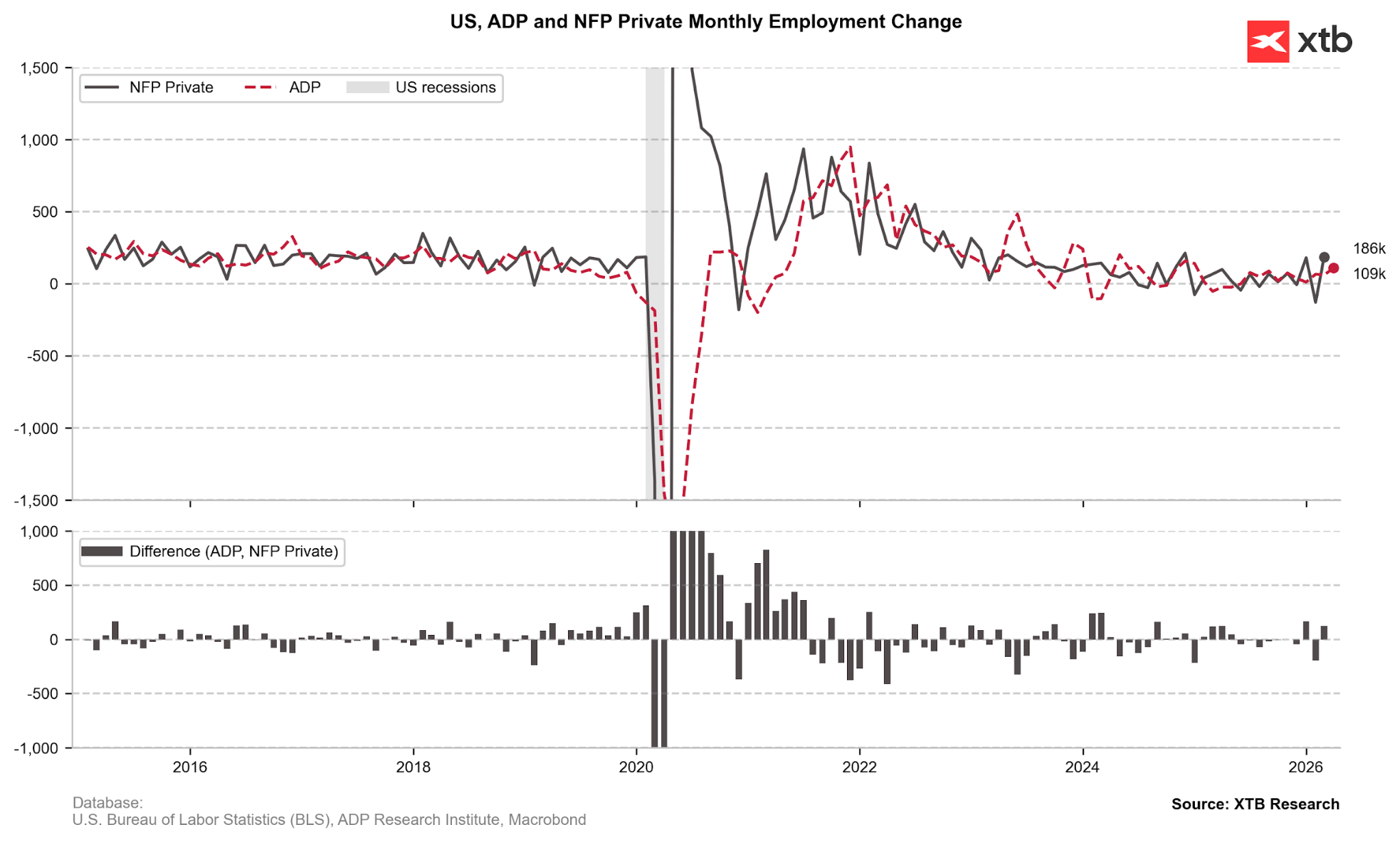
The most recent data – weekly jobless claims – are particularly noteworthy; a week ago they fell to 189k, the lowest level since 1969, remaining at low levels this week (200k). The ADP data also showed healthy levels (although since the pandemic, their correlation with the NFPs has been significantly weaker). Chart: NFP and ADP data (2015 – 2026)
Source: XTB, 08/05/2026