

How does the technical situation on EURUSD looks like?
Facts:
EURUSD is trading in an upward move from mid-March
The pair bounced off the horizontal support at 1.1725 USD
The pair is trading above the 100 – period moving average form H4 interval
Recommendation: Trade: Long position on EURUSD at market price Target: 1.1833, 1.1884 Stop: 1.1680
Opinion: Looking at EURUSD at the H4 interval, we can see that the main sentiment on the pair is bullish. However, a downward correction has occurred recently, which has brought the pair down to the key support at 1.1725 USD. The support is a result of previous reactions as well as a lower limit of 1:1 structure. According to the Overbalance strategy, as long as the price sits above 1.1725 support, the main trend remains upward. We recommend going long EURUSD at market price with two targets: 1.1833 and 1.1884. We also recommend placing a stop loss order at 1.1680. Source: xStation5
GBP/USD may find the primary barrier at the two-month high of 1.3599.
The 14-day Relative Strength Index near 59 remains positive, without indicating overbought conditions.
The immediate support lies at the lower boundary of the ascending channel around 1.3500.
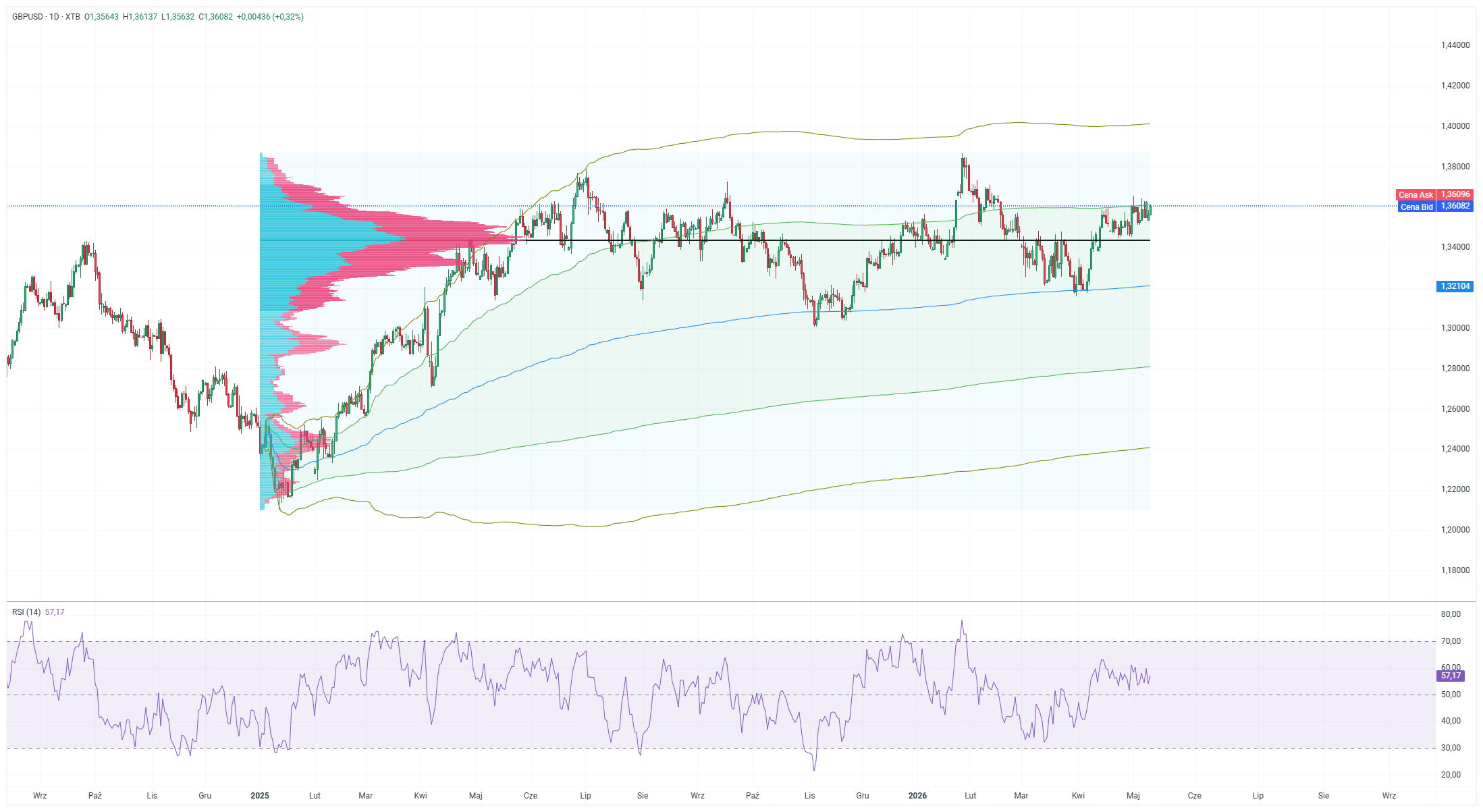
GBP/USD inches lower after registering modest gains in the previous day, trading around 1.3520 during the Asian hours on Tuesday. The technical analysis of the daily chart indicates an ongoing bullish bias, as the pair moves within the ascending channel pattern.
The GBP/USD pairย trades with a mildly bullish near-term bias, holding above both the nine-period and 50-period Exponential Moving Averages (EMAs). The short-term EMA trading above the longer one hints at constructive momentum.
The 14-day Relative Strength Index (RSI) around 59 stays in positive territory without yet signaling overbought conditions, suggesting room for further gains as long as the pair remains supported on dips.
The initial barrier lies at the two-month high of 1.3599, recorded on April 17, followed by the upper boundary of the ascending channel around 1.3750. A break above the channel would reinforce the bullish bias and support the GBP/USD pair to approach the 1.3869, the highest level since September 2021, reached on January 27.
On the downside, the GBP/USD pair may find its immediate support at the lower boundary of the ascending channel around 1.3500, followed by the nine-day EMA at 1.3493. Further declines below this confluence support zone would put downward pressure on the pair to test the 50-day EMA at 1.3423. A sustained break below the medium-term average would expose a nearly five-month low of 1.3159, recorded on March 31, followed by the 1.3010, the lowest since April 2025, which was recorded in November 2025.
GBP/USD: Daily Chart
Pound Sterling Price Today
The table below shows the percentage change of British Pound (GBP) against listed major currencies today. British Pound was the weakest against the New Zealand Dollar.
USD
EUR
GBP
JPY
CAD
AUD
NZD
CHF
USD
0.09%
0.10%
0.06%
0.00%
0.10%
-0.32%
0.08%
EUR
-0.09%
0.02%
-0.02%
-0.09%
0.04%
-0.41%
0.00%
GBP
-0.10%
-0.02%
-0.02%
-0.10%
0.00%
-0.43%
-0.01%
JPY
-0.06%
0.02%
0.02%
-0.05%
0.02%
-0.43%
0.00%
CAD
-0.00%
0.09%
0.10%
0.05%
0.08%
-0.36%
0.07%
AUD
-0.10%
-0.04%
-0.01%
-0.02%
-0.08%
-0.44%
-0.01%
NZD
0.32%
0.41%
0.43%
0.43%
0.36%
0.44%
0.43%
CHF
-0.08%
-0.00%
0.01%
-0.01%
-0.07%
0.00%
-0.43%
The heat map shows percentage changes of major currencies against each other. The base currency is picked from the left column, while the quote currency is picked from the top row. For example, if you pick the British Pound from the left column and move along the horizontal line to the US Dollar, the percentage change displayed in the box will represent GBP (base)/USD (quote).
The Pound Sterling trades mixed against its peers while investors await a string of UK data.
The UKโs headline CPI is expected to have risen at a faster pace of 3.3% in March.
Iran refuses to return to the table for another round of talks with the US.
The Pound Sterling (GBP) exhibits a mixed performance against its major currency peers during the European trading session on Monday. The British currency is expected to remain volatile as a slew of United Kingdom (UK) economic data is scheduled to be published this week.
Pound Sterling Price Today
The table below shows the percentage change of British Pound (GBP) against listed major currencies today. British Pound was the strongest against the Australian Dollar.
USD
EUR
GBP
JPY
CAD
AUD
NZD
CHF
USD
-0.05%
-0.00%
0.19%
-0.01%
0.22%
0.09%
-0.04%
EUR
0.05%
0.05%
0.22%
0.01%
0.26%
0.14%
-0.02%
GBP
0.00%
-0.05%
0.17%
-0.02%
0.20%
0.10%
-0.07%
JPY
-0.19%
-0.22%
-0.17%
-0.18%
0.03%
-0.13%
-0.25%
CAD
0.01%
-0.01%
0.02%
0.18%
0.22%
0.07%
-0.06%
AUD
-0.22%
-0.26%
-0.20%
-0.03%
-0.22%
-0.13%
-0.28%
NZD
-0.09%
-0.14%
-0.10%
0.13%
-0.07%
0.13%
-0.14%
CHF
0.04%
0.02%
0.07%
0.25%
0.06%
0.28%
0.14%
The heat map shows percentage changes of major currencies against each other. The base currency is picked from the left column, while the quote currency is picked from the top row. For example, if you pick the British Pound from the left column and move along the horizontal line to the US Dollar, the percentage change displayed in the box will represent GBP (base)/USD (quote).
Investors will pay close attention to the UK employment data for THE three months ending February, and the Consumer Price Index (CPI) and Retail Sales data for March to get fresh cues on the Bank of Englandโs (BoE) monetary policy outlook.
The UK employment data on Tuesday is expected to show that the Average Earnings Excluding Bonuses, a key measure of wage growth, rose at a moderate pace of 3.5% Year-on-Year (YoY) against the previous reading of 3.8%. The ILO Unemployment Rate is seen as steady at 5.2%.
The inflation report on Wednesday will likely demonstrate a strong growth in the headline CPI by 3% YoY, against 3% in February, in the wake of higher energy prices due to the war in the Middle East. On Friday, the UK Retail Sales, a key measure of consumer spending, is estimated to have risen 0.2% on a monthly basis after declining 0.4% in February.
Meanwhile, the recent commentary fromย BoEย Governor Andrew Bailey, in the International Monetary Fund (IMF) last week, suggests that the central bank will hold interestย ratesย steady in the policy meeting on April 30. Bailey said that there is โno rushโ for monetary policy adjustments despite a negative energy shock.
This week, investors will also focus on the preliminary UK S&P Global Purchasing Managersโ Index (PMI) data for April, which will be released on Thursday.
Against the US Dollar (USD), the Pound Sterling recovers a majority of its early losses and rebounds to near 1.3515. However, theย outlookย ofย the GBP/USD pairย remains uncertain amid uncertainty surrounding the occurrence of another round of talks between the United States (US) and Iran.
Iran’s foreign ministry spokesperson Esmail Baghaei said during the day that there is โno plan for a second round of negotiations with the United States (US) for now.
(This story was corrected at 11:30 GMT to say in the third paragraph that Average Earnings Excluding Bonuses, a key measure of wage growth, rose at a moderate pace of 3.5% Year-on-Year (YoY) against the previous reading of 3.8% and not the previous reading of 3.5%)
Commerzbankโs Thu Lan Nguyen argues that in the short term EUR/USD gains are capped as markets may be overestimating the European Central Bank’s (ECB) reaction to the latest inflation shock. She notes the Euro (EUR) and Pound (GBP) have held up better than in 2022 thanks to expectations of quicker tightening. Over the longer term, she highlights greater inflation and policy risks for the US Dollar (USD) versus the Euro.
Short-term cap, longer-term Dollar risk
“How will the fx markets develop in this environment? I think it makes sense to distinguish between the short and the longer term. In the short term โ and we have already seen this to some extent โ the focus is likely to be very much on the immediate reactions of the central banks.”
“This time things look a little different. The euro, and alongside it the British pound, are holding up fairly well against the US dollar. This is probably because markets trust both the ECB and the Bank of England to have learned from the mistakes of four years ago and to react early to inflation risks.”
“We have already expressed our doubts about market expectations for the ECB on several occasions, which is why we see the further upside potential in EUR/USD as limited. But that is only the short-term view. In the longer term, the pendulum could swing back again.”
“Therefore, in the longer term, the wheat is likely to be separated from the chaff, and only those currencies will prove robust where inflation falls back towards the 2% target more quickly. We see substantial risks in particular for the dollar. Apart from inflation, which has recently been firmer anyway due to the significant increases in import tariffs, further attacks by the US government are likely to make it difficult for the US central bank to respond adequately to an inflation shock.”
The US Dollar Index (DXY) is losing momentum near 98.00 as safe-haven demand fades on the reopening news, but downside remains limited amid lingering geopolitical risks.
Markets are experiencing fluctuations between relief and renewed caution as developments around the Strait of Hormuz continue to evolve. Earlier reports confirmed that this vital Oil chokepoint is โfully open and ready for full passage,โ alleviating fears about prolonged supply disruptions.
However, new developments are complicating the situation. Reports suggest that Iran may consider closing the Strait of Hormuz again if the United States maintains its naval blockade, warning that such an action would be viewed as a violation of the ceasefire.
US Dollar Price Today
The table below shows the percentage change of US Dollar (USD) against listed major currencies today. US Dollar was the strongest against the Euro.
USD
EUR
GBP
JPY
CAD
AUD
NZD
CHF
USD
-0.09%
-0.17%
-0.59%
-0.23%
-0.31%
-0.16%
-0.49%
EUR
0.09%
-0.08%
-0.52%
-0.15%
-0.22%
-0.08%
-0.42%
GBP
0.17%
0.08%
-0.45%
-0.07%
-0.14%
0.01%
-0.32%
JPY
0.59%
0.52%
0.45%
0.37%
0.28%
0.42%
0.09%
CAD
0.23%
0.15%
0.07%
-0.37%
-0.08%
0.05%
-0.26%
AUD
0.31%
0.22%
0.14%
-0.28%
0.08%
0.15%
-0.19%
NZD
0.16%
0.08%
-0.01%
-0.42%
-0.05%
-0.15%
-0.34%
CHF
0.49%
0.42%
0.32%
-0.09%
0.26%
0.19%
0.34%
The heat map shows percentage changes of major currencies against each other. The base currency is picked from the left column, while the quote currency is picked from the top row. For example, if you pick the US Dollar from the left column and move along the horizontal line to the Japanese Yen, the percentage change displayed in the box will represent USD (base)/JPY (quote).
EUR/USD is pushing higher toward the 1.1790 region, benefiting from the softer USD tone, although gains remain capped by cautious sentiment and mixed Eurozone data.
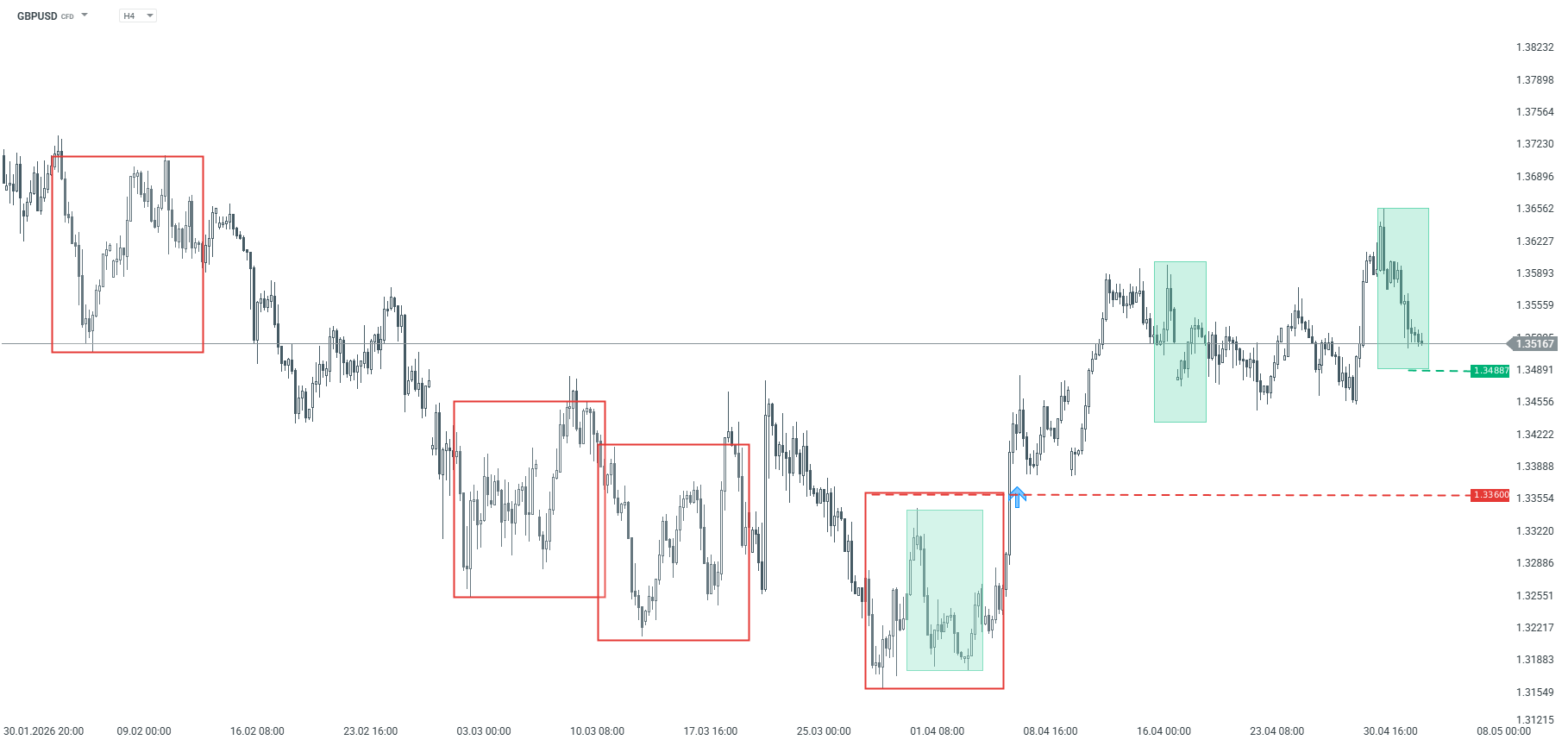
GBP/USD is also advancing near the 1.3550 level, supported by improved risk appetite as the pair attempts to recover recent losses amid a reassessment of global risks.
USD/JPY fell near the 158.20 price zone as the Japanese Yen (JPY) finds some support from residual safe-haven demand.
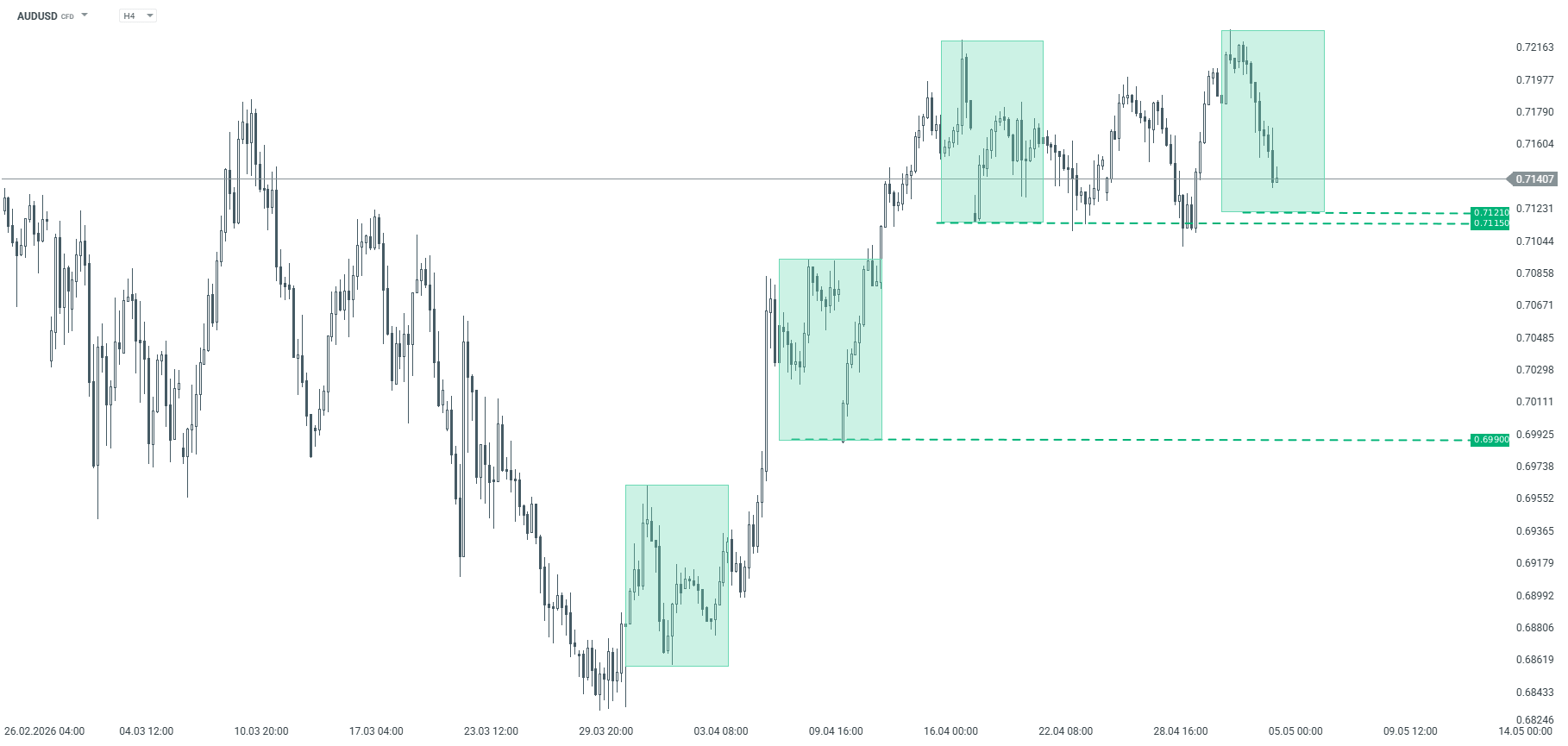
AUD/USD was one of the top performers earlier in the day, rallying sharply toward the 0.7200 region but later easing to near the 0.7180 price zone. Oil shock fears and improved global sentiment favor commodity-linked currencies.
West Texas Intermediate (WTI) Oil sharply declined to near the $83.00 per barrel, lower after the reopening of the Strait of Hormuz as supply concerns ease and risk premiums unwind. Still, prices remain vulnerable to sudden spikes if geopolitical tensions resurface.
Gold surged toward $4,865, even after safe-haven demand weakened amid ongoing uncertainty and the risk of renewed escalation in the Middle East.
Anticipating economic perspectives: Voices on the horizon
Tuesday, April 21:
ECBโs Nagel speech
ECBโs De Guindos speech
Fedโs Waller speech
Wednesday, April 22:
ECBโs Elderson speech
ECBโs Lane speech
BoEโs Breeden speech
ECBโs Lane speech
ECBโs Cipollone speech
ECBโs Sleijpen speech
ECBโs Nagel speech
ECBโs President Lagarde speech
Thursday, April 23:
ECBโs Nagel speech
Friday, April 24:
SNB Chairman Schlegel’s speech
Central banks’ meetings and upcoming data releases to shape
Monday, April 20:
China PBoC Interest Rate Decision
Germany PPI March
Canada CPIs
Canada BoC Business Outlook Survey
New Zealand Business Confidence Q1
New Zealand CPI Q1
Tuesday, April 21:
United Kingdom Labor Market Data
Germany ZEW Survey April
Eurozone ZEW Survey April
United States ADP Employment Change 4-week average
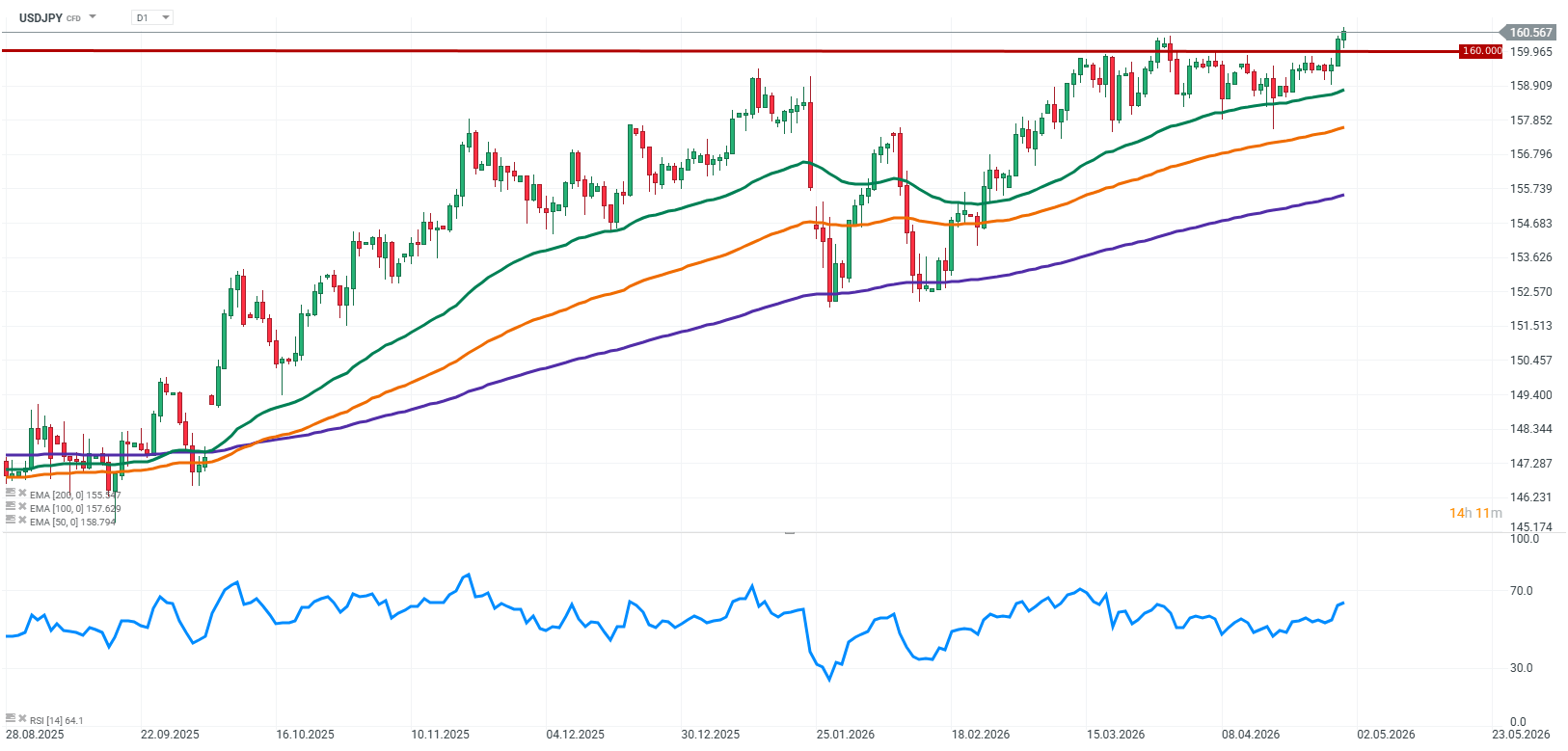
USD/JPY edges lower as softer USD and falling Oil prices support the Yen.
WTI plunges over 10% after Hormuz reopening, easing inflation concerns.
Technically, USD/JPY trades below the 20-day SMA, keeping the near-term bias bearish.
USD/JPY edges lower on Friday as the Japanese Yen (JPY) strengthens against a softer US Dollar (USD), with easing Oil prices providing additional support, given Japanโs heavy reliance on imported energy. At the time of writing, the pair is trading around 158.18, down 0.61% on the day.
Despite the decline, the pair remains largely range-bound within a one-month range between 157.50 and 160.50 and is on track for a third consecutive weekly decline, mirroring moves in the US Dollar Index (DXY), which tracks the Greenback against a basket of six major currencies. The index remains under pressure amid improving market sentiment surrounding a potential US-Iran peace deal.
Crude prices plunged more than 10% after Iran reopened the Strait of Hormuz. Iranian Foreign Minister Abbas Araghchi said in a statement on X that, in line with the ceasefire in Lebanon, passage for all commercial vessels through the Strait has been declared open for the remaining period of the truce, with transit taking place along coordinated routes set by Iranโs Ports and Maritime Organisation.
The sharp drop in Oil prices is easing immediate inflation risks, reviving expectations forย Federal Reserveย (Fed) rate cuts, while reinforcing the Bank of Japanโs (BoJ) gradual policy normalization path.
Looking ahead, traders will closely monitor developments around USโIran talks over the weekend, with markets watching for signs of a lasting peace deal. However, unresolved differences, particularly over nuclear issues, could keep uncertainty elevated.
In the daily chart, USD/JPY holds a bearish near-term bias as spot sits below the 20-day simple moving average (SMA) component of the Bollinger Bands at 159.20 while only marginally above the lower band support at 158.15. This configuration suggests the recent pullback is not yet resolved, with the pair trading in the lower half of its volatility envelope; a sub-50 Relative Strength Index (RSI) at 46 and a negative Moving Average Convergence Divergence (MACD) reading around -0.20 both hint that downside momentum still outweighs buying interest.
On the topside, initial resistance is located at the Bollinger SMA midline near 159.20, with a stronger cap emerging at the upper band around 160.25, where renewed selling pressure could reappear if the pair attempts a rebound. On the downside, immediate support is seen at the lower Bollinger Band near 158.15; a daily close below this level would expose deeper losses toward prior price floors, whereas holding above it would keep the pair confined to a corrective consolidation within the broader uptrend.
Japanese Yen Price Today
The table below shows the percentage change of Japanese Yen (JPY) against listed major currencies today. Japanese Yen was the strongest against the US Dollar.
USD
EUR
GBP
JPY
CAD
AUD
NZD
CHF
USD
-0.12%
-0.19%
-0.62%
-0.20%
-0.28%
-0.16%
-0.51%
EUR
0.12%
-0.07%
-0.52%
-0.09%
-0.17%
-0.05%
-0.41%
GBP
0.19%
0.07%
-0.45%
-0.02%
-0.10%
0.02%
-0.33%
JPY
0.62%
0.52%
0.45%
0.44%
0.35%
0.46%
0.12%
CAD
0.20%
0.09%
0.02%
-0.44%
-0.08%
0.02%
-0.31%
AUD
0.28%
0.17%
0.10%
-0.35%
0.08%
0.12%
-0.23%
NZD
0.16%
0.05%
-0.02%
-0.46%
-0.02%
-0.12%
-0.35%
CHF
0.51%
0.41%
0.33%
-0.12%
0.31%
0.23%
0.35%
The heat map shows percentage changes of major currencies against each other. The base currency is picked from the left column, while the quote currency is picked from the top row. For example, if you pick the Japanese Yen from the left column and move along the horizontal line to the US Dollar, the percentage change displayed in the box will represent JPY (base)/USD (quote).
USD/CHF falls below all major SMAs, confirming bearish structure shift.
RSI in bearish territory reflects strong selling pressure since April.
Break below 0.7800 exposes 0.7775 and 0.7748 support levels.
USD/CHF finishes the week on a lower note, down 0.87% for the week and 0.27% in the day, as markets turn optimistic about a possible US-Iran deal over the weekend. In the meantime, the technical picture remains bearish, as the pair tumbled below key moving averages, hitting a five-week low at 0.7775.
USD/CHF Price Forecast: Technical outlook
The daily chart shows the pair ended the day below the 50-day Simple Moving Average (SMA) at 0.7825โthe last of a group of four that included the 20-, 100-, and 200-day SMAs โ, opening the door for further downside. The Relative Strength Index (RSI) is also in bearish territory, indicating that bears have been aggressive since April 9, when the index pierced below its 50-neutral level.
For a bearish continuation, the USD/CHF must clear key support at 0.7800. A breach of the latter will expose a key support trendline around 0.7775/80, followed by the March 10 daily low at 0.7748. Fresh buying interest is seen at 0.7700.
On the other hand, a break of resistance at the 50-day SMA would expose the 100-day SMA at 0.7871, ahead of the 20-day SMA at 0.7909. Overhead lies the 200-day SMA at 0.7937.
USD/CHF Price Chart โ Daily
USD/CHF daily chart
Swiss Franc Price This week
The table below shows the percentage change of Swiss Franc (CHF) against listed major currencies this week. Swiss Franc was the strongest against the US Dollar.
USD
EUR
GBP
JPY
CAD
AUD
NZD
CHF
USD
-0.78%
-0.92%
-0.59%
-1.23%
-2.48%
-1.43%
-1.14%
EUR
0.78%
-0.15%
0.17%
-0.43%
-1.65%
-0.66%
-0.34%
GBP
0.92%
0.15%
0.26%
-0.30%
-1.50%
-0.51%
-0.18%
JPY
0.59%
-0.17%
-0.26%
-0.66%
-1.84%
-0.74%
-0.57%
CAD
1.23%
0.43%
0.30%
0.66%
-1.10%
-0.09%
0.11%
AUD
2.48%
1.65%
1.50%
1.84%
1.10%
1.06%
1.27%
NZD
1.43%
0.66%
0.51%
0.74%
0.09%
-1.06%
0.31%
CHF
1.14%
0.34%
0.18%
0.57%
-0.11%
-1.27%
-0.31%
The heat map shows percentage changes of major currencies against each other. The base currency is picked from the left column, while the quote currency is picked from the top row. For example, if you pick the Swiss Franc from the left column and move along the horizontal line to the US Dollar, the percentage change displayed in the box will represent CHF (base)/USD (quote).
USD/CHF rises to near 0.7825 as Iran truce optimism has diminished the US Dollarโs safe-haven demand.
US President Trump has stated multiple times that Washington is close to reaching a deal with Iran.
The Fed is unlikely to raise interest rates this year.
The USD/CHF pairย trades 0.15% lower at around 0.7825 during the European trading session on Friday. The Swiss Franc pair faces selling pressure as optimism towards a permanent ceasefire between the United States (US) and Iran has diminished the appeal of safe-haven assets.
During the press time, the US Dollar Index (DXY), which tracks the Greenbackโs value against six major currencies, trades 0.1% lower to near 98.08. The DXY is close to its over six-week low of 97.83 posted on Thursday.
The hopes of an Iran truce remain firm as US President Donald Trump has stated multiple times that Tehran is eager to reach a deal soon. On Thursday, Trump said in a press briefing, โWe’re very close to a deal with Iran,โ while warning that military actions against Tehran would resume if a deal is not closed. Trump added that Iran is willing to give up its enriched uranium and surrender its plans to pursue nuclear ambitions.
On the domestic front, traders have completely pared hawkishย Federal Reserveย (Fed) for the year, as capped oil prices due to Iran truce optimism have again anchored inflation expectations globally.
USD/CHF technical analysis
USD/CHF trades lower at around 0.7825 as of writing, keeping a bearish near-term tone as it holds below the 20-period exponential moving average (EMA) at 0.7883. On the daily chart, the pair exhibits a Bearish Flag formation, which warrants the continuation of the downside trend after a period of consolidation.
The Relative Strength Index (14) at around 42 leans to the weak side and hints that rebounds may continue to struggle beneath overhead supply.
On the downside, the channel bottom around 0.7798 is the first line of support, and a clear move below that floor would expose a deeper retracement within the broader bearish structure defined by the longer-term downward trend line towards the March 10 low of 0.7748, followed by the February 23 low of 0.7710.
Looking up, initial resistance emerges at the channel top near 0.7850, followed by the 20-period EMA at 0.7883; a sustained break above these levels would be needed to ease immediate downside pressure and extend the recovery towards the April 13 high of 0.7934.
To provide the best experiences, we use technologies like cookies to store and/or access device information. Consenting to these technologies will allow us to process data such as browsing behavior or unique IDs on this site. Not consenting or withdrawing consent, may adversely affect certain features and functions.
Functional
Always active
The technical storage or access is strictly necessary for the legitimate purpose of enabling the use of a specific service explicitly requested by the subscriber or user, or for the sole purpose of carrying out the transmission of a communication over an electronic communications network.
Preferences
The technical storage or access is necessary for the legitimate purpose of storing preferences that are not requested by the subscriber or user.
Statistics
The technical storage or access that is used exclusively for statistical purposes.The technical storage or access that is used exclusively for anonymous statistical purposes. Without a subpoena, voluntary compliance on the part of your Internet Service Provider, or additional records from a third party, information stored or retrieved for this purpose alone cannot usually be used to identify you.
Marketing
The technical storage or access is required to create user profiles to send advertising, or to track the user on a website or across several websites for similar marketing purposes.