


The Japanese currency has weakened by 1% against the dollar this week. It has been two weeks since the record intervention by the Japanese Ministry of Finance and the US Department of the Treasury. Following a decline to near 155, the USDJPY pair is beginning to recover, approaching the psychological barrier at 160. Figure 1: USDJPY (01.02.2026 – 12.08.2026)
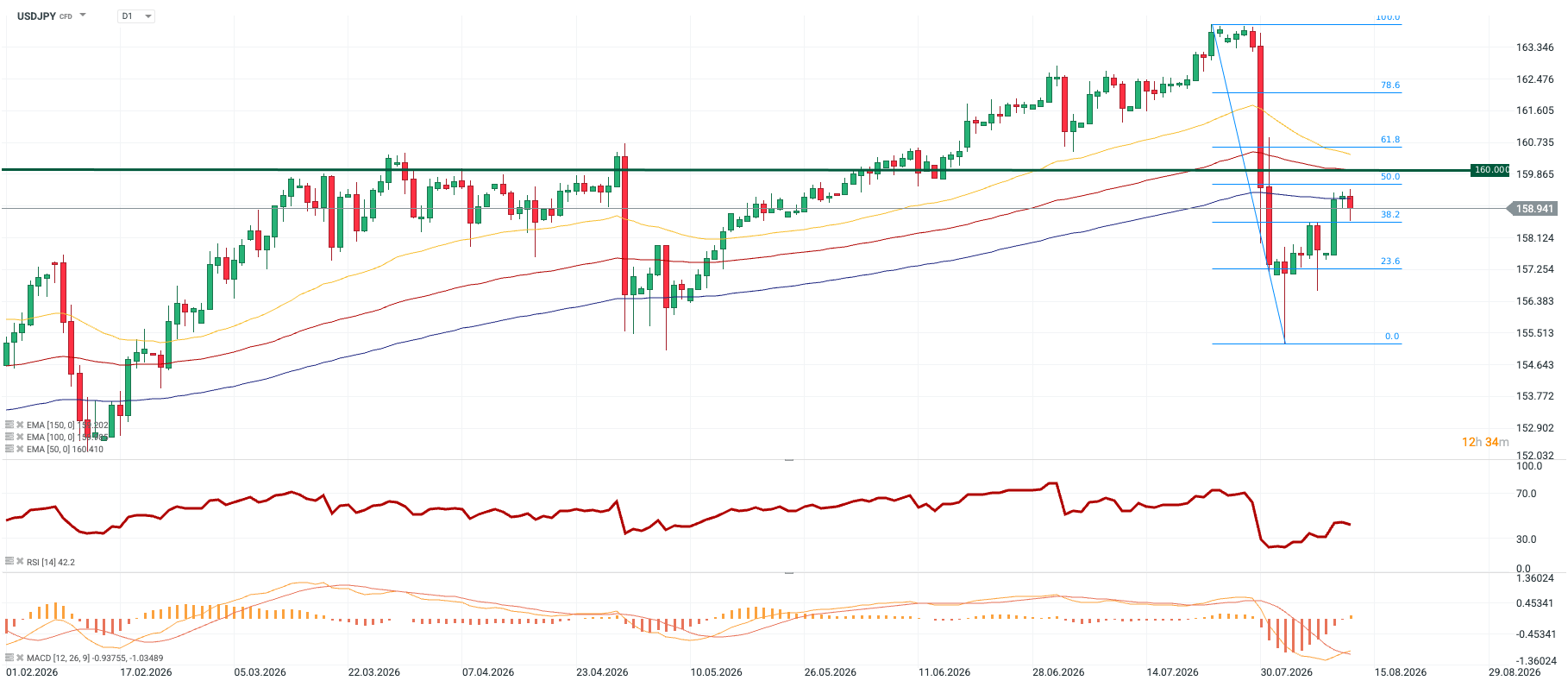
Source: xStation, 12.08.2026
What stands behind the decline?
Fundamentals continue to put pressure on the Japanese currency. The key remains, of course, the carry trade issue, i.e., trading on interest rate differentials. Figure 2: Performance of Selected Currencies against the USD (09.08.2026 – 12.08.2026)
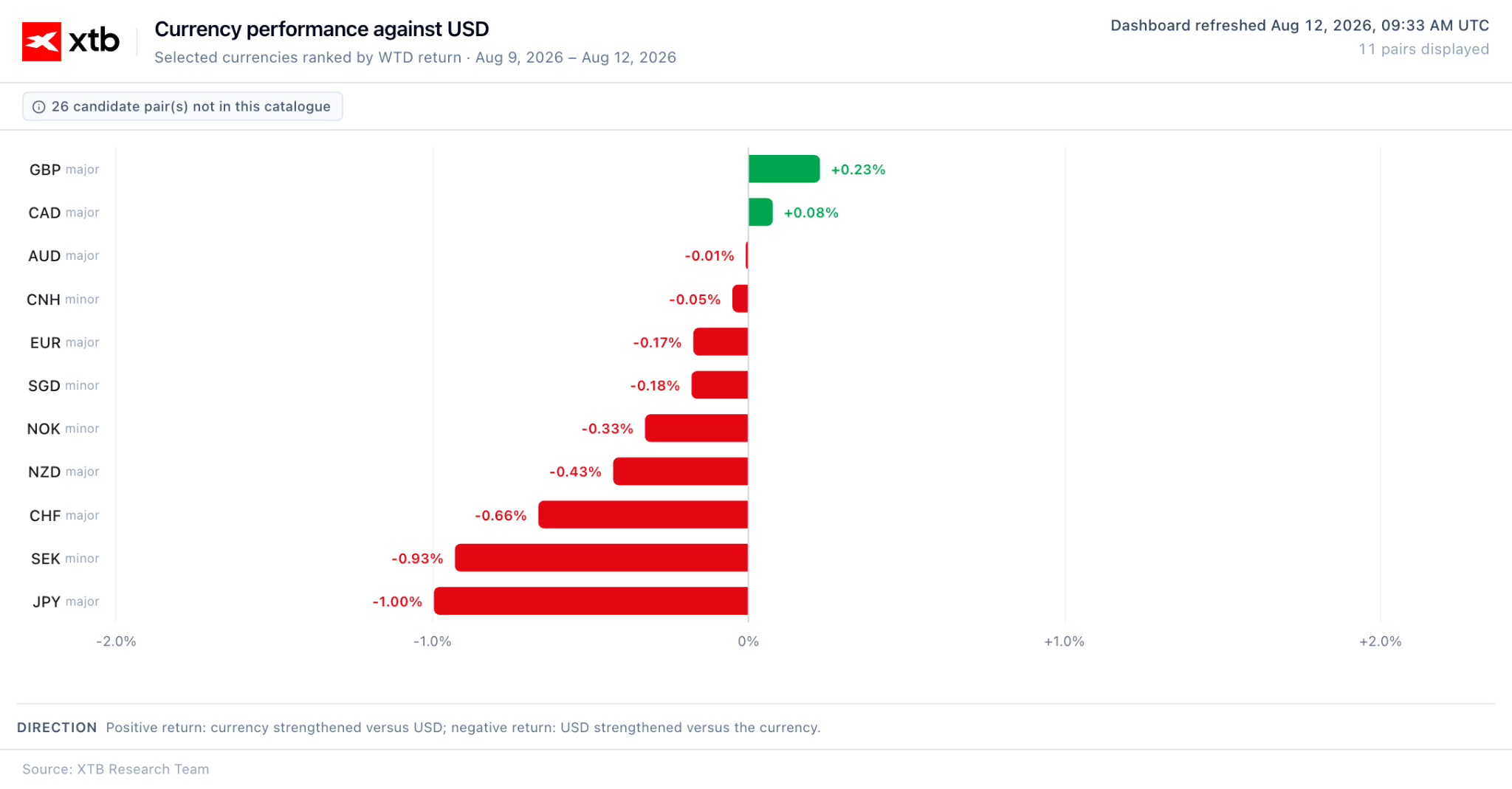
Source: xStation, 12.08.2026 As long as the divergence between the projected interest rate levels in the United States and Japan remains significant, even an intervention amounting to nearly 90 billion dollars may prove insufficient to permanently reverse the trend. Investors expect firm action from the Bank of Japan, though an opportunity for this will not arise until 18 September. The decision to raise interest rates then may constitute a significant declaration for the market, leading to an increase in bets on further hikes in subsequent months. Currently, such a move is priced in at approximately 75%.
Figure 3: Market-implied Probability of a Hike at the September BoJ Meeting (2025-2026)
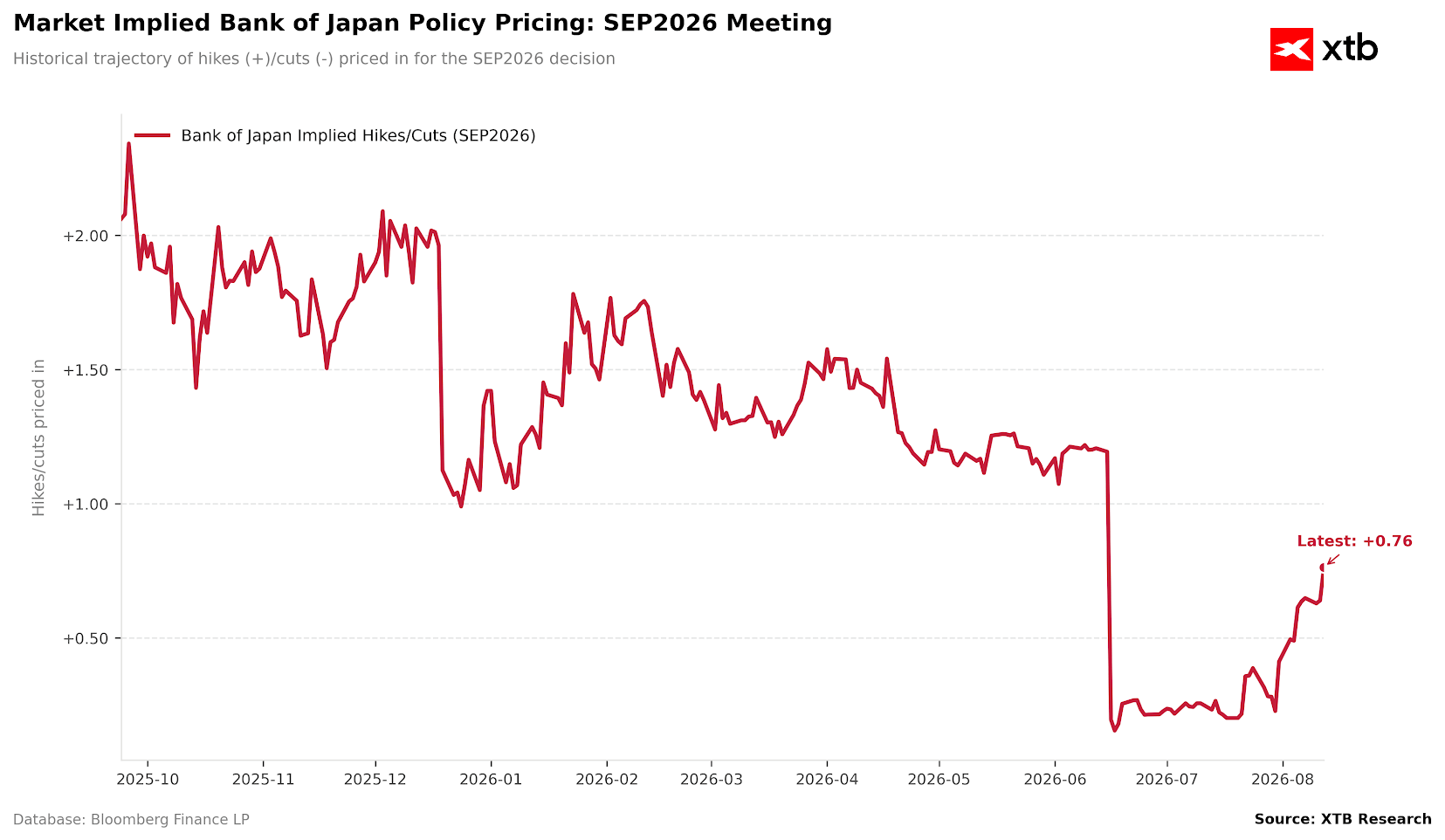
Source: XTB Research, 12.08.2026 In the meantime, market attention will shift to the United States. Today at 1:30 PM, we await the publication of the July inflation data. What can we expect?
- The headline inflation indicator is expected to be 3.4% y/y (a decline from 3.5%).
- The core indicator is expected to fall to its lowest level since March 2021 (to 2.5%).
- Ceny energii najprawdopodobniej spadną, głównie za sprawą spadku cen benzyny.
- Energy prices are likely to fall, mainly due to the decline in petrol prices.
- Core services inflation is expected to rebound to 0.2% m/m, driven by rising rental costs.
If the reading shows a stronger-than-expected decline, markets may continue their dovish repricing regarding the Fed’s interest rate path. It is worth noting that after the latest committee meeting and the exceptionally weak NFP data, the market-implied probability of a September hike has fallen to approximately 50%.
Figure 4: Fed Market-Implied Interest Rate Path [Number of Hikes] (2025-2026)
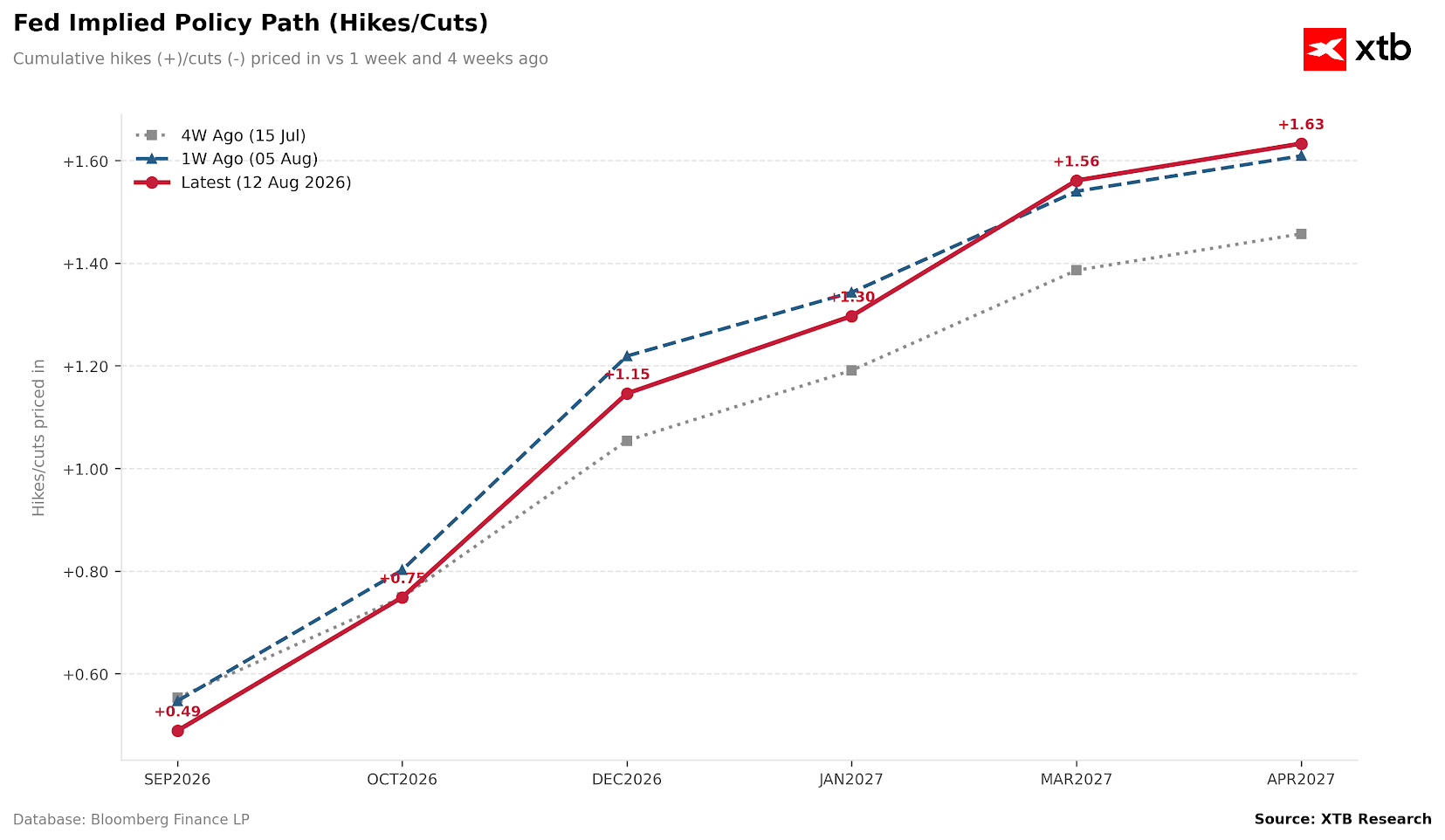
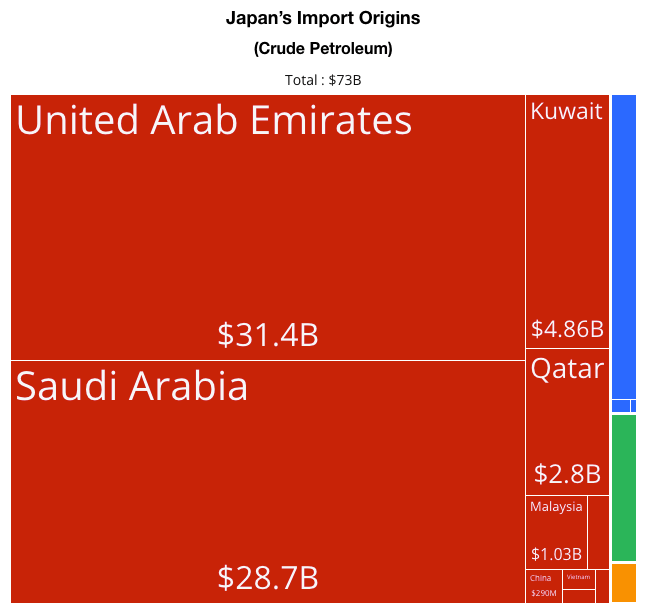
Source: XTB Research, 12.08.2026 In the context of the yen, attention is also drawn to developments in the Strait of Hormuz – Japan is almost entirely dependent on imports for its energy needs, and nearly 90% of its crude oil normally comes from the Middle East. Figure 5: Structure of Japan’s Crude Oil Imports (2024)
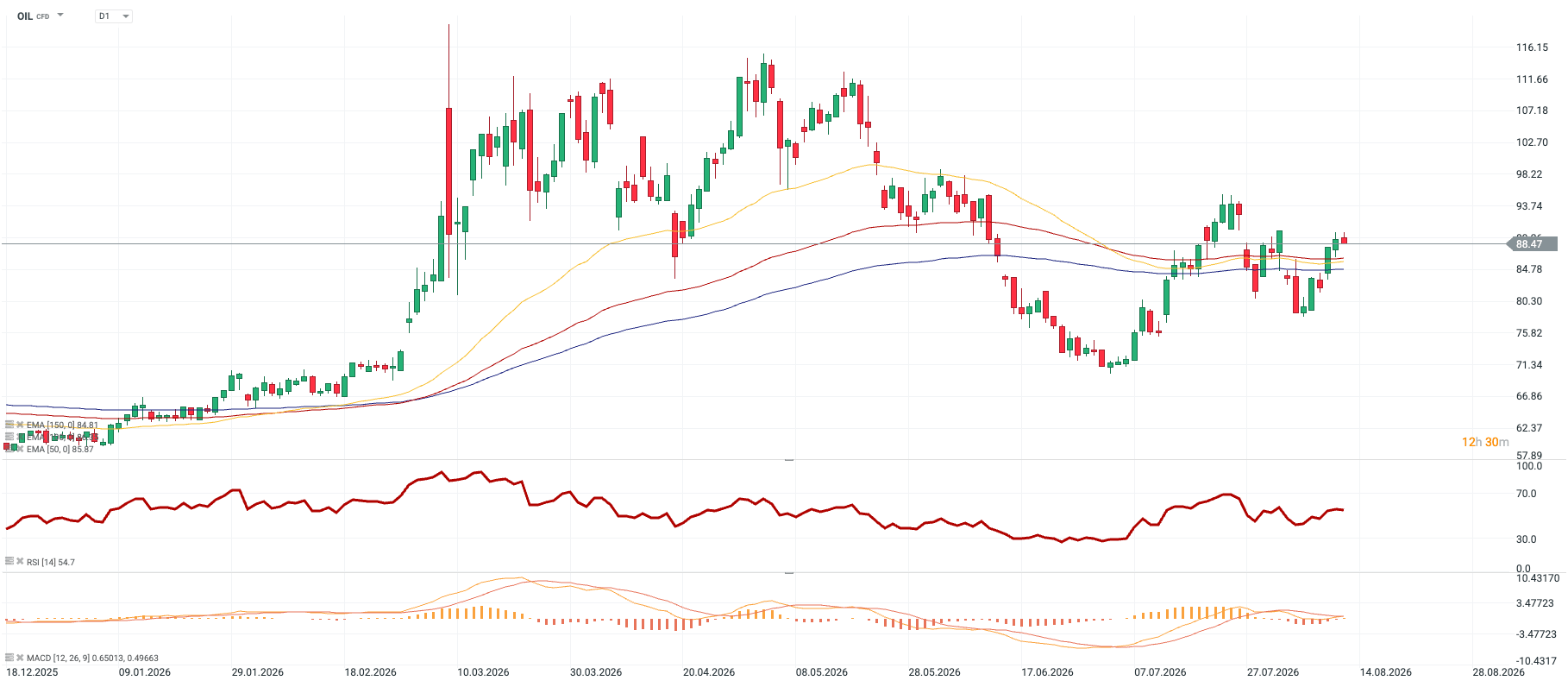
Source: OEC, 12.08.2026 In recent days, we have observed a rebound in oil prices. One must pay over 89 dollars for a barrel of Brent. Yesterday, key energy commodities continued to rise, despite optimistic declarations from the Pakistani Ministry of Foreign Affairs. Figure 6: OIL (18.12.2025 – 12.08.2026)
Source: xStation, 12.08.2026 Overnight, Donald Trump stated in media comments that the USA has “total control” over the Strait of Hormuz. The Iranian side, in turn, has set tough conditions for reopening the route, demanding the lifting of US sanctions, an end to the naval blockade, and the payment of reparations for war damages by the USA. Ship traffic in the Strait of Hormuz has fallen to its lowest level in a week (approx. 10 ships per day).