

Currency Hedger No Comments

New Zealand Dollar gains ground to near 0.5800 as US-Iran Presidents signs agreement to end war

  • NZD/USD gains ground to near 0.5790 in Thursdayโ€™s Asian session.
  • New Zealandโ€™s Q1 annual GDP beat the estimates. 
  • Fed held interest rates steady and signaled growing support for rate hikes this year.

The NZD/USD pair gains traction to around 0.5790 during the Asian trading hours on Thursday. The New Zealand Dollar (NZD) strengthens against the US Dollar (USD) amid upbeat annual New Zealand Gross Domestic Product (GDP) data and improved risk sentiment. 

Data released by Statistics New Zealand on Thursday showed that the countryโ€™s GDP expanded by 0.8% QoQ in the first quarter (Q1) of 2026. This figure followed a 0.5% expansion (revised from 0.2%) in the fourth quarter of 2025 and came in weaker than the expectation of a rise of 0.9%.

On an annual basis, the New Zealand economy grew by 1.5% in Q1 of 2026, compared to a rise of 1.5% (revised from 1.3%) in Q4 of 2025, while beating the estimation of a 1.1% growth.

US President Donald Trump and Iranโ€™s President Masoud Pezeshkian have electronically signed a memorandum of understanding to end the US and Israelโ€™s war on Iran, per Reuters. Both sides said the deal is in effect. Iran and the US are expected to formally sign the MOU to end the war on Friday in Geneva.

The US Federal Reserve (Fed) on Wednesday decided to leave the policy rate in 3.50%-3.75% range at its June policy meeting. The federal funds rate has held there since the US central bank lowered rates by three-quarters of a percentage point in the latter part of 2025. Fed officials signaled the chance of higher rates as they assess the impacts of the Iran war on inflation.

โ€œPersistently high prices are a burden for the American people, but the recent past need not be prologue,โ€ said Kevin Warsh in his debut press conference as chairman. Officials are unambiguous and unanimous. This committee will deliver price stability.โ€

Currency Hedger No Comments

AUD/USD Price Forecast: Eyes 0.7050 on weaker USD; 100-day SMA holds the key for bulls

  • AUD/USD attracts fresh buyers on Thursday as the US-Iran peace deal undermines the USD.
  • The hawkish RBA further benefits the Aussie, while Fed rate hike bets could limit USD losses.
  • The bearish technical setup warrants caution before positioning for any further appreciation.

The AUD/USD pair regains positive traction during the Asian session on Thursday, reversing part of the previous day’s slide to sub-0.7000 levels, or the weekly low. Spot prices currently trade around the 0.7040 region, up nearly 0.40% for the day, amid a broadly weaker US Dollar (USD).

The USD Index (DXY), which tracks the Greenback against a basket of currencies, retreats from its highest level since late March amid the latest optimism over the US-Iran deal to end the war and reopen the Strait of Hormuz. Moreover, the Reserve Bank of Australia’s (RBA) hawkish signal that further rate hikes are possible if inflation remains stubbornly elevated supports the Australian Dollar (AUD) and the AUD/USD pair. However, rising bets for an interest rate hike by the US Federal Reserve (Fed) in December might hold back the USD bears from placing aggressive bets and cap the currency pair.

From a technical perspective, this week’s repeated failures near the 100-day Simple Moving Average (SMA) support breakpoint favor bearish traders. Moreover, the AUD/USD pair holds below the 50% retracement of the March-May upswing, suggesting that rallies are more likely to be sold into while spot prices remain capped beneath these overhead levels. This negative outlook is further reinforced by bearish momentum indicators. In fact, the Relative Strength Index (RSI) is near 42, and a slightly negative Moving Average Convergence Divergence (MACD) reading hints at waning upside momentum.

On the topside, immediate resistance emerges at the 50% retracement around 0.7054, followed by the 100-day SMA near 0.7085 and the 38.2% Fibonacci retracement at 0.7106, with a stronger barrier further up at the 23.6% level around 0.7171. On the downside, initial support is defined by the 61.8% Fibo. level at 0.7002, with deeper cushions at the 78.6% level around 0.6928 and the prior swing low near 0.6834, where buyers would be expected to show more interest if the decline extends.

AUD/USD daily chart

Chart Analysis AUD/USD

US Dollar Price Today

The table below shows the percentage change of US Dollar (USD) against listed major currencies today. US Dollar was the strongest against the Canadian Dollar.

USDEURGBPJPYCADAUDNZDCHF
USD-0.20%-0.19%-0.05%-0.01%-0.36%-0.44%-0.14%
EUR0.20%0.01%0.17%0.18%-0.16%-0.29%0.06%
GBP0.19%-0.01%0.13%0.15%-0.17%-0.28%0.03%
JPY0.05%-0.17%-0.13%0.06%-0.32%-0.44%-0.10%
CAD0.01%-0.18%-0.15%-0.06%-0.36%-0.49%-0.14%
AUD0.36%0.16%0.17%0.32%0.36%-0.12%0.22%
NZD0.44%0.29%0.28%0.44%0.49%0.12%0.35%
CHF0.14%-0.06%-0.03%0.10%0.14%-0.22%-0.35%

The heat map shows percentage changes of major currencies against each other. The base currency is picked from the left column, while the quote currency is picked from the top row. For example, if you pick the US Dollar from the left column and move along the horizontal line to the Japanese Yen, the percentage change displayed in the box will represent USD (base)/JPY (quote).

Currency Hedger No Comments

Rupiah Holds Near IDR 17,850 Ahead of BI Decision

The Indonesian rupiah traded near IDR 17,850 per U.S. dollar on Wednesday, little changed from the previous session, as traders awaited the central bank’s interest rate decision later in the day. Policymakers are widely expected to raise the benchmark rate by 25bps, following cumulative 75bps of tightening since May, to support the rupiah and reinforce inflation expectations. While tighter monetary policy should help stabilise the local currency, higher borrowing costs could further weigh on domestic demand. Investors also weighed local reports of a new stimulus package for lower-middle-income households, alongside unchanged subsidized fuel and LPG prices. Jakarta, meanwhile, has cut funding for the flagship Free Meal Program by about IDR 67 trillion as President Prabowo pursues fiscal efficiency. Externally, the dollar stayed firm after the Fed held rates but flagged growing support for hikes later this year, curbing gains across emerging-market currencies, including the rupiah.

Currency Hedger No Comments

Indian Rupee Retreats on Firmer Dollar

The Indian rupee hovered around 94.6 per dollar, retreating from recent gains as the US dollar strengthened after the Federal Reserve concluded its latest policy meeting. Investors reassessed the interest-rate outlook after the Fed unanimously left its benchmark rate unchanged at 3.5%โ€“3.75%, while updated projections signaled a notable shift in policymakersโ€™ expectations. Further pressure on the rupee came as US Treasury yields climbed, with the two-year yield rising 12 basis points, supported by a series of resilient economic indicators that reinforced the case for higher-for-longer interest rates. Meanwhile, crude oil prices continued to move lower after the United States and Iran reached an interim agreement to halt the conflict and restore traffic through the Strait of Hormuz, easing concerns over energy supply disruptions.

Currency Hedger No Comments

Japan Signals Readiness to Respond to Yen Moves

Japan stands ready to act if needed to address excessive exchange-rate volatility, Chief Cabinet Secretary Minoru Kihara said on Thursday. He added that the government is prepared to respond to market moves at any time, stating, “We are ready to respond appropriately to currency moves as needed at any time.” He added that officials will continue to closely monitor foreign exchange developments. Kihara noted that while a weaker yen benefits manufacturers by boosting export competitiveness and corporate profits, it also raises import costs, increasing the burden on businesses and households through higher prices. “We need to scrutinise such effects comprehensively,” he said, highlighting the government’s balanced assessment of the currency’s impact on the economy.

Currency Hedger No Comments

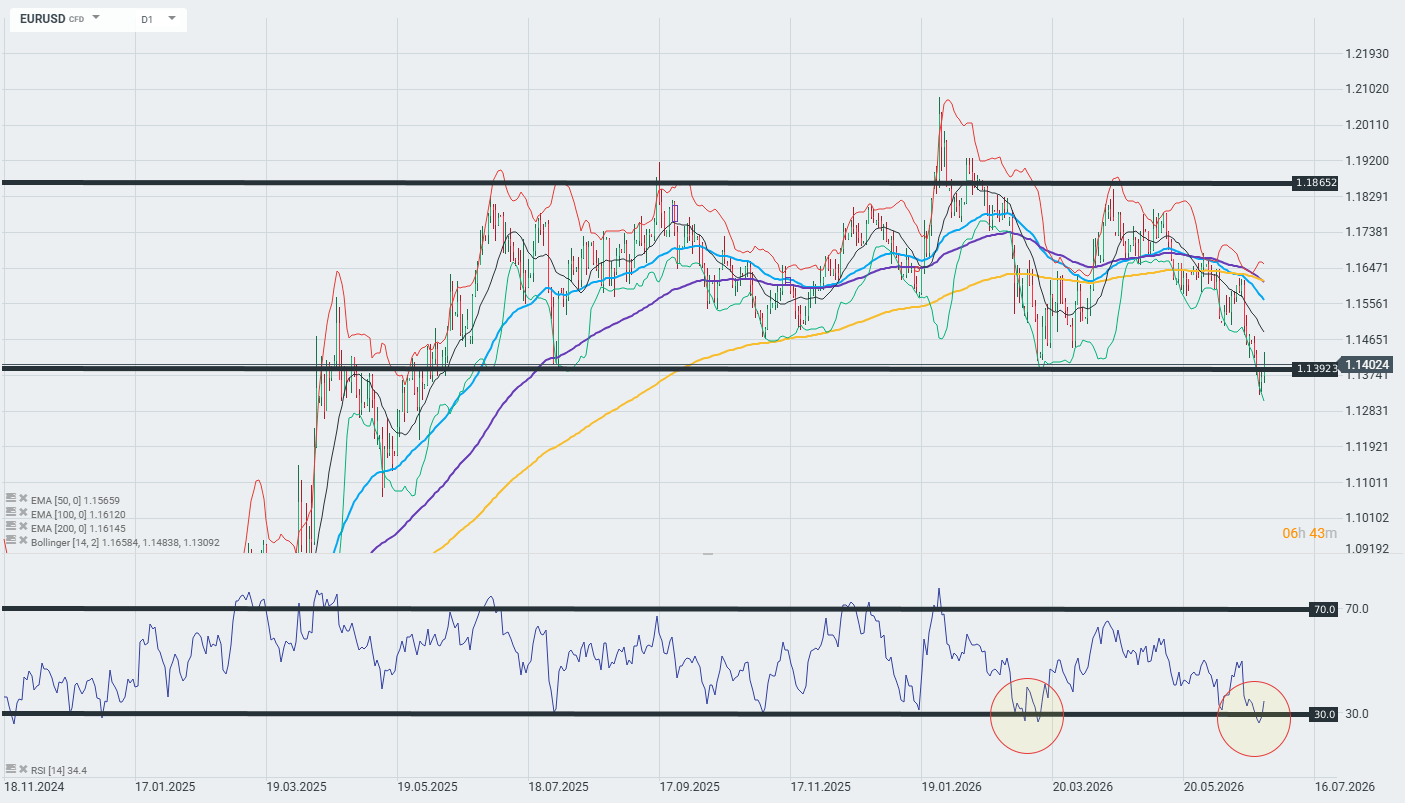
Chart of the Day – A New Era at the Fed and the Hawkish Shadow of the ECB. EUR/USD at a Turning Point

EURUSD starts todayโ€™s session in a noticeably tense yet somewhat uneven atmosphere, where the market lacks a single dominant narrative. On one side, investors are already looking ahead to the evening and the Federal Reserveโ€™s decision, which could set the tone for the US dollar over the coming weeks. On the other side, Europe refuses to fade into the background, as fresh inflation data once again highlights that the ECB story and its future policy response to price pressures remain unresolved.

In practice, EURUSD is trading in an environment where no clear narrative has taken control. Market participants are simultaneously trying to price in the Fed, the ECB, and the widening divergence between them, which naturally increases volatility and means that any new impulse can quickly shift the balance of forces. In such a setup, the currency pair becomes particularly sensitive to changes in expectations, especially on a day filled with major macroeconomic events.

Source: xStation5

What is driving EURUSD today? Kevin Warshโ€™s debut and the Fed credibility test

Todayโ€™s Federal Reserve meeting carries special significance as it is the first under the leadership of Kevin Warsh. Markets are almost fully aligned in expecting interest rates to remain unchanged in the 3.50โ€“3.75% range, but the decision itself is not the key focus. Far more important will be the tone of communication and how the new Fed Chair outlines the future path of monetary policy. Warsh takes control at a time when US inflation remains sticky and the economy continues to show relative resilience, limiting room for an early policy easing cycle. This makes todayโ€™s message potentially a directional signal for the entire Fed cycle. Even a subtle shift toward a more hawkish stance could strengthen the US dollar and add downward pressure on EURUSD.

Europe: inflation in line with forecasts, but pressure persists

On the European side, today brought the final release of May HICP inflation. The reading of 3.2% year on year came in exactly in line with consensus expectations, which helps stabilize short-term market positioning. However, it does not change the broader picture, where inflation remains elevated compared to last year. This keeps price pressures firmly on the radar of the European Central Bank. Particular attention continues to be drawn to persistent core inflation and the services component, both of which still show no clear disinflationary trend.

ECB and rising risks of further tightening

The lack of any positive surprise in inflation data leaves the ECB in a challenging position. After its recent rate hike, markets are once again reassessing whether the tightening cycle is truly over. If price pressures in services remain elevated and core inflation fails to meaningfully ease, the European Central Bank may be forced into another move later this year. Such a scenario limits the downside potential for the euro and acts as an important counterbalance to US dollar strength.

Market picture: tension between two central banks

EURUSD remains a market driven by two opposing narratives. On one side, investors are focused on the Fed and its impact on US dollar valuation. On the other, persistent inflation in Europe continues to support cautious expectations regarding the ECB. In this environment, markets become highly sensitive to central bank communication, while the technical structure of price action reinforces the sense of a fragile equilibrium, vulnerable to sharp shifts.

Key takeaways

  • Todayโ€™s EURUSD session is shaped by two opposing forces that broadly offset each other
  • The Fed remains the primary driver for the US dollar and could set the tone for the coming period
  • Europe continues to face persistent inflation with no clear signs of meaningful easing
  • The market remains in a wait-and-see mode with no dominant narrative
  • The key resolution will likely come only after the evening Fed decision and press conference
Currency Hedger No Comments

United Kingdom CPI inflation holds steady in April: What 2.8% means for British Pound

The United Kingdom (UK) headline Consumer Price Index (CPI) climbed 2.8% over the year in May, compared to a rise of 2.8% in April, the data released by the Office for National Statistics (ONS) showed on Wednesday. The UK inflation reading was well above the Bank of Englandโ€™s (BoE) 2% inflation target.

The core CPI (excluding volatile food and energy items) rose 2.6% year-over-year (YoY) in the same period, compared to Aprilโ€™s 2.5% print and came in softer than the forecast of 2.7%.

Meanwhile, the monthly UK CPI arrived at 0.2% in May versus a rise of 0.7% reported in April, below the market consensus of 0.4%.

The British Pound (GBP) attracts some sellers in an immediate reaction to the UK inflation report. At the time of writing, the GBP/USD pair is trading 0.05% lower on the day to trade at 1.3420.

Pound Sterling Price Today

The table below shows the percentage change of British Pound (GBP) against listed major currencies today. British Pound was the weakest against the Swiss Franc.

USDEURGBPJPYCADAUDNZDCHF
USD-0.04%0.02%-0.08%0.03%0.12%0.19%-0.22%
EUR0.04%0.06%-0.02%0.06%0.15%0.26%-0.17%
GBP-0.02%-0.06%-0.09%0.03%0.13%0.19%-0.20%
JPY0.08%0.02%0.09%0.10%0.19%0.22%-0.10%
CAD-0.03%-0.06%-0.03%-0.10%0.09%0.16%-0.21%
AUD-0.12%-0.15%-0.13%-0.19%-0.09%0.09%-0.29%
NZD-0.19%-0.26%-0.19%-0.22%-0.16%-0.09%-0.38%
CHF0.22%0.17%0.20%0.10%0.21%0.29%0.38%

The heat map shows percentage changes of major currencies against each other. The base currency is picked from the left column, while the quote currency is picked from the top row. For example, if you pick the British Pound from the left column and move along the horizontal line to the US Dollar, the percentage change displayed in the box will represent GBP (base)/USD (quote).

What do United Kingdom CPI inflation data mean for the British Pound?

The UK CPI is a measure of consumer price inflation, the rate at which the prices of goods and services bought by households rise or fall. This figure is one of the most important economic indicators for the GBP because it measures inflation and plays a key role in the Bank of England’s (BoE) monetary policy decisions.

Hotter-than-expected CPI Inflation suggests stronger price pressures in the economy. Traders may expect the BoE to keep interest rates higher-for-longer or consider additional rate hikes.

On the other hand, softer-than-expected outcomes may indicate easing price pressures in the UK economy. Markets could increase their bets on future BoE rate cuts.

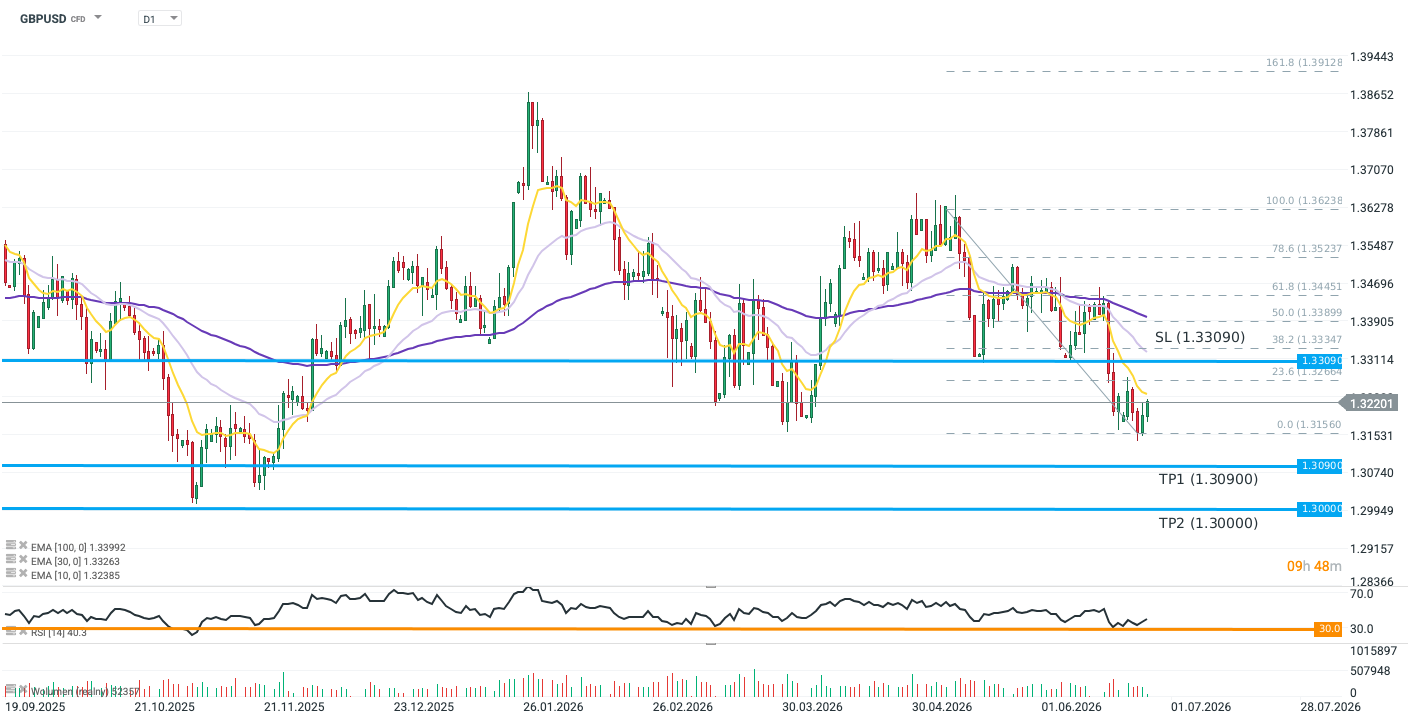
Technical Analysis: GBP/USD maintains a neutral outlook in the near-term 

Chart Analysis GBP/USD

In the daily chart, GBP/USD holds just above the Bollinger middle band, while still capped by the 100-day simple moving average (SMA). This configuration suggests a neutral near-term bias, with price consolidating inside the Bollinger envelope rather than trending. The Relative Strength Index (RSI) at roughly 50 hints at balanced momentum, leaving the pair dependent on a break outside this nearby band-and-MA corridor to define the next directional move.

On the topside, initial resistance emerges at the 100-day SMA around 1.3460, with the Bollinger upper band near 1.3498 forming a secondary barrier if buyers extend the recovery. On the downside, immediate support is seen at the Bollinger middle band around 1.3420, ahead of a deeper cushion at the Bollinger lower band close to 1.3345, where a break would expose a broader corrective phase.

Currency Hedger No Comments

Offshore Yuan Holds Near a Multi-Year High

The offshore yuan traded around 6.75 per dollar on Wednesday, remaining close to its strongest level since February 2023 after the People’s Bank of China unveils fresh measures designed to deepen global usage of the Chinese currency. The central bank said it will expand access to yuan liquidity through its Foreign and International Monetary Authorities (FIMA) repo facility, enabling foreign central banks, sovereign wealth funds, and other official institutions to borrow yuan against holdings of Chinese government bonds and other eligible securities. The announcement marks another step in Beijing’s long-running campaign to internationalize the yuan and reduce reliance on the US dollar in global finance. Reflecting this ambition, China’s latest five-year plan pledged to advance yuan internationalization, while President Xi Jinping has emphasized the objective of building a strong and influential global currency.