
Currency Hedger No Comments

Rupee Falls on Outflows, Trump Speech

The Indian rupee edged down to around 93.2 per dollar, extending gains for another session amid persistent capital outflows and heightened geopolitical tensions. The currency has been under pressure from spillovers of the Iran war, prompting the Reserve Bank of India to step up measures against arbitrage and forward contract manipulation.

After an earlier crackdown on banks failed to ease volatility, corporates were barred from rebooking cancelled foreign exchange contracts, and derivative trades with related parties were restricted. Analysts noted that while these measures aim to curb speculative activity, the rupee remains vulnerable as oil prices stay elevated and capital inflows remain limited. Adding to the downward pressure, President Donald Trumpโ€™s 20-minute prime-time address said the US is โ€œvery closeโ€ to completing its military objectives in Iran, while warning of potential escalation.

Currency Hedger No Comments

AUD slips despite February Trade Surplus more than doubles

  • Australian Dollar weakens despite Trade Surplus more than doubling in February.
  • Australiaโ€™s Trade Surplus widened to AUD 5,686 million from a revised AUD 2,258 million previously.
  • President Trump signaled that the US intends to conclude the Iran conflict quickly.

AUD/USD depreciates after two days of gains, trading around 0.6900 during the Asian hours on Thursday. The pair weakens as the Australian Dollar (AUD) comes under pressure despite robust trade data, with Australiaโ€™s Trade Surplus more than doubling in February to its highest level in seven months, supported by strong gains in gold and agricultural exports, while imports of gold and data processing equipment declined.

Australiaโ€™s Trade Surplus expanded to AUD 5,686 million in February from a downwardly revised AUD 2,258 million in the previous month, significantly exceeding market expectations of an AUD 2,500 million surplus and marking the largest surplus since July 2025.

Exports increased 4.9% month-over-month (MoM) to a four-month high, rebounding from a revised 1.6% decline in the prior month. Meanwhile, imports fell 3.2% MoM to a seven-month low, reversing a revised 1.1% increase in January, reflecting softer domestic demand and ongoing uncertainty in global trade flows amid geopolitical tensions.

The AUD/USD pair also faces downside pressure as the US Dollar (USD) strengthens, even as safe-haven demand fades amid rising optimism over Middle East peace. US President Donald Trump stated on Thursday that Iranโ€™s military capabilities have been significantly weakened, noting that its missile and drone capacity has been curtailed.

Trump added that the US no longer relies on Middle Eastern oil and emphasized that Iranโ€™s naval and air forces have been severely diminished, with leadership losses further reducing its operational strength, while signaling that the US intends to conclude the conflict swiftly.

Currency Hedger No Comments

JPY softens after Trump Iran war remarks

  • USD/JPY edges higher to around 159.20 in Thursday’s Asian session. 
  • Trump said his core “objectives are nearing completion” in Iran. 
  • Japanโ€™s Mimura said authorities may take a ‘decisive’ step if speculative moves persist. 

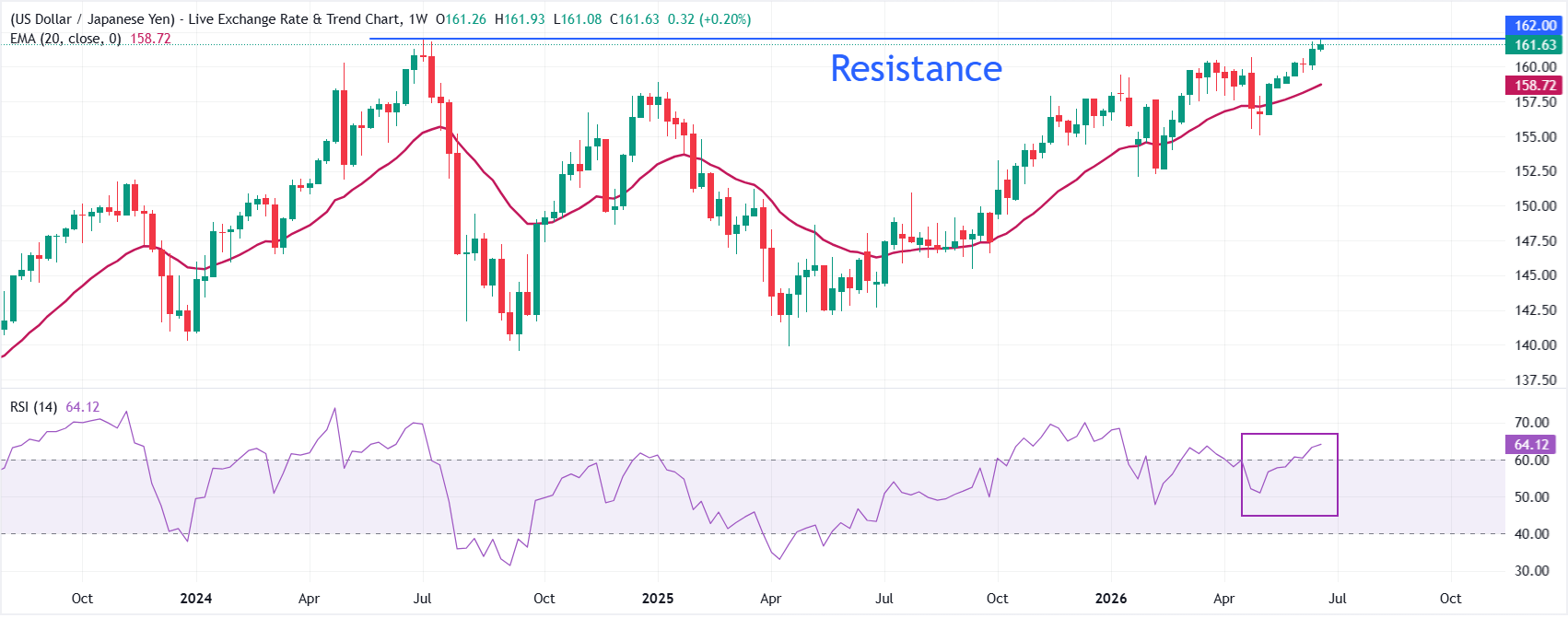
The USD/JPY pair gains momentum to near 159.20 during the Asian trading hours on Thursday. The US Dollar (USD) strengthens against the Japanese Yen (JPY) following US President Donald Trumpโ€™s speech from the White House. 

Trump said on Thursday that the US is “systemically dismantling the regime’s ability to threaten America or project power outside of their borders.โ€ He added that Iran’s ability to launch missiles and drones has been curtailed.

A White House official stated that the US President will focus on the operation having met or exceeded all of its benchmarks, including destroying Iranโ€™s ballistic missiles and production facilities. Uncertainty surrounding the US-Iran ceasefire and persistent tensions in the Middle East continue to boost the Greenback in the near term. 

Fears that Japanese authorities would step in to support the domestic currency could help limit the JPYโ€™s losses. Japan’s top currency diplomat, Atsushi Mimura, said on Monday that officials may need to take “decisive” steps if speculative moves persist in the currency market.

“We are hearing that speculative moves are increasing in the currency market, in addition to the crude futures market. If this situation continues, it may be time to take decisive measures,” said Mimura. 

Currency Hedger No Comments

GBP weakens as USD rallies after Trumpโ€™s address to the nation

  • GBP/USD attracts heavy selling as Trumpโ€™s comments dampen de-escalation hopes and boost USD.
  • Rallying Crude Oil prices revive inflation fears and bolster Fed rate hike bets, further lifting the USD.
  • Economic concerns stemming from the Iran war undermine the GBP and also weigh on spot prices.

The GBP/USD pair meets fresh supply during the Asian session on Thursday. It retreats further from the weekly high, which was around the 1.3345 area touched the previous day. Spot prices decline to the mid-1.3200s after US President Donald Trump’s comments. These comments stall a two-day recovery move from a four-month low set on Tuesday.

Addressing the nation, Trump reiterated the 2-3 week deadline. He also threatened to hit Iran’s energy infrastructure if no deal is reached. Trump added that negotiations with Iran are going well. However, Tehran quickly rejected the claim. Additionally, reports say the United Arab Emirates (UAE) is pushing for military action to reopen the Strait of Hormuz. This fuels worries about more tension in the Middle East.

The latest developments trigger a sharp rally in Crude Oil prices, reviving inflation fears and bolstering bets for a rate hike by the US Federal Reserve (Fed). Adding to this, a fresh wave of the global risk-aversion trade assists the safe-haven US Dollar (USD) to regain positive traction following a two-day corrective slide from the year-to-date. This, in turn, is seen as a key factor exerting downward pressure on the GBP/USD pair.

Meanwhile, the UK economy is highly vulnerable to energy price shocks linked to the Iran war. Furthermore, the Bank of England’s (BoE) hawkish signal about a potential interest rate hike as early as April amid inflation fears raises downside risks to the economy. This further undermines the British Pound (GBP) and backs the case for the resumption of the GBP/USD pair’s recent decline witnessed over the past two months or so.

US Dollar Price Today

The table below shows the percentage change of US Dollar (USD) against listed major currencies today. US Dollar was the strongest against the Australian Dollar.

USDEURGBPJPYCADAUDNZDCHF
USD0.29%0.37%0.30%0.13%0.59%0.52%0.28%
EUR-0.29%0.08%-0.02%-0.18%0.30%0.24%-0.02%
GBP-0.37%-0.08%-0.06%-0.24%0.22%0.16%-0.10%
JPY-0.30%0.02%0.06%-0.16%0.29%0.22%-0.02%
CAD-0.13%0.18%0.24%0.16%0.44%0.37%0.13%
AUD-0.59%-0.30%-0.22%-0.29%-0.44%-0.06%-0.34%
NZD-0.52%-0.24%-0.16%-0.22%-0.37%0.06%-0.26%
CHF-0.28%0.02%0.10%0.02%-0.13%0.34%0.26%

The heat map shows percentage changes of major currencies against each other. The base currency is picked from the left column, while the quote currency is picked from the top row. For example, if you pick the US Dollar from the left column and move along the horizontal line to the Japanese Yen, the percentage change displayed in the box will represent USD (base)/JPY (quote).

Currency Hedger No Comments

NZD/USD declines below 0.5750 as Iran conflict supports US Dollar

  • NZD/USD slumps to around 0.5725 in Thursdayโ€™s Asian session. 
  • Trump said the conflict in Iran would soon be ending, but US military would continue to hit targets there over the next few weeks.
  • US March employment data will be the highlight on Friday. 

The NZD/USD pair tumbles to near 0.5725 during the Asian trading hours on Thursday. The US Dollar (USD) edges higher against the New Zealand Dollar (NZD) as market caution persists due to the ongoing conflict in the Middle East, which boosts safe-haven demand. 

US President Donald Trump said on Thursday that he expects the war with Iran to last another two to three weeks, but deemed it close to an end. Trump further stated that Iran’s ability to launch missiles and drones has been curtailed. A White House official stated that the US President will focus on the operation having met or exceeded all of its benchmarks, including destroying Iranโ€™s ballistic missiles and production facilities.

“Trump’s comments failed to reassure markets … markets are starting to realize that the war will probably escalate further from here before de-escalating,” said Carol Kong, a currency strategist at Commonwealth Bank of Australia.

The attention will shift to the US employment report for March, which will be published later on Friday. The US economy is expected to show 60,000 job additions in March, while the Unemployment Rate is projected to hold steady at 4.4% during the same period. Any signs of weakening in the US labour market could drag the Greenback lower and act as a tailwind for the pair. 

The Reserve Bank of New Zealand (RBNZ) will announce its interest rate decision next week. RBNZ Governor Anna Breman indicated the bank might “look through” temporary energy-driven inflation but could hike if long-term expectations are threatened.

Currency Hedger No Comments

CAD declines as Trump remarks lift US Dollar

  • USD/CAD rises as the US Dollar strengthens after Trumpโ€™s remarks lacked clear Middle East de-escalation.
  • Trump reiterated that Iranโ€™s military capabilities were significantly weakened, signaling an end to the conflict.
  • The Canadian Dollar may gain support as oil prices rise following Trumpโ€™s comments, boosting energy market sentiment.

USD/CAD rebounds after two days of losses, trading around 1.3900 during the Asian hours on Thursday. The pair appreciates as the US Dollar (USD) strengthens after US President Donald Trumpโ€™s latest address showed no clear Middle East de-escalation, keeping geopolitical risk elevated.

US President Donald Trump reiterated that Iranโ€™s military capabilities have been significantly weakened, noting that its missile and drone capacity has been curtailed. Trump added that the US no longer relies on Middle Eastern oil. He emphasized that Iranโ€™s naval and air forces have been severely diminished, with leadership losses further reducing its operational strength, while signaling that the US intends to conclude the conflict swiftly within 2-3 weeks.

The Greenback struggled as markets reassessed the US Federal Reserveโ€™s (Fed) policy outlook amid shifting geopolitical risks, growth concerns, and persistent inflation pressures. The Fed kept interest rates unchanged at 3.50%โ€“3.75% following its March 17โ€“18, 2026 meeting. Nevertheless, the median dot plot still points to one 25-basis-point rate cut later in 2026, although some policymakers now anticipate no cuts this year.

Meanwhile, US Treasury yields are recovering, with both 2-year and 10-year notes extending gains after strong economic data reinforced expectations that rates could remain steady for longer. St. Louis Fed President Alberto Musalem noted that current monetary policy is appropriately positioned and likely to remain unchanged for some time.

However, the upside of the USD/CAD pair could be restrained as the Canadian Dollar (CAD) could receive support from higher oil prices, given the fact that Canada is the largest crude exporter to the United States (US).

West Texas Intermediate (WTI) oil price gains nearly 5% after two days of losses, trading around $98.90 per barrel at the time of writing. Crude oil prices rise as Trumpโ€™s latest remarks lack fresh signals on Iran, prompting cautious sentiment across energy markets.

Currency Hedger No Comments

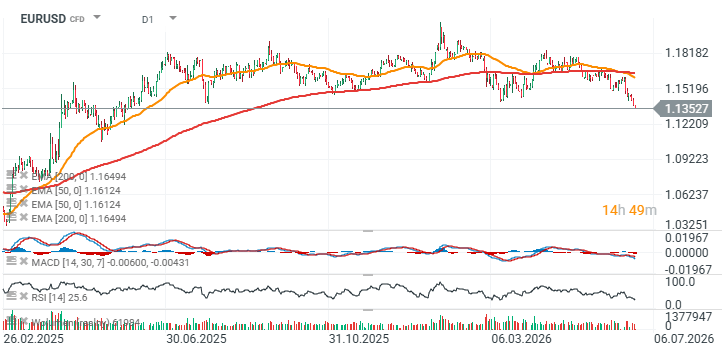
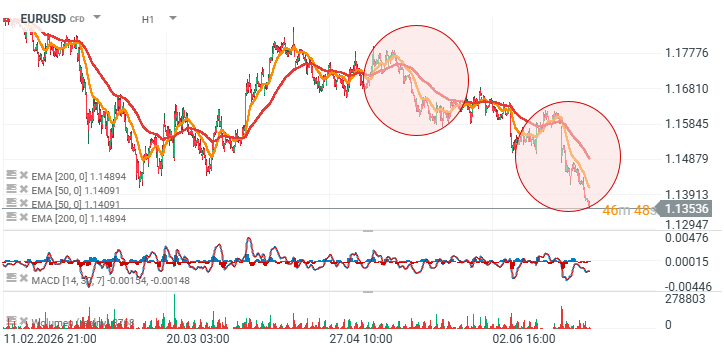
EUR/USD Price Declines below 1.1550 as Trumpโ€™s Iran war update boosts USD

  • EUR/USD meets with heavy supply as USD strengthens after Trumpโ€™s Iran war update.
  • Firming Fed rate hike bets further benefit the USD and back the case for deeper losses.
  • The intraday failure near the 200-period EMA on the H4 validates the negative outlook.

The EUR/USD pair struggles to capitalize on its gains registered over the past two days, reaching the weekly top the previous day, and attracts heavy selling during the Asian session on Thursday. Spot prices drop below the 1.1550 level in the last hour amid the emergence of fresh buying around the safe-haven US Dollar (USD) as US President Donald Trump’s update on the Iran war dampens de-escalation hopes.

Addressing the nation, Trump threatened that Iran would be hit extremely hard over the next two to three weeks and would be brought to the Stone Age if no deal is reached. Trump further added that Iranian energy infrastructure remains a possible target, triggering a sharp rally in Crude Oil prices and fueling inflationary concerns. This, in turn, bolsters bets for a rate hike by the US Federal Reserve (Fed) and turns out to be another factor supporting the USD, which is seen exerting pressure on the EUR/USD pair.

From a technical perspective, the failure to find acceptance above the 200-period Exponential Moving Average (EMA) on the 4-hour chart and a pullback from the 1.1620-1.1625 supply zone favors bearish traders. Moreover, the Moving Average Convergence Divergence (MACD) indicator slips back toward the zero line after a brief positive extension, with the histogram contracting and hinting at fading bullish momentum. Adding to this, the Relative Strength Index (RSI) eases to around 50, reinforcing a loss of directional conviction after failing to sustain overbought proximity earlier in the move.

Meanwhile, initial support emerges at 1.1520, guarding the recent reaction low near 1.1485, where a break would expose the 1.1450 zone as the next downside objective. On the topside, immediate resistance stands at 1.1580 ahead of the 1.1610โ€“1.1620 band, where prior swing highs converge with the 200-period exponential moving average to define a key barrier. A sustained move above this upper resistance zone would be needed to revive a clear bullish bias, while failure to hold 1.1520 would shift focus back toward the mid-1.1400s.

(The technical analysis of this story was written with the help of an AI tool.)

EUR/USD 4-hour chart

Chart Analysis EUR/USD

US Dollar Price Today

The table below shows the percentage change of US Dollar (USD) against listed major currencies today. US Dollar was the strongest against the New Zealand Dollar.

USDEURGBPJPYCADAUDNZDCHF
USD0.42%0.53%0.35%0.24%0.67%0.70%0.45%
EUR-0.42%0.11%-0.09%-0.20%0.26%0.29%0.02%
GBP-0.53%-0.11%-0.19%-0.26%0.16%0.20%-0.08%
JPY-0.35%0.09%0.19%-0.10%0.32%0.35%0.10%
CAD-0.24%0.20%0.26%0.10%0.42%0.44%0.20%
AUD-0.67%-0.26%-0.16%-0.32%-0.42%0.03%-0.26%
NZD-0.70%-0.29%-0.20%-0.35%-0.44%-0.03%-0.26%
CHF-0.45%-0.02%0.08%-0.10%-0.20%0.26%0.26%

The heat map shows percentage changes of major currencies against each other. The base currency is picked from the left column, while the quote currency is picked from the top row. For example, if you pick the US Dollar from the left column and move along the horizontal line to the Japanese Yen, the percentage change displayed in the box will represent USD (base)/JPY (quote).

Currency Hedger No Comments

USD/CAD drifts lower as improving risk sentiment pressures US Dollar

  • USD/CAD eases as the US Dollar Index falls to a one-week low.
  • Improving sentiment around a potential US-Iran de-escalation weighs on the Greenback, though risks around the Strait of Hormuz persist.
  • Strong US data fails to lift the USD, while Canadaโ€™s PMI signals stagnation, leaving the pair driven mainly by Dollar dynamics.

USD/CAD trades with a softer tone on Wednesday, as a pullback in the US Dollar (USD) lends support to the Canadian Dollar (CAD). The pair is trading around 1.3891 at the time of writing, retreating after touching its highest level since December 2025 earlier this week.

The US Dollar is under pressure as recent comments from US President Donald Trump suggesting the US-Iran war could end within โ€œtwo or three weeksโ€ have improved risk appetite and reduced demand for the Greenback as a safe-haven asset.

However, the situation remains far from resolved, with tensions still centered around the reopening of the Strait of Hormuz. Donald Trump said in a post on Truth Social that Iranโ€™s leadership had requested a ceasefire, adding that Washington would consider it only if the Strait of Hormuz is โ€œopen, free and clear.โ€ He warned that until then, the US would continue military operations.

Meanwhile, Iran pushed back on the claim, with a Foreign Ministry spokesperson saying that reports of Tehran requesting a ceasefire are false, according to Al Jazeera.

While hopes of de-escalation have pushed Oil prices lower from recent highs, they remain elevated compared to pre-conflict levels but have failed to provide meaningful support to the commodity-linked Loonie, leavingย USD/CADย largely driven by US Dollar dynamics.

Meanwhile, stronger US economic data failed to provide support to the Greenback. The US Dollar Index (DXY), which tracks the Greenback’s value against a basket of six major currencies, is hovering near 99.40, close to a one-week low after touching ten-month highs of 100.64 on Monday.

The ISMย Manufacturing PMIย rose to 52.7 in March, beating expectations of 52.5 and improving slightly from the previous 52.4. The ADP Employment Change rose by 62K in March, beating expectations of 40K but easing from the previous reading of 66K (revised from 63K).

Retail Sales increased by 0.6% in February, surpassing forecasts of 0.5% and rebounding from a revised -0.1% decline in January (previously -0.2%).

In Canada, the S&P Global Manufacturing PMI fell to 50 in March, down from 51 in February, signaling a stagnation in manufacturing sector performance.

On the monetary policy front, St. Louisย Fedย President Alberto Musalem said US monetary policy is โ€œwell positioned,โ€ adding that holding interestย ratesย steady is likely appropriate for some time.