

Currency Hedger No Comments

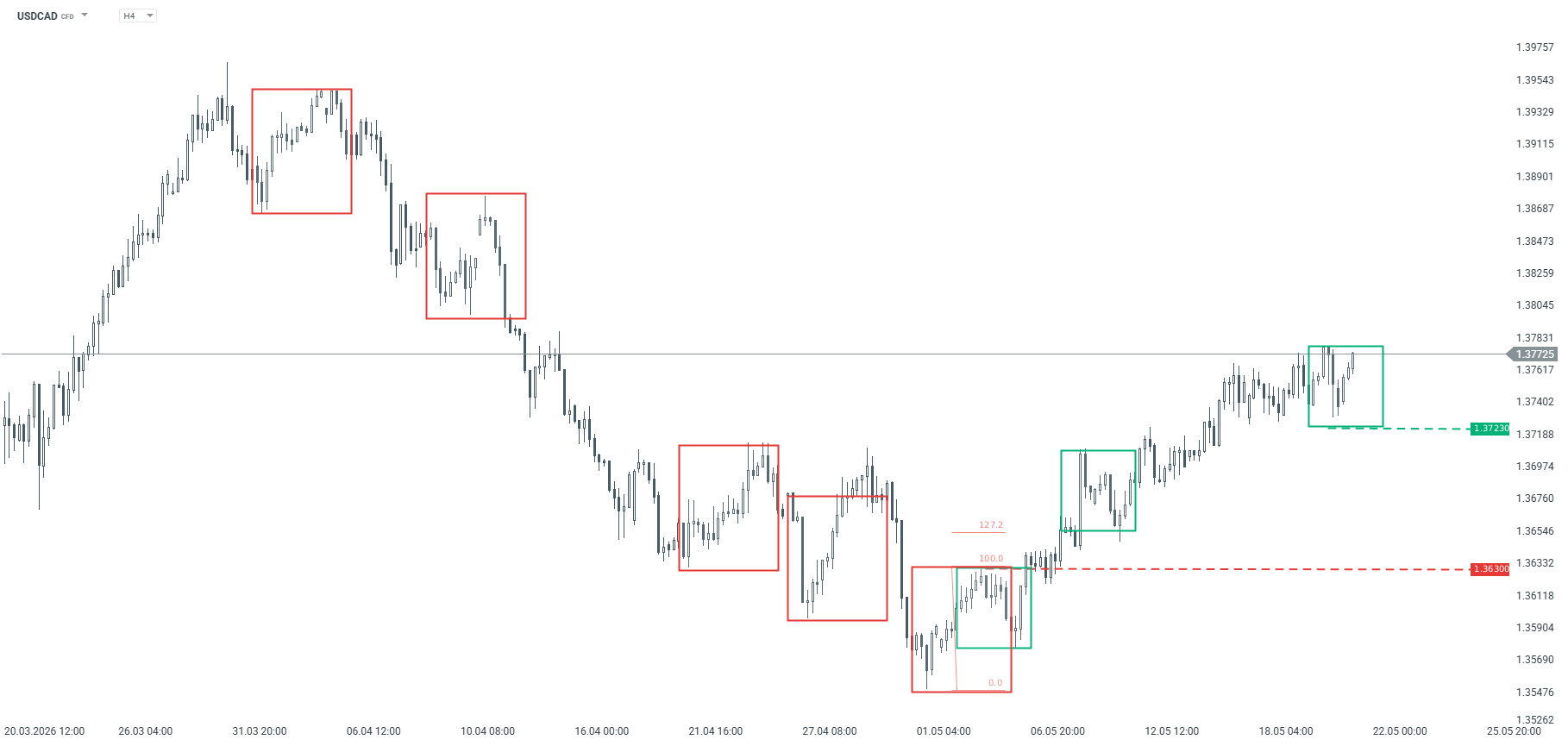
USD/CAD Price Forecast: Holds above 1.3700 to test nine-day EMA

  • USD/CAD may fall toward the descending channel support at 1.3560.
  • The 14-day Relative Strength Index falls to 44, signaling strengthening bearish momentum.
  • The immediate barrier lies at the nine-day EMA of 1.3714.

USD/CADย continues its winning streak for the fourth successive day, trading around 1.3710 during the early European hours on Friday. However, the technical analysis of the daily chart indicates the pair is remaining within the descending channel pattern, signaling a persistent bearish bias.

The USD/CAD pair holds a modest bearish near-term bias as spot remains capped under the nine-day Exponential Moving Average (EMA) and the 50-day EMA. The pair has been fading from last monthโ€™s highs while the 14-day Relative Strength Index (RSI) slips to 44, hinting at strengthening bearish momentum and leaving the downside vulnerable as long as price trades beneath these overlapping EMA barriers.

On the downside, the USD/CAD pair may navigate the region around the lower boundary of the descending channel around 1.3560. A sustained break below the channel would reinforce the bearish bias and put downward pressure on the pair to fall toward 1.3473, the lowest since September 2024.

The immediate barrier lies at the nine-day EMA of 1.3714, followed by the 50-day EMA at 1.3750, aligned with the upper descending channel boundary. Further advances above this confluence resistance zone would cause the emergence of the bullish bias and support the USD/CAD pair to explore the region around the four-month high of 1.3967, reached in December 2025.

USD/CAD: Daily Chart

Canadian Dollar Price Today

The table below shows the percentage change of Canadian Dollar (CAD) against listed major currencies today. Canadian Dollar was the weakest against the Japanese Yen.

USDEURGBPJPYCADAUDNZDCHF
USD0.06%0.04%-0.03%0.08%0.10%0.12%0.16%
EUR-0.06%-0.01%0.00%0.03%0.03%0.06%0.10%
GBP-0.04%0.00%-2.13%0.04%0.06%0.09%0.11%
JPY0.03%0.00%2.13%0.11%0.12%0.14%0.17%
CAD-0.08%-0.03%-0.04%-0.11%0.00%0.02%0.07%
AUD-0.10%-0.03%-0.06%-0.12%0.00%0.01%0.05%
NZD-0.12%-0.06%-0.09%-0.14%-0.02%-0.01%0.04%
CHF-0.16%-0.10%-0.11%-0.17%-0.07%-0.05%-0.04%

The heat map shows percentage changes of major currencies against each other. The base currency is picked from the left column, while the quote currency is picked from the top row. For example, if you pick the Canadian Dollar from the left column and move along the horizontal line to the US Dollar, the percentage change displayed in the box will represent CAD (base)/USD (quote).

Currency Hedger No Comments

EUR/GBP remains stalled below 0.8680 following strong UK Retail Sales data

  • EUR/GBP recovery from 0.8654 lows remains capped below 0.8680.
  • UK Retail Sales beat expectations in March, but mainly due to fuel sales.
  • The stalemate in Iran keeps the EUR and the GBP vulnerable against the US Dollar.

The Euroย (EUR) remains practically flat against theย British Poundย (GBP) on Friday, trading at 0.8675 at the time of writing, with resistance at the 0.8680 area capping Thursdayโ€™s rebound from 0.8654 lows. The strong UK retail consumption data, which has shown a larger-than-expected rebound in March, has failed to make any significant impact on the pair so far.ย 

Data released by National Statistics on Friday revealed that UK Retail Sales rose by 0.7% in March, following a 0.6% contraction in February, and beating expectations of a 0.2% gain. The core Retail Sales, excluding fuel and automobile sales, however, rose at a modest 0.2% pace in March, in line with the market expectations, also after a 0.6% decline in the previous month.

Higher energy costs are a concern for UK businesses and consumers

On Thursday, preliminary UK business activity showed that both the manufacturing and services sectors continued to expand at healthy levels, but costs reached their highest levels since records began, clouding theย outlookย for future economic activity.

Later in the day, the GfK Consumer Confidence index deteriorated to its lowest levels in three years. UK consumers have grown more pessimistic, wary that prices will continue growing amid the energy shock triggered by Iranโ€™s war and that mortgage costs will increase, assuming that the Bank of England (BoE) will hike interestย rates. These figures hurt the Pound and provided some support to a weak Euro.

In Europe, the focus on Friday is on the German IFO business climate data, which is also expected to have deteriorated in April, weighed by the higher costs of energy.

On the geopolitical front, the peace process between Iran and the US remains stalled while tensions between the two countries grow. Iran released footage of a seizure of a cargo vessel on the Strait of Hormuz, and US President Donald Trump threatened to destroy any ship mining the waterway. The escalating tensions and the absence ofย newsย about the new round of talks, scheduled forย this week, are weighing both currencies against the safe-haven US Dollar.

Currency Hedger No Comments

Currency Talk – AUDCAD, NZDUSD, USDJPY

Key takeaways

  • What is the technical outlook for AUDCAD, NZDUSD, and USDJPY?

This analysis from the Overbalance series aims to identify three financial instruments, analyzed primarily on the daily/four-hour (D1/H4) timeframe. The analysis uses only the Overbalance methodology, which helps determine where a trend may continue or where a reversal might occur. Todayโ€™s analysis covers three instruments, evaluated solely in terms of 1:1 correction structures.

AUDCAD

Since late March, AUDCAD has been trending upward. The key level remains the support at 0.9755, which stems from the lower boundary of the local 1:1 pattern, as well as from previous local peaks. According to the Overbalance methodology, as long as the price remains above this level, the uptrend remains in effect. However, it is worth noting the lack of a clear demand reactionโ€”further tests of this support level could weaken it, increasing the risk of a breakout to the downside. Therefore, the 0.9755 level is critical in the short term for the direction of the market.

AUDCAD – H4 timeframe. Source: xStation

NZDUSD

Since early April, the NZDUSD pair has been trending upward, but the market is currently testing key support at the 0.5840 level. Holding this level could trigger another upward move. Conversely, a break below this level and a return below 0.5828 could pave the way for a resumption of the downward trend. The current levels are therefore crucial for determining the short-term direction.

NZDUSD – H4 chart. Source: xStation

USDJPY

USDJPY has been trending upward for quite some time, but in April we saw a consolidation phase and two tests of support at the 158.10 level. This level was successfully defended, which supports the current uptrend. A break above the March 29 high would confirm the continuation of the uptrend. However, as long as support at 158.10 holds, the base case scenario is for further gains. A break below this level, however, could lead to a larger correction toward 155.11.

USDJPY – H4 chart. Source: xStation

Currency Hedger No Comments

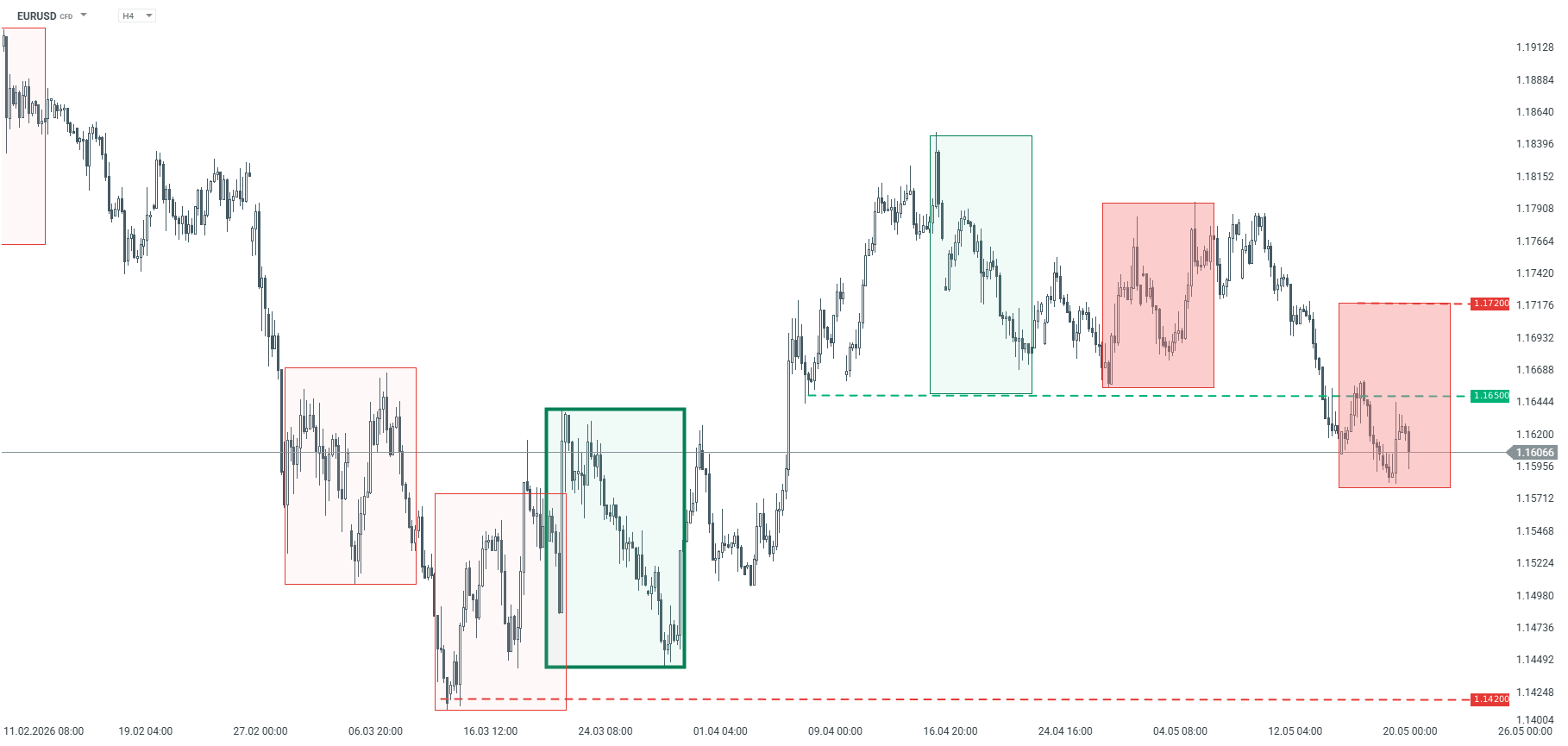
EUR/USD Forecast – Struggles below 1.1700 as bears await 200-EMA breakdown on H4

  • EUR/USD struggles to register any meaningful recovery and hangs near a two-week low.
  • Rising Iran tensions and reviving hawkish Fed bets underpin the USD, capping spot prices.
  • The technical setup seems tilted in favor of bears and backs the case for further losses.

The EUR/USD pair remains on the back foot through the Asian session on Friday and currently trades around the 1.1680-1.1675 region, just above a nearly two-week low touched the previous day.

Despite a temporary extension of the ceasefire, the lack of progress in peace talks due to the US naval blockade of Iranian ports tempers hopes for a durable de-escalation and keeps investors on edge. Furthermore, elevated Crude Oil prices revive inflationary concerns and fuel hawkish USย Federal Reserveย (Fed) expectations. This, in turn, assists the US Dollar (USD) in preserving its gains registered over the past three days and acts as a headwind for the EUR/USD pair.

From a technical perspective, spot prices currently hover around the 200-period Exponential Moving Average (EMA) on the 4-hour chart, keeping the immediate tone neutral after the recent slide from higher levels. However, Thursday’s breakdown below the 38.2%ย Fibonacciย retracement level of the recent upswing from the March swing low favors the EUR/USD bears. Moreover, the Relative Strength Index (RSI) near 32 suggests lingering downside pressure.

Meanwhile, the slightly negative Moving Average Convergence Divergence (MACD) reading reinforces a lack of clear bullish momentum despite the EMA support. In the meantime, any further weakness could find immediate support near the 50.0% Fibonacci retracement at 1.1648. A convincing break below this zone would open the way toward the deeper retracement levels at 1.1600 and 1.1532, ahead of the cycle floor at 1.1445.

On the upside, initial resistance is located at the 38.2% Fibo. retracement at 1.1696, with a break there exposing the next hurdle at the 23.6% retracement at 1.1755. Nevertheless, the broader setup suggests that the path of least resistance forย the EUR/USD pairย is to the downside, and any meaningful recovery attempt is more likely to get sold into.

(The technical analysis of this story was written with the help of an AI tool.)

EUR/USD 4-hour chart

Chart Analysis EUR/USD

US Dollar Price This week

The table below shows the percentage change of US Dollar (USD) against listed major currencies this week. US Dollar was the strongest against the Swiss Franc.

USDEURGBPJPYCADAUDNZDCHF
USD0.52%0.18%0.61%0.18%-0.01%0.14%0.70%
EUR-0.52%-0.33%0.00%-0.32%-0.49%-0.42%0.18%
GBP-0.18%0.33%2.17%0.02%-0.17%-0.09%0.52%
JPY-0.61%0.00%-2.17%-0.43%-0.54%-0.49%0.11%
CAD-0.18%0.32%-0.02%0.43%-0.08%-0.07%0.51%
AUD0.01%0.49%0.17%0.54%0.08%0.15%0.68%
NZD-0.14%0.42%0.09%0.49%0.07%-0.15%0.57%
CHF-0.70%-0.18%-0.52%-0.11%-0.51%-0.68%-0.57%

The heat map shows percentage changes of major currencies against each other. The base currency is picked from the left column, while the quote currency is picked from the top row. For example, if you pick the US Dollar from the left column and move along the horizontal line to the Japanese Yen, the percentage change displayed in the box will represent USD (base)/JPY (quote).


Currency Hedger No Comments

Offshore Yuan Set for Weekly Decline

The offshore yuan weakened past 6.83 per dollar on Friday, heading for its first weekly decline in three weeks, as the greenback continued to strengthen amid little sign of easing in Middle East tensions. President Trump ordered a โ€œshoot and killโ€ against Iranian boats allegedly laying mines in the Strait of Hormuz, injecting fresh volatility into energy markets.

Surging crude costs are already feeding through supply chains, prompting some Chinese exporters to raise prices to offset higher fuel and raw material expenses. In March, several consumer goods categories recorded notable annual costs increases, reversing a prolonged period of relative price stability. Despite these headwinds, analysts remain cautiously optimistic about the yuanโ€™s broader trajectory, noting that Chinaโ€™s substantial domestic energy reserves, along with signs of a steady economic recovery, could help anchor the currency and limit sustained depreciation pressure.

Currency Hedger No Comments

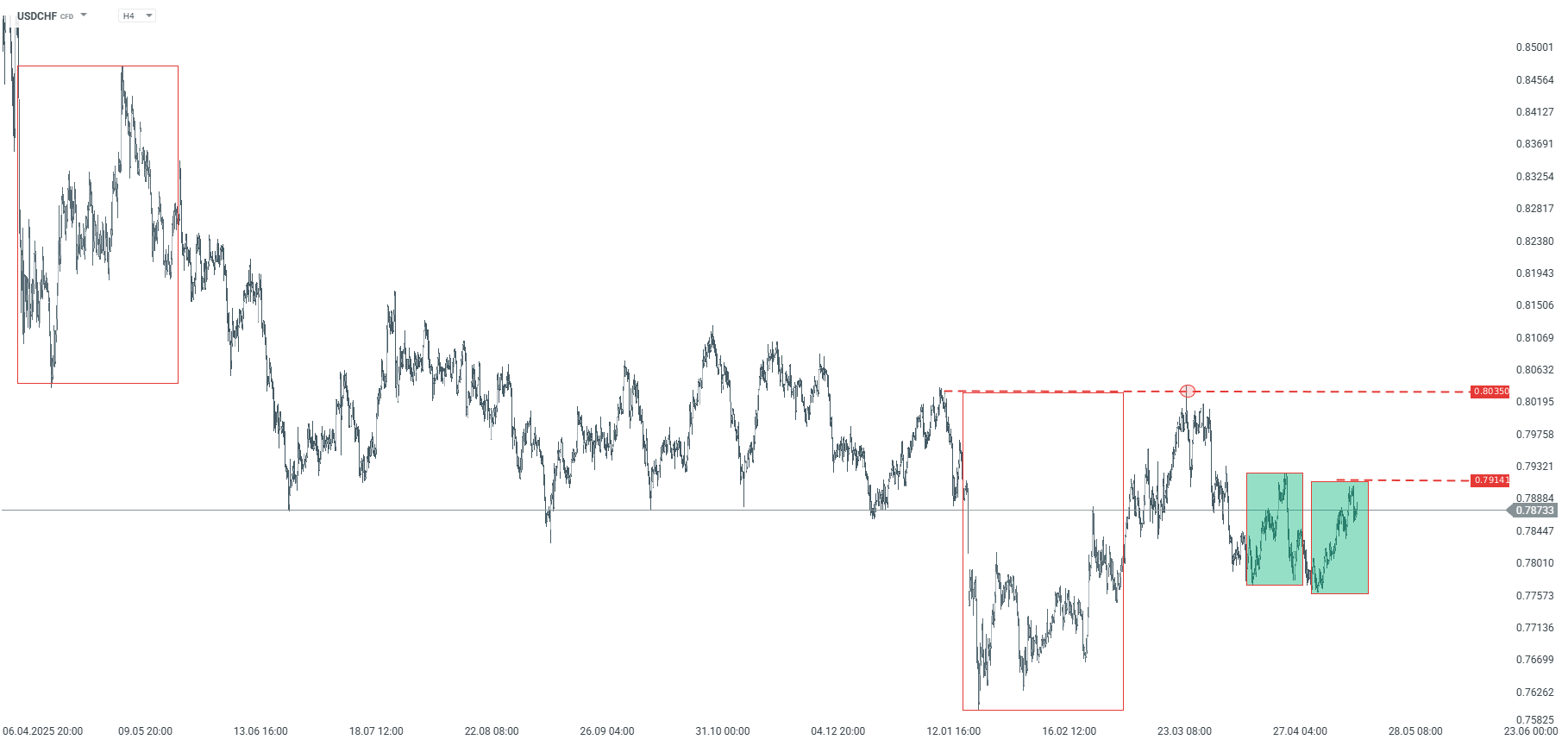
USD/CHF rises toward 0.7900 as renewed risk aversion lifts US Dollar

  • USD/CHF appreciates as the US Dollar gains on safe-haven demand amid persistent USโ€“Iran conflict uncertainty.
  • Israelโ€™s UN ambassador Danny Danon said the Lebanon ceasefire extension is โ€œnot 100%.โ€
  • Markets expect SNB intervention to curb rapid, excessive CHF appreciation.

USD/CHF extends its winning streak for the fourth successive day, trading around 0.7870 during the Asian hours on Friday. The pair gains ground as the US Dollar (USD) receives support from safe-haven demand amid persistent uncertainty surrounding the United States (US)โ€“Iran conflict.

The Guardian reported on Thursday that Lebanon will push for a one-month extension of the current ceasefire with Israel during a second round of direct talks in Washington. Israelโ€™s Ambassador to the United Nations (UN), Danny Danon, said in a CNNย Newsย interview on Friday that the Lebanon ceasefire extension is “not 100%”.

The US military intercepted two Iranian oil supertankers attempting to evade its blockade, as Washington presses ahead with efforts to curb Iranโ€™s shipping, while Tehran continues to threaten vessels in the Strait of Hormuz. US military officials are also preparing contingency plans to target Iranโ€™s capabilities in the Strait should the current ceasefire collapse.

On the US data front. Weekly Initialย Jobless Claimsย rose to 215K from 212K, indicating continued strength in the labor market. Meanwhile, S&P Global PMIs surprised to the upside, with Manufacturing at 54.0 and Services at 51.3, pointing to sustained expansion in business activity.

Earlier this week, Swiss data showed the Trade Surplus narrowed to CHF 2.7 billion in March, down from a downwardly revised six-month high of CHF 4.4 billion in February. Imports jumped 10.1% MoM to a four-month high of CHF 19.6 billion, while exports increased modestly by 1% to CHF 22.4 billion.

The upside ofย the USD/CHF pairย could be restrained as the Swiss Franc (CHF) may find support from safe-haven inflows. Additionally, the CHF may also gain ground as rising concerns over a prolonged energy-driven inflation shock reinforce expectations of a more hawkish Swiss National Bank (SNB). Market participants expect theย SNBย to intervene in FX markets to curb a rapid and excessive appreciation of the CHF.

Currency Hedger No Comments

JPY hangs near two-week low vs USD as Japanโ€™s National CPI fails to impress bulls

  • USD/JPY trades with a positive bias for the fifth straight day and flirts with a nearly two-week top.
  • Economic concerns due to the Hormuz standoff and delayed BoJ rate hike bets undermine the JPY.
  • Less dovish Fed expectations support the USD and the pair, though intervention fears cap the upside.

The USD/JPY pair sticks to its positive bias for the fifth straight day and trades around the 159.80 area, or a nearly two-week top during the Asian session on Friday. Spot prices remain on track to register strong weekly gains, though the mixed fundamental backdrop makes it prudent to wait for a breakout through over a one-month-old range before positioning for a firm near-term direction.

The Japanese Yen (JPY) continues with its relative underperformance amid economic concerns stemming from intensifying tensions in the Middle East, which, along with a bullish US Dollar (USD), acts as a tailwind for the USD/JPY pair. Investors remain skeptical about a durable agreement between the US and Iran amid the lack of progress in peace talks due to the American blockade of Iranian ports. Iran has set the complete removal of the US naval blockade as a strict precondition for resuming negotiations.

Meanwhile, Iran attacked three ships in the Strait of Hormuz on Wednesday and seized two of them. This adds to worries that Japan’s economy will come under substantial strains due to continued disruptions to energy supplies through the strategic waterway. Adding to this, expectations that the Bank of Japan (BoJ) will hold interestย ratesย steady at its upcoming April meeting, bolstered by the latest inflation figures, turn out to be another factor undermining the JPY and supporting the USD/JPY pair.

A government report showed that Japan’s headline Consumer Price Index (CPI) recovered from its lowest level in nearly four years and rose to the 1.5% YoY rate in March. Moreover, the core gauge, which excludes volatile fresh food costs, climbed 1.8% from 1.6% in February, though it remained below the BoJ’s 2% annual target. That said, the Core CPI that excludes both fresh food and fuel costs rose 2.4%, suggesting that price pressures remain sticky and backing the case for an imminentย BoJย rate hike.

The data, however, does little to provide any respite to the JPY bulls. The US Dollar (USD), on the other hand, preserves its gains registered over the past three days amid persistent geopolitical uncertainties and fading dovish USย Federal Reserveย (Fed) bets. This further contributes to a positive tone surrounding the USD/JPY pair. However, speculations that Japanese authorities will step in to stem further weakness in the domestic currency help limit deeper JPY losses and cap gains for the currency pair.

Currency Hedger No Comments

CAD steadies as US Dollar firms on safe-haven demand

  • USD/CAD holds ground as the US Dollar remains firm on safe-haven demand amid persistent USโ€“Iran conflict uncertainty.
  • US intercepted two Iranian supertankers evading its blockade, as Tehran threatens vessels in the Strait of Hormuz.
  • Higher energy prices raise the likelihood of a more hawkish Bank of Canada stance.

USD/CADย remains flat following a three-day winning streak, trading around 1.3700 during the Asian hours on Friday. The pair steadies as the US Dollar (USD) maintains its position as safe-haven demand increases amid persistent uncertainty surrounding the United States (US)โ€“Iran conflict.

Bloomberg reported on Thursday that the US military intercepted two Iranian oil supertankers attempting to evade its blockade, as Washington presses ahead with efforts to curb Iranโ€™s shipping while Tehran continues to threaten vessels in the Strait of Hormuz. US military officials are also preparing contingency plans to target Iranโ€™s capabilities in the Strait should the current ceasefire collapse.

US President Donald Trump warned that if Iran does not move its oil, its infrastructure would be targeted. Iranian officials, however, denied agreeing to any extension of the truce and accused Washington of breaching it by maintaining a naval blockade on Iranian trade.

The Greenback also found additional support from resilient US economic data. Weekly Initialย Jobless Claimsย rose to 215K from 212K, indicating continued strength in the labor market. Meanwhile, S&P Global PMIs surprised to the upside, with Manufacturing at 54.0 and Services at 51.3, pointing to sustained expansion in business activity.

The latest data showed that higher energy prices lifted Canadaโ€™s annual consumer inflation by 0.6% to 2.4% in April, in line with Bank of Canada (BoC) warnings that rising energy costs are feeding into inflation expectations.

Elevated energy prices have increased the likelihood of a more hawkish response from the Bank of Canada. Oil and refined product prices moved sharply higher as commercial vessels transiting the Strait of Hormuz came under attack from both the US and Iran, reinforcing the risk of prolonged disruptions to tanker flows from the region.