

Currency Hedger No Comments

EUR/USD nears weekly highs at 1.1755 as the US Dollar falters

  • EUR/USD extends gains on Friday, approaching weekly highs, at 1.1755.
  • Another alleged Yen intervention has hit the US Dollar on a holiday-thinned market.
  • The Euro bounced up on Thursday amid hot Eurozone inflation and a hawkish hold by the ECB.

The Euroย (EUR) has turned positive against a weaker US Dollar (USD) on Friday, and is trading at 1.1742 at the time of writing, a few pips short of the top of the weekly trading range, at 1.1755. An alleged intervention by Japanese authorities, presumably the second in the last two days, hit the USD/JPY earlier on Friday, hammering the Greenback in thinned Labour Day trading.

The USD/JPY dropped nearly 200 pips in a matter of seconds at the early European session, in a move that reverberated throughout the market, sending the US Dollar lower across the board. The EUR/USD, which hitherto was featuring moderate losses, resumed its positive trend from Thursday’s lows at 1.1655.

The pair regained lost ground on Thursday, as investors prioritised the hot Eurozone inflation figures over the weakening Gross Domestic Product (GDP) figures. Later on, the European Central Bank (ECB) delivered a “hawkish hold,” keeping interestย ratesย unchanged but hinting at a rate hike in the near term.

The ECB’s stance was reaffirmed by theย Bundesbank president and committee member, Joachim Nagel, who said on Friday that the baseline scenario entails a more restrictive monetary policy and flagged the possibility of a rate hike in June.

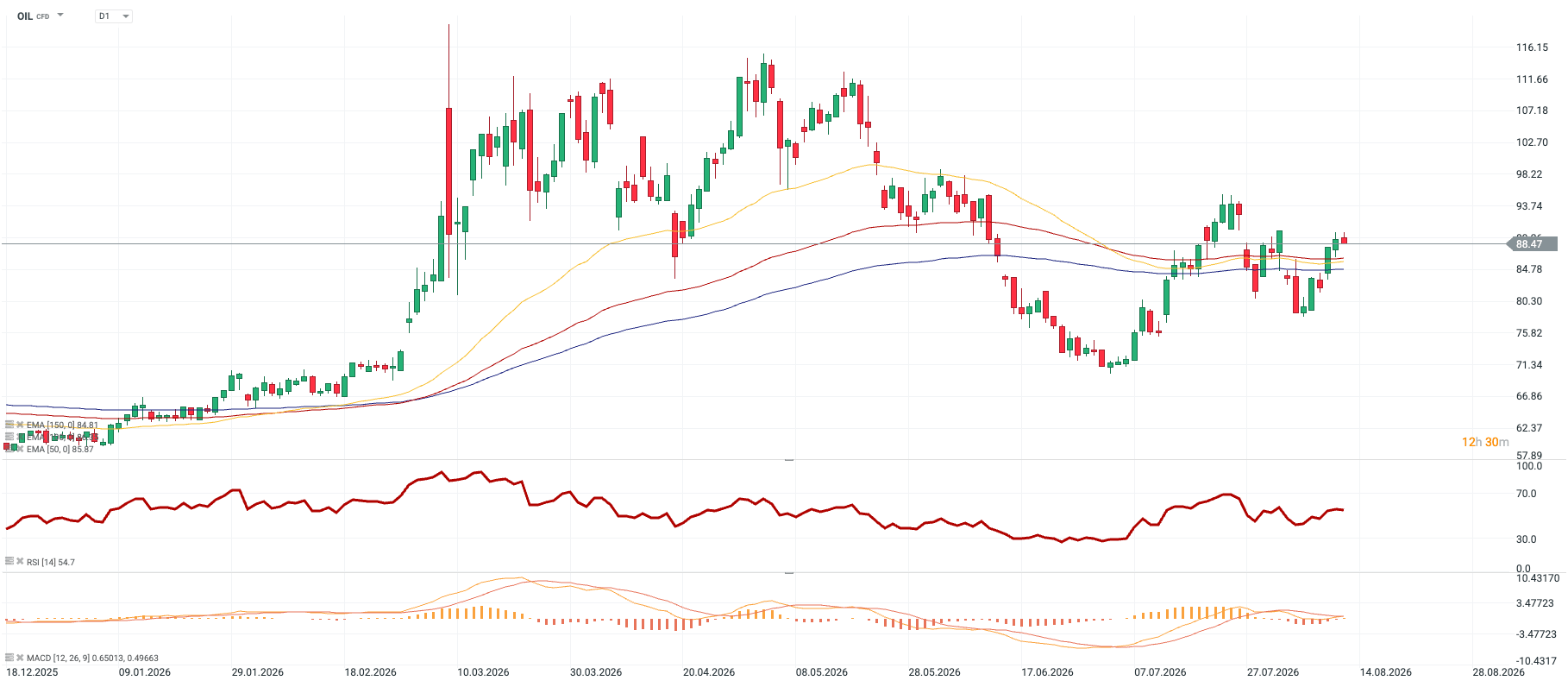
Meanwhile, the situation in the Middle East remains stalled. The US and Iran have continued exchanging threats, with the Strait of Hormuz entering its third month of blockade and no credible plan to reopen it at sight. Oil prices are above the key $100, with Brent Oil at $113.94 at the time of writing, a very painful level forย Eurozoneย Crude-importing economies, which will, highly likely, weigh on the Euro in the long run.

Technical Analysis: EUR/USD keeps looking for direction around 1.1700

EUR/USD Chart Analysis

From a technical perspective, the EUR/USD remains trapped within a broadly 100-pip range, with support above 1.1650 holding bears and upside attempts limited below 1.1750.

Technical indicators on the 4-hour chart are showing an improving momentum. The Relative Strength Index (RSI) reaches the 60 level, and the Moving Average Convergence Divergence (MACD) is showing a widening green histogram, suggesting that the bullish momentum is gathering pace.

Bulls, however, would need to break the mentioned 1.1755 resistance (April 27 high) to confirm that the bearish correction from 1.1850 highs has been completed. Further up, the April 20 high near 1.1790 is likely to test the Euro’s recovery ahead of April’s peak, right below 1.1850.

Bears, on the other hand, are struggling to extend dips below a cluster of supports between 1.1675 and the April 8 intraday low, near 1.1645. A confirmation below here would clear the way to the 61.8%ย Fibonacciย retracement of the early April rally, at 1.1580, and the April 2 and 3 low, near 1.1500.

Currency Hedger No Comments

USD/JPY: Intervention buys time as risks persist โ€“ MUFG

MUFGโ€™s Derek Halpenny argues that recent Japanese authoritiesโ€™ action around the 160 level in USD/JPY likely reflects renewed intervention, with the move seen as buying time for the BoJ and government as they face Middle East uncertainty and domestic cost-of-living concerns. He warns that with yen shorts less extended and global yields rising, USD/JPY could rebound quickly if energy prices or geopolitical risks escalate.

BoJ action seen as time-buying move

“The five-big figure drop in USD/JPY is far too big a move on just rhetoric and the report from the Nikkei that intervention took place points strongly to intervention.”

“What this intervention does is provide some time for theย BoJย to assess the uncertainties related to the conflict in the Middle East. There was an understandable reluctance to hikeย this weekย due to the lack of clarity and that reluctance coupled with theย Fedย being more hawkish opened up scope for a de-stabilising yen sell-off, possibly next week when Japan will be on vacation for Golden Week โ€“ Monday through Wednesday next week is a Japan holiday.”

“But with yen shorts not as extensive as in past intervention episodes there is a danger that this action does not have a lasting impact. An escalation in the conflict and/or a further rise in energy prices could see USD/JPY rebound quickly.”

“MoF yen-buying intervention in Oct 2022 and July 2024 were successful for a period as the action coincided with or was soon followed by a decline in US yields. At the time of the intervention in Apr/May 2024 US yields did not decline and intervention was required again by July.”

Currency Hedger No Comments

Pound Sterling edges down, remains broadly firm amid hawkish BoE prospects

  • The Pound Sterling ticks lower but is broadly upbeat amid expectations of a BoE interest rate hike in the near term.
  • BoEโ€™s Bailey calls for a possible interest rate hike to avoid second-round effects of inflation from emerging.
  • The US Dollar trades with caution ahead of the US ISM Manufacturing PMI data for April.

The Pound Sterling (GBP) ticks lower against its major currency peers, trading marginally down to near 1.3590 against the US Dollar (USD) during the European trading session on Friday. However, the British currency is broadly upbeat amid the speculation that the Bank of England (BoE) will deliver an interest rate hike in upcoming policy meetings.

Pound Sterling Price Today

The table below shows the percentage change of British Pound (GBP) against listed major currencies today. British Pound was the weakest against the Japanese Yen.

USDEURGBPJPYCADAUDNZDCHF
USD-0.02%0.06%-0.05%-0.03%0.20%0.32%-0.02%
EUR0.02%0.07%-0.04%-0.03%0.22%0.32%-0.01%
GBP-0.06%-0.07%-0.11%-0.09%0.12%0.27%-0.06%
JPY0.05%0.04%0.11%0.00%0.23%0.32%0.02%
CAD0.03%0.03%0.09%-0.01%0.22%0.34%0.03%
AUD-0.20%-0.22%-0.12%-0.23%-0.22%0.11%-0.21%
NZD-0.32%-0.32%-0.27%-0.32%-0.34%-0.11%-0.31%
CHF0.02%0.00%0.06%-0.02%-0.03%0.21%0.31%

The heat map shows percentage changes of major currencies against each other. The base currency is picked from the left column, while the quote currency is picked from the top row. For example, if you pick the British Pound from the left column and move along the horizontal line to the US Dollar, the percentage change displayed in the box will represent GBP (base)/USD (quote).

Hawkish BoE prospects are backed by remarks from BoE Governor Andrew Bailey, in a press conference after the policy meeting on Thursday, pointing to hiking interest rates before elevated energy prices-driven inflation starts showing second-round effects.

โ€œA prolonged spike in energy prices could lead to a higher bank rate,โ€ BoEโ€™s Bailey said, adding, โ€œIt would be a mistake to wait to see the second-round effects before acting because then it would be too late,โ€ Reuters reported.

In the policy meeting, the BoE left interest rates unchanged at 3.75%, as expected, for the third meeting in a row. Out of the nine members-led Monetary Policy Committee (MPC),ย BoEย Chief Economist Huw Pill dissented from the decision to hold interest rates, and voted in favor of an interest rate hike.

The United Kingdom (UK) Consumer Price Index (CPI) data for March showed that the headline inflation accelerated to 3.3% Year-on-Year (YoY).

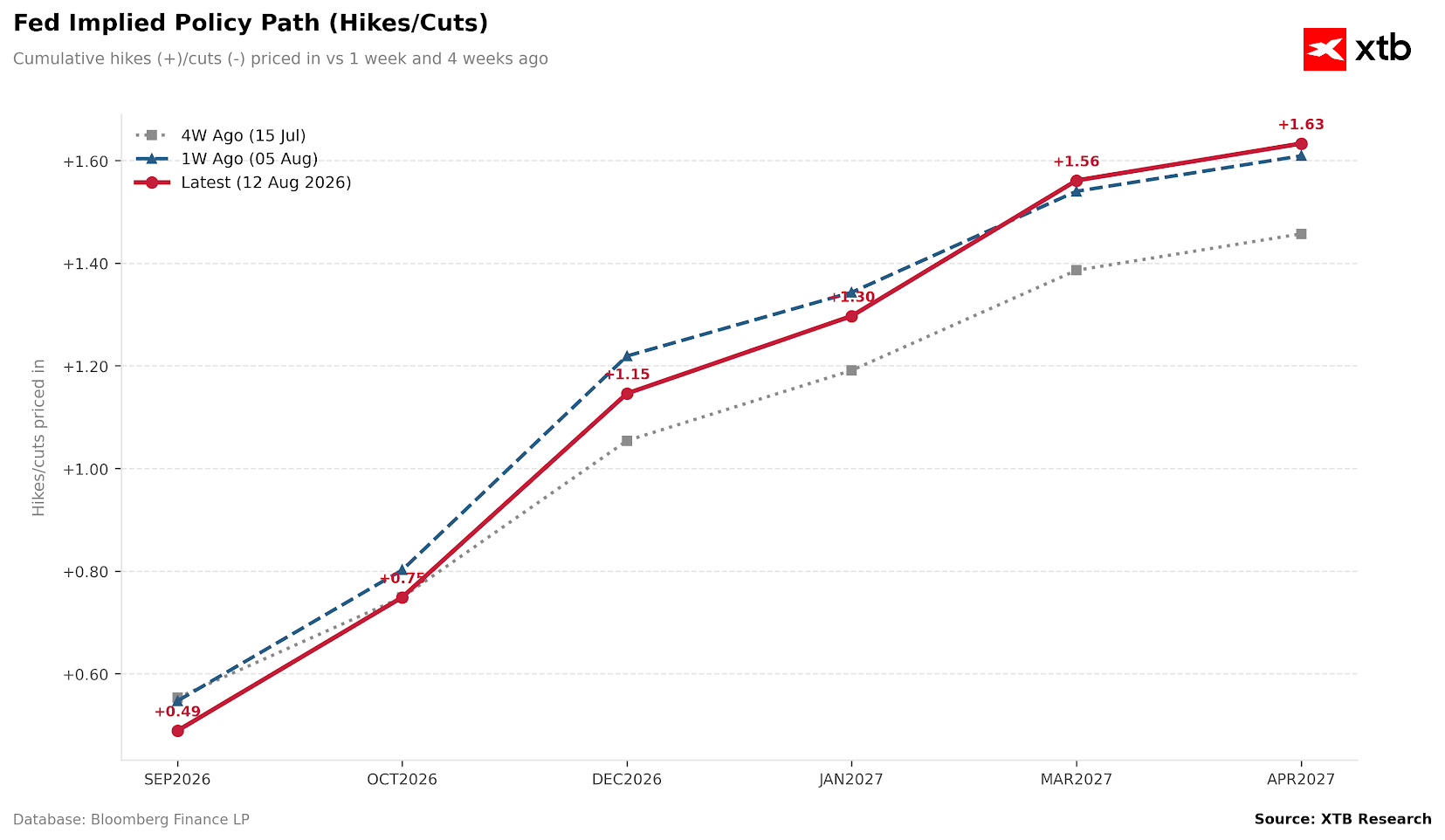
Meanwhile, the US Dollar (USD) trades cautiously even as theย Federal Reserveย (Fed) is expected to hold interest rates at their current levels for the entire year. According to the CME FedWatch tool, the odds of the Fed keeping interestย ratesย unchanged in the current range of 3.50%-3.75% by the year end is 83.6%.

In Fridayโ€™s session, investors will focus on the US ISM Manufacturing Purchasing Managersโ€™ Index (PMI) data for April, which will be published at 14:00 GMT.

Currency Hedger No Comments

Chart of The Day – Intervention on the Yen? Tokyo Challenges Speculators

Key takeaways

  • Intervention at 160: Breaking the psychological USDJPY barrier forced Tokyo to act, pushing the rate down to 155 amid low liquidity during Golden Week.
  • Buying Time: Market interventions provide only temporary relief; a long-term trend reversal requires BoJ rate hikes and a shift in U.S. dollar strength.
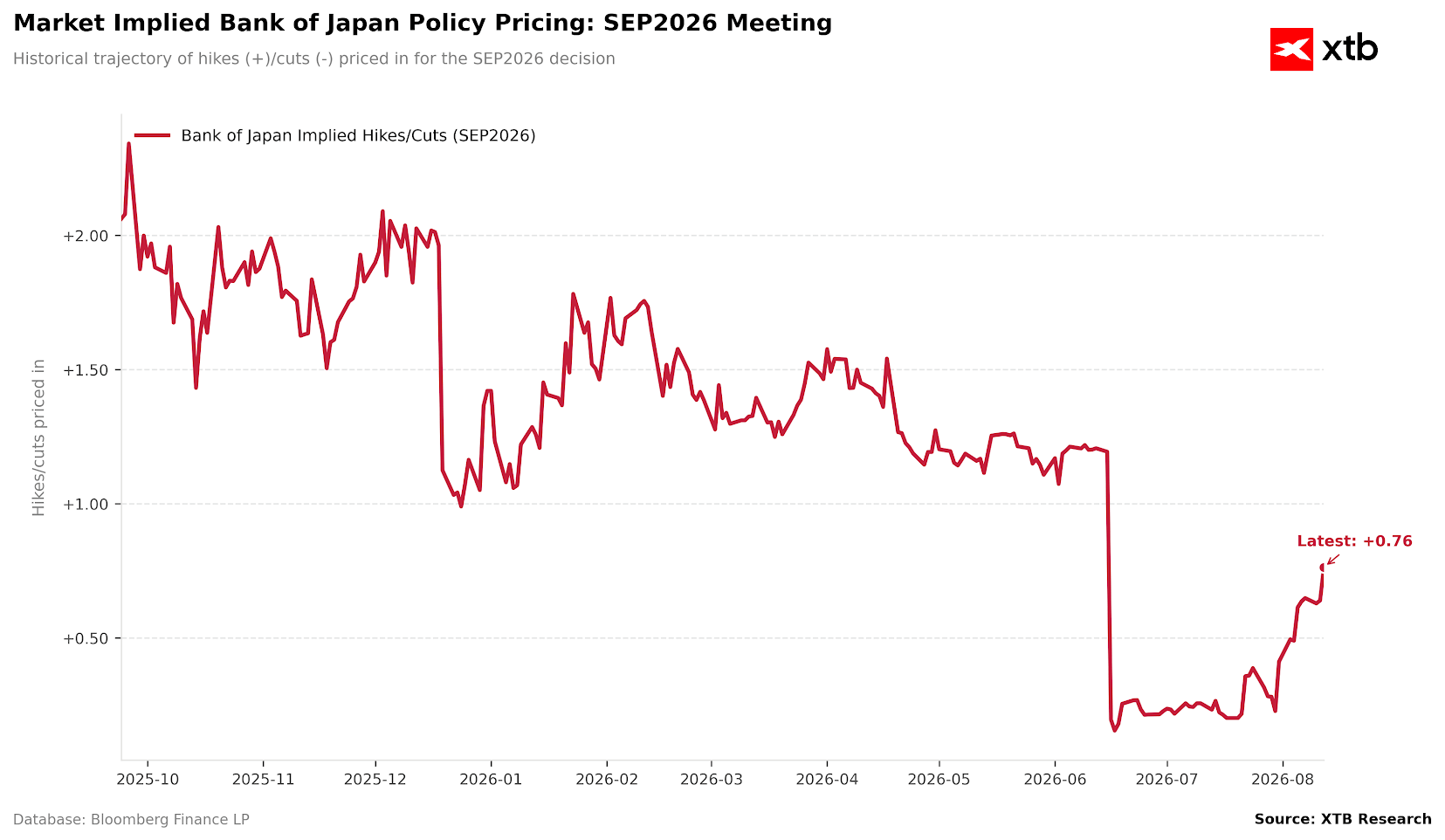
  • Path to 1.0%: Despite the slow pace, high inflation and a weak yen are fueling a hawkish shift within the BoJ, with eyes on a 1.0% rate later in 2026.

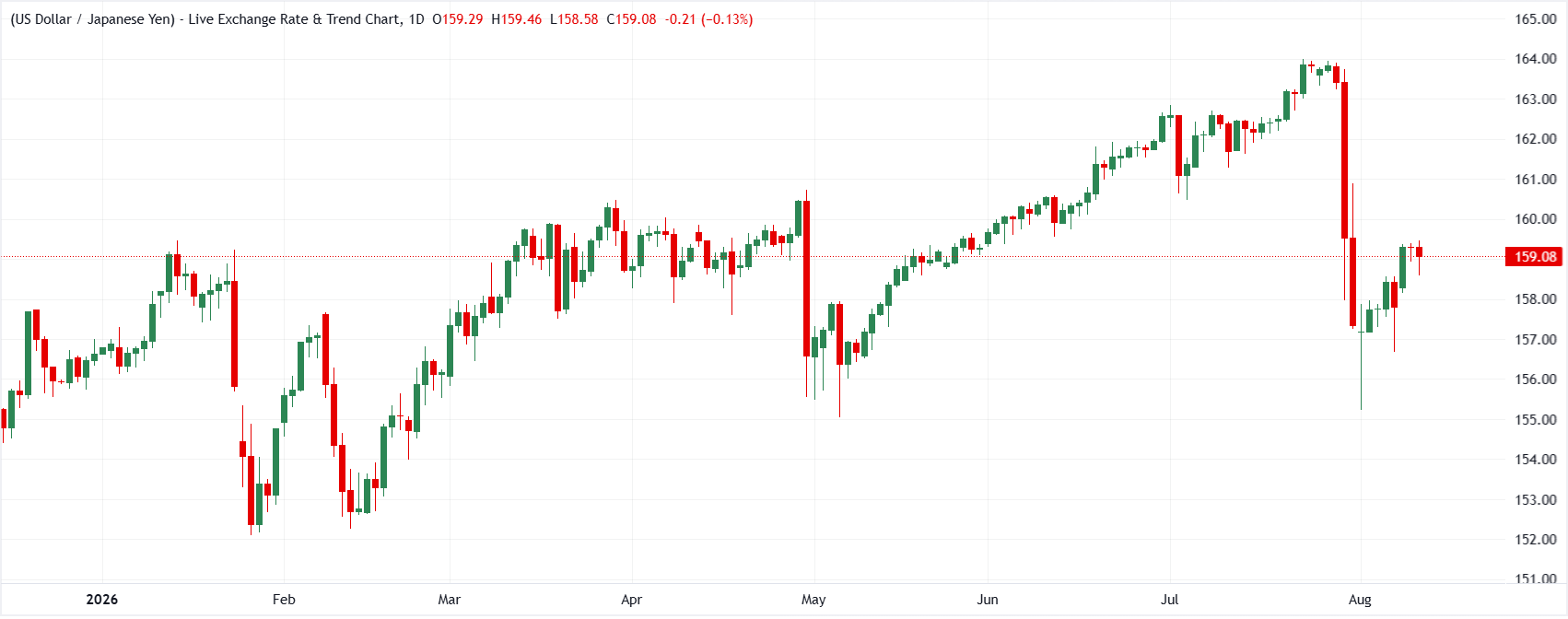
Japan has once again found itself at the center of attention in global financial markets. Massive problems related to the energy crisis, high bond yields, prospects of resurgent inflation, and economic slowdown have led to another wave of yen sell-offs. Ultimately, when USDJPY once again broke through the 160 level, a currency intervention most likely took place. Although there has been no direct confirmation yet and we must wait for official, significantly delayed data from the Ministry of Finance, officials are confirming the situation between the lines and announcing a possible further fight against speculators.

A Repeat of the Past: What Happened on April 30th?

The final session of April brought dramatic scenarios. The USDJPY pair once again breached the psychological 160 barrier , triggering an avalanche of orders and forcing Tokyo to act. We quickly observed a strengthening of the yen, and the USDJPY pair dropped to the 155 level. Such a sharp move occurred during a period of low liquidityโ€”the Golden Week in Japan. It is also worth noting that this move coincided with record highs on the June Brent crude oil contract, which also dropped significantly at the moment of the Japanese intervention.

Golden Week is a 7-day period at the turn of April and May, featuring four national holidays. Authorities in Tokyo, led by Atsushi Mimura, sent a clear signal: “Golden Week” will not be a safe haven for speculation. History of Interventions: Is This a Good Time for the Yen? (2022โ€“2024) Japan has a rich, albeit bittersweet history of fighting market trends. Recent history shows that interventions are an effective “emergency brake,” but they rarely change the direction of travel in the long term. It is also worth remembering that there were years when the Ministry of Finance sold the yen due to excessive strength to boost export power.

History of recent interventions:

  • September/October 2022: The first large-scale market operations in decades conducted at a record-weak yen. The result was approximately a 15% strengthening of the yen against the dollar, a move that lasted about 3 months. USDJPY returned to the October 2022 peaks after about 10 months.
  • April/May 2024: Action aimed at defending the previous 2022 peaks and the approach to the psychological level of 160 USDJPY. It brought immediate success, and the situation on the currency pair only stabilized longer-term following dovish signals from the U.S. Federal Reserve (Fed).
  • July 2024: Another strike against speculators, this time supported by hawkish rhetoric from the Bank of Japan. The effect was much more lasting than in previous cases because the intervention was accompanied by an actual interest rate hike by the BoJ. On the other hand, the downward move lasted 2 months and amounted to approximately 13.5% on the USDJPY pair.

What is the conclusion? Intervention alone is only “buying time.” Real change depends on the divergence (or lack thereof) between the policies of the Bank of Japan and the U.S. Federal Reserve.

It is worth noting that the spread should have clearly favored the yen for nearly a year now , but the rise in yields in Japan is a result not only of higher interest rates but primarily concerns regarding the massive debt situation and further fiscal expansion plans. Source: Bloomberg Finance LP, XTB

โ€‹โ€‹โ€‹โ€‹โ€‹โ€‹โ€‹Furthermore, after the previous intervention in 2024, speculators changed their stance and a sharp short-squeeze on the yen began, with the market shifting from a net negative to a positive positioning for the first time since 2016. Currently, however, we are seeing an increase in short positions to almost the extreme high levels of 2024 or 2007. Source: xStation5

Bank of Japan Strategy: An Extremely Slow March Toward Normalization

While the Ministry of Finance fights on the front line with billions of dollars from reserves, the Bank of Japan (BoJ) is conducting an operation to normalize monetary policy after decades of maintaining extremely low interest rates. Nevertheless, due to the state of the Japanese economy, this process is very slow.

  • Where are we? After the December hike in 2025, the main interest rate in Japan stands at 0.75% โ€”its highest level in three decades, yet still one of the lowest in the world. Japan is still being used for carry trade transactions.
  • Divisions in the board: Recent meetings have shown a growing hawkish camp. As many as three out of nine board members favor an immediate move to the 1.0% level. This means that the probability of a hike this year is high.
  • Inflationary pressure: The BoJ forecasts core inflation (core CPI) for 2026 at 2.8%, which, with current rates, means that real interest rates remain deeply negative.

Whatโ€™s Next for Rates? The base scenario assumes that the BoJ will raise rates to 1.0% still in 2026. The weak yen is a key catalyst here: expensive energy and food imports are draining the wallets of the Japanese people, becoming a political issue that the central bank cannot ignore.

Does the Yen Have a Chance for a Permanent Recovery?

The intervention at the end of April is a clear sign that Tokyo’s threshold of patience lies around the 160 level. However, the fundamentals remain relentless. For the yen to gain value permanently, the market must believe in two factors: a change in BoJ communication to a more hawkish tone , which must be handled cautiously to avoid a crisis in yields; and a change in sentiment regarding the dollar. If the crisis in the Strait of Hormuz ends, the dollar will no longer be as necessary as a safe haven. On the other hand, if the Fed begins to communicate possible hikes, USDJPY could permanently find itself above 160.

โ€‹โ€‹โ€‹โ€‹โ€‹โ€‹โ€‹The pair is currently in an important area of potential extreme overbought conditions. Interventions would need to be carried out regularly, and additionally, we would need to see a fundamental shift on both the Japanese and global sides. Source: xStation5

Currency Hedger No Comments

USD/JPY – Holds above 157.00; bulls seem hesitant amid intervention fears

  • USD/JPY moves away from a two-month low following the release of a softer Tokyo CPI print.
  • A modest USD uptick further supports spot prices, though intervention risks cap the upside.
  • The mixed technical setup warrants caution before positioning for any further appreciation.

The USD/JPY pair builds on the previous day’s late rebound from the vicinity of mid-155.00s, or over a two-month trough, and gains some positive traction during the Asian session on Friday. Spot prices touched a daily high near the 157.55 region, though the lack of follow-through buying warrants some caution for bullish traders.

The Japanese Yen (JPY) weakens across as softer consumer inflation figures from Tokyo โ€“ Japan’s capital city โ€“ give the Bank of Japan (BoJ) reasons to pause amid economic concerns due to Middle East tensions. Apart from this, a modest US Dollar (USD) uptick turns out to be another factor offering support to the USD/JPY pair. Meanwhile, Japanโ€™s top foreign exchange diplomat, Atsushi Mimura, reiterated that officials are in close contact with the US on currency. This keeps intervention risks in play and limits JPY losses, capping the currency pair.

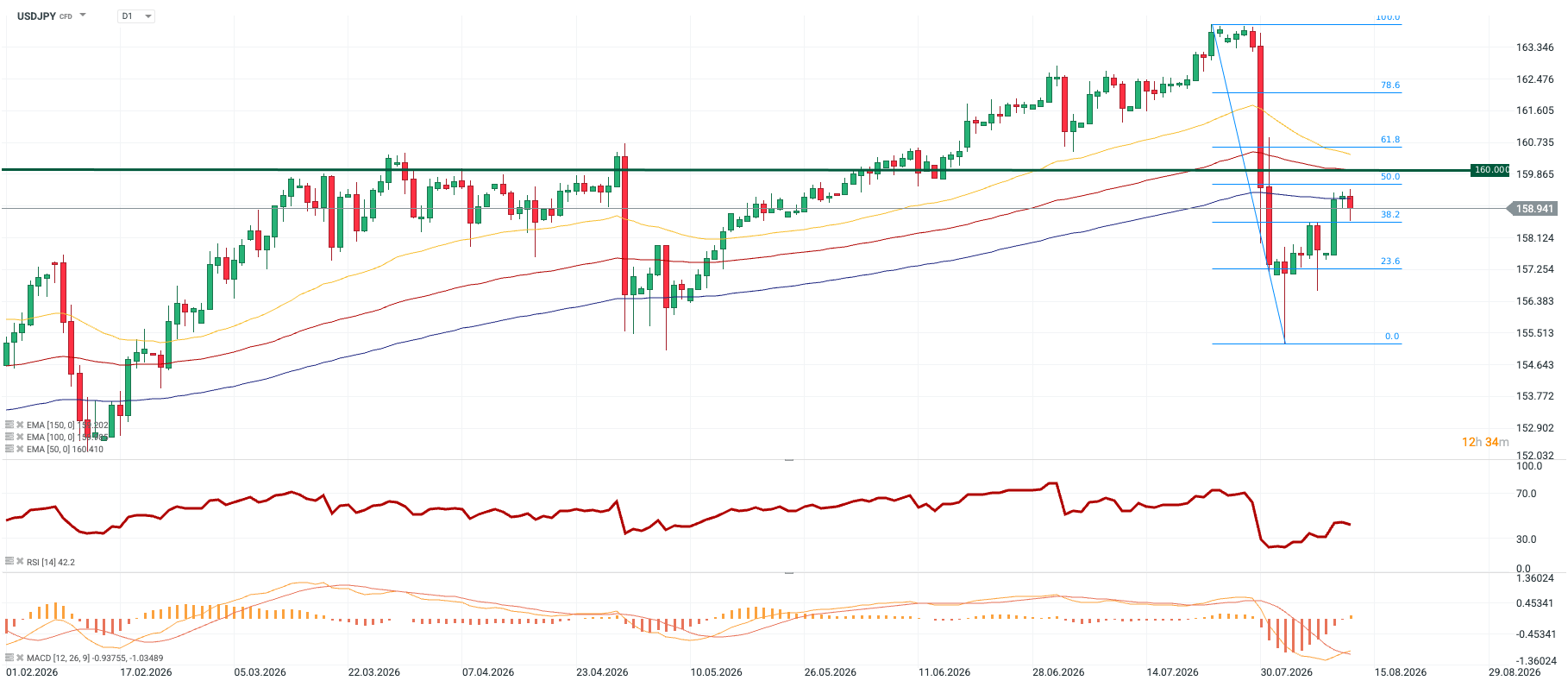
From a technical perspective, Thursday’s steep intraday decline from the 160.75 area, or the highest level since July 2024, stalled near the 61.8%ย Fibonacciย retracement level of the February-April upswing. Moreover, the USD/JPY pair, so far, has held above the 200-day Exponential Moving Average (EMA), which, in turn, keeps bearish traders on the back foot. However, a softening Relative Strength Index (RSI) near 40, alongside a negative Moving Average Convergence Divergence (MACD) reading below zero, suggests downside pressure persists.

Hence, recovery attempts are likely to face supply on further rise towards initial resistance at the 38.2% retracement near 157.48. That said, a sustained strength beyond would expose the 23.6% retracement at 158.73 and then the 160.75 cycle high.

On the downside, immediate support emerges at the 50.0% retracement near 156.47, followed by the 61.8% retracement at 155.47 and the 200-day EMA at 155.21. A clear loss of this area would open the way toward deeper Fibonacci support at 154.03 and the 152.20 swing low.

(The technical analysis of this story was written with the help of an AI tool.)

USD/JPY daily chart

Chart Analysis USD/JPY

Japanese Yen Price Today

The table below shows the percentage change of Japanese Yen (JPY) against listed major currencies today. Japanese Yen was the strongest against the New Zealand Dollar.

USDEURGBPJPYCADAUDNZDCHF
USD0.03%0.05%0.39%0.03%0.13%0.24%0.07%
EUR-0.03%0.00%0.37%-0.02%0.11%0.20%0.04%
GBP-0.05%-0.01%0.34%0.00%0.08%0.18%0.05%
JPY-0.39%-0.37%-0.34%-0.36%-0.27%-0.18%-0.31%
CAD-0.03%0.02%0.00%0.36%0.09%0.21%0.05%
AUD-0.13%-0.11%-0.08%0.27%-0.09%0.11%-0.02%
NZD-0.24%-0.20%-0.18%0.18%-0.21%-0.11%-0.15%
CHF-0.07%-0.04%-0.05%0.31%-0.05%0.02%0.15%

The heat map shows percentage changes of major currencies against each other. The base currency is picked from the left column, while the quote currency is picked from the top row. For example, if you pick the Japanese Yen from the left column and move along the horizontal line to the US Dollar, the percentage change displayed in the box will represent JPY (base)/USD (quote).

Currency Hedger No Comments

EUR/GBP flat lines above 0.8600 as ECB and BoE keep interest rates unchanged

  • EUR/GBP steadies near 0.8625 in Fridayโ€™s early European session.ย 
  • The European Central Bank kept interest rates on hold at its April meeting.ย 
  • The Bank of England left interest rates unchanged at 3.75% on Thursday.ย ย 

Theย EUR/GBPย cross holds steady around 0.8625 during the early European session on Friday. The European Central Bank (ECB) and the Bank of England (BoE) warned they may need to raise interest rates in the coming months, as central banks grapple with the energy shock triggered by the war in the Middle East.

The ECB governing council opted to hold its benchmark deposit facility rate at 2% on Thursday. According to the statement, the central bank said the inflationย outlookย was largely unchanged. “The upside risks to inflation and the downside risks to growth have intensified.โ€

ECB Presidentย Christine Lagardeย said the central bankโ€™s governing council had discussed a rate rise this month โ€œat length and in depthโ€ before voting for a hold. However, policymakers would closely monitor the situation and take a data-dependent and meeting-by-meeting approach to determining their monetary policy stance. ย 

On the UKโ€™s front, the Bank of England (BoE) held interestย ratesย at 3.75%ย as uncertainty over the Iran war continues.ย BoEย Governor Andrew Bailey said if price pressures triggered by the conflict proved to be severe, a โ€œforceful tighteningโ€ would be required.

Bailey on Thursday played down fears of near-term rate hikes but added: โ€œWeโ€™ll continue to monitor the situation and its impact on the UK economy very closely.โ€

Currency Hedger No Comments

USD/CAD – Descending 20-day EMA supports more downside

  • USD/CAD trades cautiously around 1.3580 amid the US Dollarโ€™s underperformance.
  • Investors await Fed speeches for fresh cues on the US interest rate outlook.
  • The BoC opens the door for interest rate hikes amid upside inflation risks.

The USD/CAD pair trades with caution near Thursdayโ€™s low at around 1.3580 during the late Asian trading session on Friday. The Loonie pair trades weakly as the US Dollar (USD) is broadly under pressure, following Japanese intervention in the forex markets.

During the press time, the US Dollar Index (DXY), which tracks the Greenbackโ€™s value against six major currencies, is marginally higher to near 98.20, but is close to its 10-day low of 98.00.

US Dollar Price This week

The table below shows the percentage change of US Dollar (USD) against listed major currencies this week. US Dollar was the weakest against the Japanese Yen.

USDEURGBPJPYCADAUDNZDCHF
USD-0.25%-0.62%-1.43%-0.70%-0.82%-0.45%-0.59%
EUR0.25%-0.35%-1.25%-0.43%-0.55%-0.18%-0.32%
GBP0.62%0.35%-0.88%-0.07%-0.20%0.17%0.03%
JPY1.43%1.25%0.88%0.80%0.66%1.11%0.93%
CAD0.70%0.43%0.07%-0.80%-0.08%0.31%0.11%
AUD0.82%0.55%0.20%-0.66%0.08%0.38%0.24%
NZD0.45%0.18%-0.17%-1.11%-0.31%-0.38%-0.14%
CHF0.59%0.32%-0.03%-0.93%-0.11%-0.24%0.14%

The heat map shows percentage changes of major currencies against each other. The base currency is picked from the left column, while the quote currency is picked from the top row. For example, if you pick the US Dollar from the left column and move along the horizontal line to the Japanese Yen, the percentage change displayed in the box will represent USD (base)/JPY (quote).

The next major trigger for the US Dollar will be commentaries from a slew ofย Federal Reserveย (Fed) officials as the blackout period has ended after the monetary policy announcement on Wednesday.

In the policy meeting, the Fed decided to leave interestย ratesย unchanged in the range of 3.50%-3.75%, as expected, with an 8-4 majority. Four members dissented from the hold decision, of which three called for a move away from the easing bias.

Meanwhile, the Canadian Dollar (CAD) outperforms as the Bank of Canada (BoC) warned on Wednesday that interest rates could rise, with energy prices remaining higher.

USD/CAD technical analysis

USD/CADย trades close to Thursday’s low at around 1.3580 at the press time. The pair holds a bearish near-term bias as spot remains capped beneath the 20-day Exponential Moving Average (EMA) at 1.3698 and a Fibonacci-heavy resistance band starting at the 61.8% retracement near 1.3667.

A shift in the Relative Strength Index (14) below 40.00 warrants fresh downside momentum with no oversold signals in sight.

On the downside, the pair could slide towards the March 9 low of 1.3525 and the swing low at 1.3482 if it fails to hold the 78.6%ย Fibonacciย retracement at 1.3585.

On the topside, a recovery would first face resistance at the 61.8% retracement at 1.3667, followed by the 20-day EMA at 1.3698 and the 50% retracement near 1.3725; only a sustained break above this cluster would ease the current bearish tone and open the way toward higher retracement barriers at 1.3782 and 1.3853.

Currency Hedger No Comments

USD/CHF remains above 0.7800 as US Dollar gains on risk-off mood

  • USD/CHF rises as the US Dollar strengthens on safe-haven demand after Trump vowed to maintain the Iran port blockade.
  • US Core PCE rose 3.2% YoY, up from 3% in February and in line with forecasts.
  • Thursday’s ZEW Swiss Expectations rose to -30.3 in April from -35.0, recovering from a six-month low.

USD/CHF inches higher after posting 1.25% losses in the previous day, trading around 0.7820 during the Asian hours on Friday. The pair gains ground as the safe-haven demand supports the US Dollar (USD) against its major peers.

Market sentiment remains cautious after Bloomberg reported on Thursday that US President Donald Trump stated he would continue the naval blockade of Iranian ports, amid concerns that the strategically important Strait of Hormuz may not reopen in the near term. Trump also criticized congressional efforts aimed at restricting his war powers, including a recent Senate proposal that was rejected earlier in the day.

On Thursday, data showed that the US Personal Consumption Expenditures (PCE) Price Index rose to 3.5% in March from 2.8% in February, in line with market expectations. On a monthly basis, the index increased by 0.7%. The core PCE Price Index, the Federal Reserveโ€™s (Fed) preferred inflation gauge excluding volatile food and energy components, advanced 3.2% YoY, following a 3% rise in February and matching analystsโ€™ forecasts.

Meanwhile, preliminary Gross Domestic Product (GDP) Annualized expanded by 2.0% in Q1 2026, falling short of the 2.3% market expectation but improving from the previous 0.5% growth.

On the Swiss side, the KOF Leading Indicator rose to 97.9 in April 2026 from 95.6 in March, beating the 95.9 forecast on gains in manufacturing, services, and consumption, data showed on Thursday.

Earlierย this week, the ZEW Swiss Survey Expectations improved to -30.3 in April from -35.0 in March, a six-month low. More than half of respondents expect theย outlookย to remain stable over the next six months, while slightly over a third anticipate deterioration.