

Currency Hedger No Comments

CAD sits near its highest level since March 11 vs USD amid elevated Oil prices

  • USD/CAD remains depressed as elevated Crude Oil prices continue to underpin the Loonie.
  • The Fedโ€™s hawkish tilt and the US-Iran stalemate support the USD, limiting losses for the pair.
  • Spot prices seem poised to post losses for the fourth week as traders look to the US ISM PMI.

The USD/CAD pair enters a bearish consolidation phase after touching a fresh low since March 11 during the Asian session on Friday, and currently trades around the 1.3575 region. Nevertheless, spot prices remain on track to register losses for the fourth straight week.

Crude Oil prices stall the previous day’s retracement slide from a nearly four-week top amid persistent geopolitical uncertainties due to stalled US-Iran peace talks. In fact, US President Donald Trump rejected an Iranian proposal to open the Strait of Hormuz and lift the blockade, while postponing nuclear issues to a later stage. Trump further said that he’s going to keep Iran under a naval blockade until the regime agrees to a deal that addresses US concerns about its nuclear program.

Moreover, reports suggest that the US is considering new military strikes on Iran, which acts as a tailwind for the black liquid. This, in turn, is seen underpinning the commodity-linked Loonie and capping the USD/CAD pair. Meanwhile, the US Dollar (USD) recovers slightly following the overnight slump to a one-and-a-half week low amid the US-Iran stalemate and the Federal Reserve’s (Fed) hawkish tilt. This offers some support to the currency pair and helps limit the downside.

The Fed’s decision on Wednesday to hold its key policy rate unchanged at 3.50%-3.75% saw three policymakers voting against the accommodative tone in the policy statement. Adding to this, the Advance US GDP report released on Thursday pointed to continued economic resilience, while the US Personal Consumption Expenditures (PCE) Price Index showed that inflation accelerated in March. The data reaffirms bets that theย Fedย could keepย ratesย unchanged and supports the USD.

Traders, however, are still pricing in a small possibility that the US central bank will lower borrowing costs by the end of this year. The expectations, in turn, hold the USD bulls on the back foot, warranting some caution before positioning for any meaningful recovery for theย USD/CADย pair. Traders now look forward to the release of the US ISMย Manufacturing PMIย for some impetus heading into the weekend.

Currency Hedger No Comments

EUR/USD Price Holds onto gains near 1.1730

  • EUR/USD trades firmly near 1.1735 amid weakness in the US Dollar.
  • Investors await the ECB commentaries and the US ISM Manufacturing PMI data for April.
  • The US GDP growth remained at 2% on an annualized basis in the first quarter of the year.

The EUR/USD pair clings to Thursdayโ€™s gains near 1.1735 during the Asian trading session on Friday. The major currency pair reflects strength as the US Dollar (USD) holds onto the previous dayโ€™s losses, which were driven by suspected Japanโ€™s intervention in forex markets.

During the press time, the US Dollar Index (DXY), which tracks the Greenbackโ€™s value against six major currencies, trades weakly near Thursdayโ€™s low around 98.00.

On Thursday, the US preliminary Q1 Gross Domestic Product (GDP) data arrived weaker than projected. The US Bureau of Economic Analysis (BEA) reported that the economy grew at an annualized pace of 2%, slower than 2.3% estimates.

Meanwhile, investors await the US ISMย Manufacturing PMIย data for April, which will be published at 14:00 GMT. The Manufacturing PMI is expected to arrive higher at 53.0 from the previous reading of 52.7.

During the Asian trade,ย the Euroย (EUR) trades broadly firm, with investors awaiting commentaries from a slew of European Central Bank (ECB) officials, following the completion of the so-called quiet period after the monetary policy announcement on Thursday.

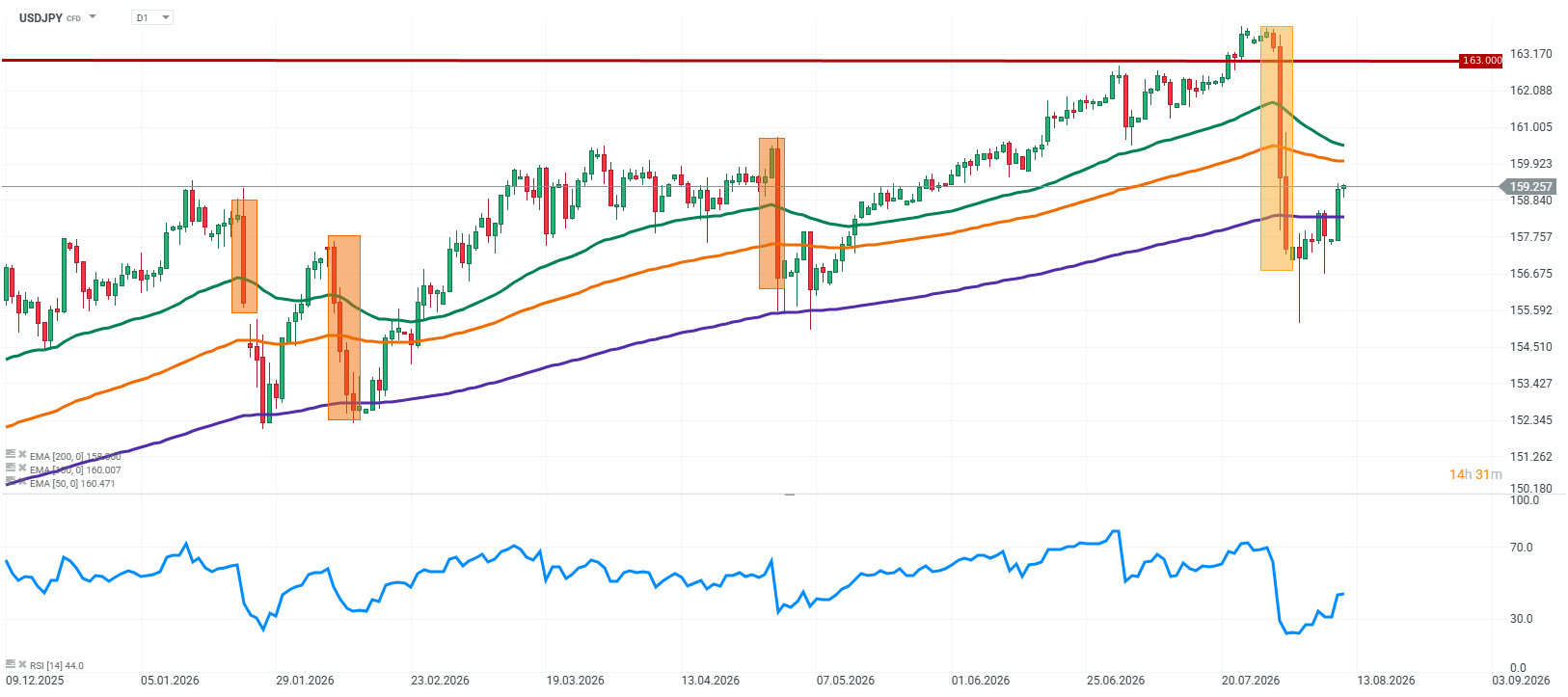
USD/JPY technical analysis

EUR/USD trades firmly at around 1.1735, holding a mildly bullish bias as it sits above the 20-period exponential moving average (EMA) at 1.1702 and between key Fibonacci retracement levels of the latest swing. The pair is hovering just under the 50.0% retracement at 1.1745, suggesting topside progress is slowing but not yet reversing, while the Relative Strength Index (RSI) around 55 hints at constructive, yet not overextended, upside momentum.

On the topside, immediate resistance is located at the 50.0% Fibonacci retracement at 1.1745, followed by the 61.8% level at 1.1825, with further barriers at 1.1938 and 1.2082. On the downside, initial support is provided by the 20-period EMA at 1.1702, ahead of the 38.2%ย Fibonacciย level at 1.1666; a deeper pullback would expose the 23.6% retracement at 1.1567, with the cycle low near 1.1408 acting as a more distant structural floor.

Currency Hedger No Comments

EUR/JPY remains stronger near 184.50 following Tokyo inflation data

  • EUR/JPY rises as the Japanese Yen weakens after mixed Tokyo inflation data.
  • Tokyo CPI rose 1.5% YoY in April; core CPI also 1.5%, missing the 1.8% forecast.
  • The ECB kept the deposit rate at 2% despite rising Eurozone inflation driven by the Iran conflict.

EUR/JPY gains ground after registering 1.88% losses in the previous day, trading around 184.40 during the Asian hours on Friday. The currency cross advances as the Japanese Yen (JPY) weakens following mixed Tokyo inflation data.

Japanโ€™s Statistics Bureau reported Friday that Tokyoโ€™s headline Consumer Price Index (CPI) rose 1.5% year-over-year (YoY) in April, up from 1.4% prior. Core CPI (excluding fresh food) also increased 1.5% YoY, missing the 1.8% forecast and down from 1.7% previously. Meanwhile, CPI excluding fresh food and energy eased to 1.5% from 1.7%.

The JPY found some support against major peers after suspected intervention by Tokyo, which came hours after officials issued a โ€œfinalโ€ warning against excessive currency selling. Although the Finance Ministry has not confirmed action, the sharp market move led traders to attribute it to government support. Investors are now weighing the chances of further intervention, as authorities often act in multiple rounds.

Japanโ€™s top FX official, Vice Finance Minister for International Affairs Atsushi Mimura, declined to comment on intervention or crude oil futures, but noted ongoing close communication with the US on currency matters.

The Euroย (EUR) also gains support after the European Central Bank (ECB) left interestย ratesย unchanged at its April meeting. The governing council kept the deposit rate at 2% despite risingย Eurozoneย inflation amid the Iran conflict, stating that while theย outlookย remains broadly unchanged, upside risks to inflation and downside risks to growth have increased.

Currency Hedger No Comments

GBP/JPY jumps to near 214.00 as Yen gives back some Japan intervention-led gains

  • GBP/JPY rises to near 214.00 as the Japanese Yen surrenders some gains driven by Japanโ€™s intervention.
  • Tokyo CPI ex. Fresh Food growth cooled down to 1.5% YoY in April.
  • BoEโ€™s Bailey clarifies that the central bank will act if it finds there might be second-round effects of inflation.

The GBP/JPY pair is up 0.35% at around 214.00 during the Asian trading session on Friday. The pair trades higher as the Japanese Yen (JPY) surrenders a majority of its Thursdayโ€™s gains, which were driven by Japanโ€™s intervention in forex markets to counter one-way speculative moves against the domestic currency.

Japanese Yen Price Today

The table below shows the percentage change of Japanese Yen (JPY) against listed major currencies today. Japanese Yen was the weakest against the US Dollar.

USDEURGBPJPYCADAUDNZDCHF
USD0.02%0.03%0.35%0.00%0.13%0.22%0.03%
EUR-0.02%0.00%0.31%-0.04%0.11%0.18%0.00%
GBP-0.03%-0.00%0.30%-0.03%0.09%0.17%0.02%
JPY-0.35%-0.31%-0.30%-0.33%-0.22%-0.16%-0.31%
CAD-0.01%0.04%0.03%0.33%0.11%0.20%0.04%
AUD-0.13%-0.11%-0.09%0.22%-0.11%0.08%-0.06%
NZD-0.22%-0.18%-0.17%0.16%-0.20%-0.08%-0.15%
CHF-0.03%-0.00%-0.02%0.31%-0.04%0.06%0.15%

The heat map shows percentage changes of major currencies against each other. The base currency is picked from the left column, while the quote currency is picked from the top row. For example, if you pick the Japanese Yen from the left column and move along the horizontal line to the US Dollar, the percentage change displayed in the box will represent JPY (base)/USD (quote).

According to a report from Reuters, Japan intervened to prop up the JPY against the US Dollar (USD) on Thursday, its first official currency action in nearly two years.

Japan Finance Minister (FM) Satsuki Katayama also said on Thursday that they are moving closer to taking decisive action in the foreign exchange markets.

Meanwhile, Tokyoโ€™s Consumer Price Index (CPI) ex. Fresh Food data for April has come in lower than expected. The underlying inflation growth cooled down to 1.5% Year-on-Year (YoY) from 1.7% in March, while it was expected to arrive higher at 1.8%.

In the Asian trade, the Pound Sterling (GBP) trades higher against its major currency peers, except the Canadian Dollar (CAD), as the Bank of England (BoE) has opened the room for an interest rate hike if the energy supply shock continues to persist.

On Thursday, theย BoEย left interestย ratesย unchanged at 3.75%, as expected, and Governor Andrew Bailey warned that second-round effects of energy crisis-led inflation could arise, but the central bank would not wait and act early. โ€œIt would be a mistake to wait to see the second-round effects before acting because then it would be too late,โ€ Bailey said in the press conference, Reuters reported.

Currency Hedger No Comments

AUD/JPY Price Gains ground, maintaining bullish bias above 100-day EMA

  • AUD/JPY edges higher to around 113.10 in Fridayโ€™s early European session.ย 
  • The cross keeps a positive tone above the 100-day EMA, with the RSI pointing to neutral but slightly positive momentum.ย 
  • The immediate resistance level emerges at 113.30; the initial support level to watch is 111.10.ย 

The AUD/JPY cross holds positive ground near 113.10 during the early European session on Friday. The cross remains firm after pulling back from a multi-decade high of 114.72. However, the potential upside for AUD/JPY might be limited amid intervention fears. 

Atsushi Mimura, Japanโ€™s Vice Finance Minister for International Affairs and top foreign exchange official, on Friday declined to confirm the Japanese Yen (JPY) intervention directly but delivered a pointed warning to speculators, noting that Japan’s Golden Week holidays have just started and that there is no change to his view that market moves remain speculative in nature. 

On the other hand, a hawkish stance from the Reserve Bank of Australia (RBA) could underpin the Aussie. Australian headline Consumer Price Index (CPI) inflation climbed to 4.6% YoY in March, primarily due to fuel price shocks linked to ongoing Middle East conflicts. While the figure was slightly below the 4.7% forecast, it remains well above the Reserve Bank of Australiaโ€™s (RBA) target range, keeping pressure on the central bank to hikeย rates.ย 

Chart Analysis AUD/JPY

Technical Analysis:

In the daily chart, AUD/JPY keeps a constructive bullish bias as it holds above the 100-day Exponential Moving Average (EMA) and the lower Bollinger Band. Price is testing the Bollinger 20-day simple moving average (SMA) pivot at 113.30, suggesting ongoing upside interest after the recent pullback, while the Relative Strength Index (RSI) around 52 points to neutral but slightly positive momentum rather than overbought conditions.

On the topside, a sustained break above the Bollinger mid-line at 113.30 would open the way toward the April 28 high of 114.72, en route to the upper Bollinger Band of 115.45. On the downside, initial demand is seen at the lower Bollinger Band near 111.10, ahead of stronger, medium-term support at the 100-day EMA around 109.30, where buyers would be expected to re-emerge if a deeper correction unfolds.

Currency Hedger No Comments

EUR/USD advances as ECB holds rates, mixed US data weigh on Dollar

  • EUR/USD advances despite a cautious ECB stance and unchanged rates.
  • Energy-driven inflation risks complicate the Eurozone outlook.
  • The US Dollar softens amid mixed US data and steady Fed expectations.

EUR/USD trades around 1.1690 on Thursday at the time of writing, up 0.11% on the day, after hitting a three-week low at 1.1655 earlier in the day.

The pair benefits from a weaker US Dollar (USD), as mixed economic indicators are weighing on the Greenback, notably US annualized Gross Domestic Product (GDP) growth coming in at 2% in the first quarter, below expectations of 2.3%, although significantly higher than the previous reading of 0.5%.

At the same time, inflation measured by the Personal Consumption Expenditures (PCE) Price Index reached 3.5% YoY in March, confirming persistent price pressures, while Initial Jobless Claims fell to 189K from a revised 215K in the previous week, pointing to continued resilience in the labor market. This mixed backdrop is maintaining uncertainty around the timing of the Federal Reserveโ€™s (Fed) next policy moves.

Fed Chair Jerome Powell reiterated on Wednesday that the current policy stance remains appropriate, while highlighting that geopolitical tensions in the Middle East are adding to global uncertainty.

On the European side, the European Central Bank (ECB) left its key interest rates unchanged on Thursday, with the main refinancing rate at 2.15%, the marginal lending facility at 2.4%, and the deposit facility at 2%. The central bank noted that incoming data have been broadly in line with its projections, while warning that upside risks to inflation and downside risks to growth have intensified.

ECB President Christine Lagarde emphasized a data-dependent, meeting-by-meeting approach, noting that policymakers extensively debated a potential rate hike before unanimously deciding to hold rates steady. She also highlighted that rising energy prices could weigh on investment from both firms and households, amid elevated uncertainty and weakening confidence.

Although long-term inflation expectations remain well anchored around the 2% target, short-term expectations have risen significantly, particularly due to geopolitical tensions. This context reinforces the ECBโ€™s cautious stance, as it prefers to wait for greater clarity before adjusting its monetary policy.

US Dollar Price Today

The table below shows the percentage change of US Dollar (USD) against listed major currencies today. US Dollar was the strongest against the Euro.

USDEURGBPJPYCADAUDNZDCHF
USD-0.07%-0.25%-2.26%-0.12%-0.55%-0.67%-0.94%
EUR0.07%-0.14%-2.18%-0.05%-0.45%-0.57%-0.84%
GBP0.25%0.14%-2.03%0.10%-0.30%-0.42%-0.70%
JPY2.26%2.18%2.03%2.18%1.77%1.59%1.33%
CAD0.12%0.05%-0.10%-2.18%-0.43%-0.58%-0.82%
AUD0.55%0.45%0.30%-1.77%0.43%-0.12%-0.38%
NZD0.67%0.57%0.42%-1.59%0.58%0.12%-0.27%
CHF0.94%0.84%0.70%-1.33%0.82%0.38%0.27%

The heat map shows percentage changes of major currencies against each other. The base currency is picked from the left column, while the quote currency is picked from the top row. For example, if you pick the US Dollar from the left column and move along the horizontal line to the Japanese Yen, the percentage change displayed in the box will represent USD (base)/JPY (quote).

Currency Hedger No Comments

EUR/JPY retreats as ECB holds rates, Japan steps up intervention warnings

  • EUR/JPY gives back recent gains and comes under pressure around 183.60.
  • ECB keeps rates unchanged and highlights rising uncertainty on inflation and growth.
  • Japan strengthens its intervention rhetoric, supporting the Japanese Yen.

EUR/JPY declines and trades around 183.60 at the time of writing, after hitting two-week highs above 187.50, amid mixed pressures from European monetary policy and rising intervention risks in Japan.

The European Central Bank (ECB) leaves its key interestย ratesย unchanged at its April meeting, as expected, with the main refinancing rate at 2.15%, the marginal lending facility at 2.4% and the deposit facility at 2%. The central bank notes that incoming data has been broadly in line with its expectations, but warns that upside risks to inflation and downside risks to growth have intensified, particularly due to rising energy prices linked to geopolitical tensions in the Middle East.

The ECB emphasizes a data-dependent, meeting-by-meeting approach and reiterates that it is not pre-committing to any specific rate path. It also highlights that long-term inflation expectations remain well anchored, although short-term expectations have increased significantly.

On the Japanese side, pressure builds on the Japanese Yen (JPY) following firm comments from Finance Minister Satsuki Katayama, who signals that the time for decisive action in the foreign exchange market is approaching. These remarks come as USD/JPY moved above the key 160.00 level, reviving speculation about potential intervention by Japanese authorities to support the currency.

At the same time, rising Oil prices, driven by tensions in the Middle East, weigh on Japanโ€™s economicย outlookย as a major energy importer, limiting the JPYโ€™s upside despite intervention warnings.

In theย Eurozone, macroeconomic data sends mixed signals. Germanyโ€™sย Gross Domestic Productย (GDP) expanded by 0.3% in the first quarter, beating expectations, but the Unemployment Rate rose to 6.4%, pointing to ongoing labor market fragility. Meanwhile, inflation in the Eurozone accelerated, with the Harmonized Index of Consumer Prices (HICP) increasing by 3% YoY in April, above forecasts.

Market focus now shifts to the press conference ofย ECBย Presidentย Christine Lagardeย for further guidance on the future path of monetary policy.

Euro Price Today

The table below shows the percentage change of Euro (EUR) against listed major currencies today. Euro was the strongest against the US Dollar.

USDEURGBPJPYCADAUDNZDCHF
USD-0.13%-0.25%-2.21%-0.09%-0.48%-0.61%-0.89%
EUR0.13%-0.09%-2.04%0.03%-0.33%-0.48%-0.73%
GBP0.25%0.09%-1.93%0.13%-0.23%-0.37%-0.64%
JPY2.21%2.04%1.93%2.13%1.75%1.55%1.30%
CAD0.09%-0.03%-0.13%-2.13%-0.39%-0.56%-0.80%
AUD0.48%0.33%0.23%-1.75%0.39%-0.14%-0.39%
NZD0.61%0.48%0.37%-1.55%0.56%0.14%-0.25%
CHF0.89%0.73%0.64%-1.30%0.80%0.39%0.25%

The heat map shows percentage changes of major currencies against each other. The base currency is picked from the left column, while the quote currency is picked from the top row. For example, if you pick the Euro from the left column and move along the horizontal line to the US Dollar, the percentage change displayed in the box will represent EUR (base)/USD (quote).

(This story was corrected at 13:05 GMT to say that EUR/JPY was trading around 183.60, not 186.60)