

Currency Hedger No Comments

GBP edges higher despite Middle East uncertainty

  • GBP/USD edges higher to around 1.3580 in Mondayโ€™s early Asian session.ย 
  • Traders will closely monitor the developments surrounding the Middle East.ย 
  • The BoE and the Fed left the interest rates unchanged at the April policy meeting last week.ย 

The GBP/USD pairย posts modest gains near 1.3580 during the Asian trading hours on Monday. Nonetheless, the potential upside for the major pair might be limited amid Middle East uncertainty. The US employment report for April will take center stage later on Friday.ย 

Markets could turn cautious after US President Donald Trump said the US would start an effort on Monday morning to free ships stranded in the Strait of Hormuz as a “humanitarian โ€Œgesture” to aid neutral countries in the US-Israeli war with Iran. An Iranian official warned that US interference in Hormuz will be considered a violation of the ceasefire, adding that the Strait of Hormuz and the Persian Gulf are not a place for rhetoric. 

Iran earlier claimed that the US had reacted to its 14-point plan through Pakistan, and it was reviewing the response, though Trump said it was unlikely to be acceptable. Signs of rising tensions in the Middle East could boost a safe-haven currency such as the US Dollar (USD) and create a headwind for the major pair. 

Last week, both the Bank of England (BoE) and the USย Federal Reserveย maintained current interestย rates.ย BoEย Governor Andrew Bailey said if price pressures triggered by the conflict proved to be severe, a โ€œforceful tighteningโ€ would be required. Bailey played down fears of near-term rate hikes but added that “we’ll continue to monitor the situation and its impact on the UK economy very closely.โ€

Currency Hedger No Comments

Canadian Dollar remains subdued amid lower oil prices

  • USD/CAD holds firm as commodity-linked Canadian Dollar weakens amid lower oil prices.
  • WTI struggles after Bloomberg reports Donald Trump plans to escort ships via the Strait of Hormuz.
  • Iran proposed a one-month deadline for talks to reopen the Strait of Hormuz and end conflicts in Iran and Lebanon.

USD/CADย inches higher for the second successive day, trading around 1.3590 during the Asian hours on Monday. The pair remains stronger as the commodity-linked Canadian Dollar (CAD) faces challenges amid lower oil prices. West Texas Intermediate (WTI) oil price remains in the negative territory for the third successive day, trading around $98.50 per barrel at the time of writing.

Crude oil prices struggled following a Sunday report by Bloomberg indicating that Donald Trump said the United States will begin guiding neutral ships trapped in the Persian Gulf out through the Strait of Hormuz starting Monday.

However, Ebrahim Azizi, a former commander in Iranโ€™sย Islamicย Revolutionary Guards Corps (IRGC) and current head of the parliamentary National Security and Foreign Policy Committee, said any US interference in the new maritime regime of the Strait of Hormuz would be considered a violation of the ceasefire. He added that the Strait of Hormuz and the Persian Gulf are not a place for rhetoric.

The upside in USD/CAD may remain limited as the US Dollar (USD) struggles amid easing safe-haven demand, with traders assessing progress in USโ€“Iran peace negotiations. Mediation efforts to end the conflict have continued as the war in Iran enters its third month. Donald Trump hinted that Tehranโ€™s latest peace proposal may fall short of expectations, Bloomberg reported Sunday.

According to Axios, citing sources familiar with the matter, Iran has proposed setting a one-month deadline for talks aimed at reopening the Strait of Hormuz and ending both the US naval blockade and the conflicts in Iran and Lebanon.

Currency Hedger No Comments

NZD/USD approaches 0.5925 hurdle as Iran tensions loom ahead of NZ and US jobs data

  • NZD/USD shows some resilience below 0.5900 and attracts some dip-buyers on Monday.
  • US-Iran tensions and reviving Fed rate cut bets support the USD and might cap the pair.
  • Traders this week will take cues from NZ employment details and the key US NFP report.

The NZD/USD pair attracts some dip-buyers at the start of a new week and climbs back above the 0.5900 mark during the Asian session. Bulls, however, need to wait for a convincing breakout through the 0.5920-0.5925 horizontal barrier before positioning for any further gains, as the focus remains glued to developments surrounding the Middle East crisis.

US President Donald Trump announced over the weekend that the US will begin guiding neutral ships stranded in the Strait of Hormuz under an operation called Project Freedom and added that if this process is disrupted, we will deal with it by force. In response, Ebrahim Azizi, head of the Iranian parliament’s National Security Commission, issued a formal warning that any US interference in the strategic waterway would constitute a ceasefire violation. This keeps geopolitical risks in play, which could benefit the safe-haven US Dollar (USD) and act as a headwind for the NZD/USD pair.

Meanwhile, Minneapolisย Federal Reserveย (Fed) President Neel Kashkari said on Sunday that a prolonged Iran conflict increases inflation risks and economic damage. Moreover, Kashkari raised the possibility of movingย ratesย higher, citing uncertainty around all aspects of the war. This turns out to be another factor underpinning the USD. However, expectations that the Reserve Bank of New Zealand (RBNZ) would maintain a cautious stance or consider tightening to bring inflation back to the 2% midpoint counter the negative factors, supporting the New Zealand Dollar (NZD) andย the NZD/USD pair.

The mixed fundamental backdrop, in turn, makes it prudent to wait for a sustained strength beyond the aforementioned barrier before positioning for the resumption of the recent strong move up from the April monthly swing low. There isn’t any relevant economic data due for release from the US on Monday, leaving the USD at the mercy of geopolitical headlines. Tradersย this weekย will further take cues from key US macro releases, including the Nonfarm Payrolls (NFP) report, which, along with the quarterly employment report from New Zealand, should provide a fresh impetus to the NZDUSD pair.

Currency Hedger No Comments

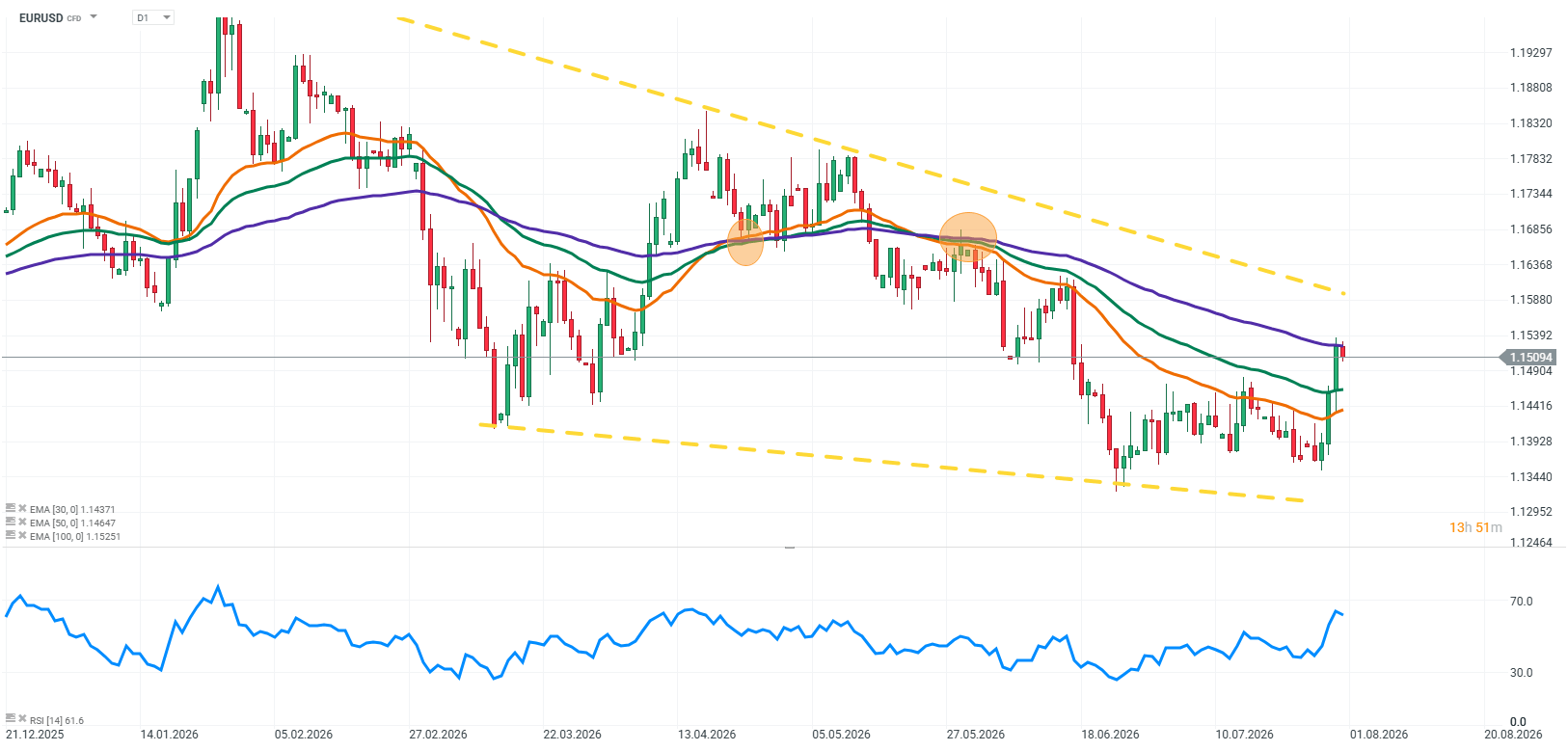
EUR/USD trims gains as fresh Trump tariff threats, Iran woes lift USD

  • Trump threatens to raise EU auto tariffs to 25% from 15%, weighing on the EUR/USD pair.
  • Trump says he isn’t happy about the latest proposal sent by Tehran, adding uncertainty and fueling safe-haven demand for the USD.
  • USD rebounds from two-week lows amid intensifying geopolitical risks.

The EUR/USD pairย is trading near the 1.1730 level on Friday’s late American session, trimming almost all its intraday gains, after United States (US) President Donald Trump threatened to raise the tariff rate on European Union (EU) cars and trucks from 15% to 25% and said he isn’t happy with the latest proposal sent by Iran to end the war.

Iran passed a peace talks offer through Pakistan to try and strike a deal with the US, though the details and demands from Tehran remain unknown. US President Trump claimed that โ€œwe made strides in talks with Iran, but I’m not sure we’re going to get to a deal,โ€ and added that he is not satisfied with the current proposal because Iran is asking for things “he is not comfortable agreeing with”.

When asked about potential missile strikes on Iran, US President Trump said: โ€œWhy would I tell you that?โ€, adding to the uncertainty. The heightened uncertainty over the fate of the latest proposal has supported the US Dollar (USD) as aย safe haven, whichhas recovered from a two-week low.

Chart Analysis EUR/USD

Short-term technical analysis:

On the four-hour chart, EUR/USD trades at 1.1730, hovering between nearby moving averages and maintaining a broadly neutral bias. The pair holds above the 20-period Simple Moving Average (SMA) at 1.1713, which lends modest downside support, but it remains capped by the 100-period SMA at 1.1736 and the horizontal barrier at 1.1744. The Relative Strength Index around 53 hints at mildly positive momentum, yet the proximity of overhead levels suggests limited upside unless buyers can force a sustained break higher.

On the topside, immediate resistance is located at the 100-period SMA at 1.1736, followed by the horizontal hurdle at 1.1744. A clearance of these levels would open the way toward 1.1757 and then 1.1785. On the downside, initial support is seen at the nearby horizontal floor at 1.1729, with the 20-period SMA at 1.1713 reinforcing the underlying demand area. A break below this latter level would expose a deeper corrective phase in the short term.

Currency Hedger No Comments

USD/CAD steadies as weekly slide extends on Loonie strength

  • Iran ceasefire talks stalled over the weekend, with the US blockade and the Strait of Hormuz closure both in place.
  • US ISM Manufacturing PMI held at 52.7 in April, missing the 53.0 consensus, while the Prices Paid index surged to 84.6.
  • Canada’s S&P Global Manufacturing PMI jumped to 53.3 in April from 50.0 in March, returning the sector to expansion.

USD/CAD edged higher by less than 0.1% on Friday, recovering from an early-session low near 1.3560 to trade around 1.3590. The pair has shed roughly 0.6% on the week after rolling over from the 1.3700 area mid-week, and momentum has appeared sluggish close to 1.3580 as a cluster of small-bodied candles points to indecision.

The US-Iran conflict and the continued closure of the Strait of Hormuz remain the dominant drivers, keeping crude oil prices elevated and offering tailwinds to the commodity-linked Canadian Dollar. Ceasefire talks stalled over the weekend with both sides hardening their positions, and the US naval blockade of Iranian ports stays in place despite intermittent administration claims of progress that markets have largely discounted.

The US ISM Manufacturing Purchasing Managers Index (PMI) held at 52.7 in April, narrowly missing the 53.0 consensus, while the Employment Index slumped to 46.4 and the Prices Paid component surged to 84.6, the highest reading in over four years. Canada’s S&P Globalย Manufacturing PMIย jumped to 53.3 from 50.0 in March, returning the sector to expansion. Markets now look ahead to next Friday’s heavy calendar, headlined by USย Non-Farm Payrollsย (NFP), with consensus pointing to 73K versus 178K previously, and Canadian employment data with the unemployment rate seen unchanged at 6.7%.


USD/CAD 5-minute chart

Chart Analysis USD/CAD

Technical Analysis

In the five-minute chart, USD/CAD trades at 1.3587, hovering just above the daily open at 1.3580, which now acts as immediate intraday support. The pair has lost upside momentum after earlier gains, while the downward sloping resistance trend line drawn from 1.3680 continues to cap the broader recovery potential. The latest Stochastic RSI reading has retreated toward lower levels, hinting at fading bullish pressure and keeping the near-term tone broadly neutral while price oscillates around the opening level.

On the downside, a clear break back below the 1.3580 daily open would expose softer intraday levels and suggest that sellers are regaining control in the very short term. On the topside, the next meaningful barrier is the descending resistance line coming from 1.3680, and only a sustained move toward that region and a subsequent break higher would start to undermine the broader corrective bias and open the way for a more convincing upside extension.

In the one-hour chart,ย USD/CADย trades at 1.3589, holding a mildly bearish near-term tone as it remains capped by a downward-sloping trend-line resistance coming in around 1.3680. The lack of nearby moving averages in the dataset keeps the focus on this structural barrier, while the Stochastic RSI has pushed into elevated territory above 70 recently, hinting that upside attempts could face exhaustion below the mentioned trend line.

On the topside, the immediate obstacle is the descending trend-line resistance at 1.3680, and a sustained break above this level would be needed to ease the current bearish pressure and open the way to a stronger recovery. With no clearly defined intraday supports in the provided data, any pullback from current levels would likely see traders looking to prior session lows and intraday swing points below 1.3589 for initial demand, while an inability to challenge 1.3680 would keep the pair vulnerable to further downside probing.

Currency Hedger No Comments

AUD/USD Price Forecast: Remains bullish despite hovering around 0.7200

  • AUD/USD trades near range highs within 0.7100โ€“0.7200 consolidation band.
  • RSI above 50 supports bullish momentum and potential breakout scenario.
  • Break above 0.7250 targets 0.7282 and 0.7300 resistance levels.

AUD/USDย holds to minimal gains of 0.10% late in the North American session, yet poised to finish the week up 0.84%. At the time of writing, the pair trades above 0.7200 as the โ€˜bullish engulfingโ€™ chart pattern caps the Aussie on the downside.

AUD/USD Price Forecast: Technical outlook

From a technical perspective, the AUD/USD trades near the top of a 100-pip consolidation range between 0.7100 and 0.7200, with traders awaiting fresh catalysts. Momentum is bullish as depicted by the Relative Strength Index (RSI) sitting above its neutral level.

On the upside, the first resistance for AUD/USD is the psychological 0.7250 level. If cleared, the next stop would be the June 3, 2022, high of 0.7282 ahead of the 0.7300 area. The next area of interest would be on April 5, 2022, at 0.7661

Conversely, if AUD/USD ends the day below 0.7200, it could open the door for testing the 20-day SMA at 0.7121. Below this level is 0.7100 โ”€the bottom of the 100-pip rangeโ”€, followed by the 50-day SMA at 0.7059

AUD/USD Price Chart โ€“ Daily

AUD/USD daily chart
Currency Hedger No Comments

AUD/USD holds steady near recent highs ahead of expected RBA rate hike

  • AUD/USD trades near 0.7200, holding steady despite volatility linked to geopolitical risks.
  • Investors largely expect a rate hike from the Australian central bank next week.
  • The US Dollar remains broadly under pressure, limiting downside in the pair.

AUD/USDย trades around 0.7200 on Friday at the time of writing, virtually unchanged on the day and holding near recent highs, as markets adopt a wait-and-see approach ahead of the Reserve Bank of Australia (RBA) monetary policy decision scheduled for Tuesday.

The Australian Dollar (AUD) remains slightly supported against its major peers, with investors expecting this key event. According to a Reuters poll, a strong majority of economists expect a 25 basis point rate hike, which would bring the policy rate to 4.35%. These expectations are supported by persistent inflationary pressures in Australia, with the annual Consumer Price Index (CPI) coming in at 4.6% YoY in March, still well above the central bankโ€™s target.

Market participants will also closely watch Governor Michele Bullockโ€™s comments for further guidance on the policyย outlook, particularly as energy-related risks linked to tensions in the Middle East and uncertainty surrounding the Strait of Hormuz could continue to fuel inflationary pressures.

At the same time, the US Dollar (USD) is struggling to gain traction despite a geopolitical backdrop that usually supports safe-haven demand. Markets expect theย Federal Reserveย (Fed) to keep interestย ratesย unchanged through the end of the year, although some officials, including Neel Kashkari, have highlighted the possibility of further hikes in the event of a significant inflationary shock driven by energy prices.

Geopolitical tensions still provide intermittent support to the Greenback, particularly following reports that the US administration is considering military options regarding Iran. Meanwhile, diplomatic developments suggesting that Tehran has submitted a new proposal to the United States (US) on Thursday have temporarily weighed on the US Dollar.

Investors now turn their attention to the release of the US ISM Manufacturing Purchasing Managers Index (PMI) later in the day, a key indicator for assessing economic momentum.

US Dollar Price Today

The table below shows the percentage change of US Dollar (USD) against listed major currencies today. US Dollar was the strongest against the New Zealand Dollar.

USDEURGBPJPYCADAUDNZDCHF
USD-0.25%-0.22%-0.02%-0.14%-0.03%0.15%-0.20%
EUR0.25%0.02%0.22%0.08%0.22%0.38%0.05%
GBP0.22%-0.02%0.19%0.08%0.19%0.36%0.05%
JPY0.02%-0.22%-0.19%-0.11%-0.01%0.14%-0.16%
CAD0.14%-0.08%-0.08%0.11%0.10%0.28%-0.03%
AUD0.03%-0.22%-0.19%0.00%-0.10%0.16%-0.12%
NZD-0.15%-0.38%-0.36%-0.14%-0.28%-0.16%-0.31%
CHF0.20%-0.05%-0.05%0.16%0.03%0.12%0.31%

The heat map shows percentage changes of major currencies against each other. The base currency is picked from the left column, while the quote currency is picked from the top row. For example, if you pick the US Dollar from the left column and move along the horizontal line to the Japanese Yen, the percentage change displayed in the box will represent USD (base)/JPY (quote).