

Currency Hedger No Comments

EUR/USD Price Forecast: Holds above 1.1700 as bullish potential seems intact

  • EUR/USD struggles to capitalize on a modest bullish gap at the start of a new week.
  • The technical setup favors bulls and backs the case for some upside in the near-term.
  • A break below the 1.1650-1.1645 confluence is needed to negate the positive bias.

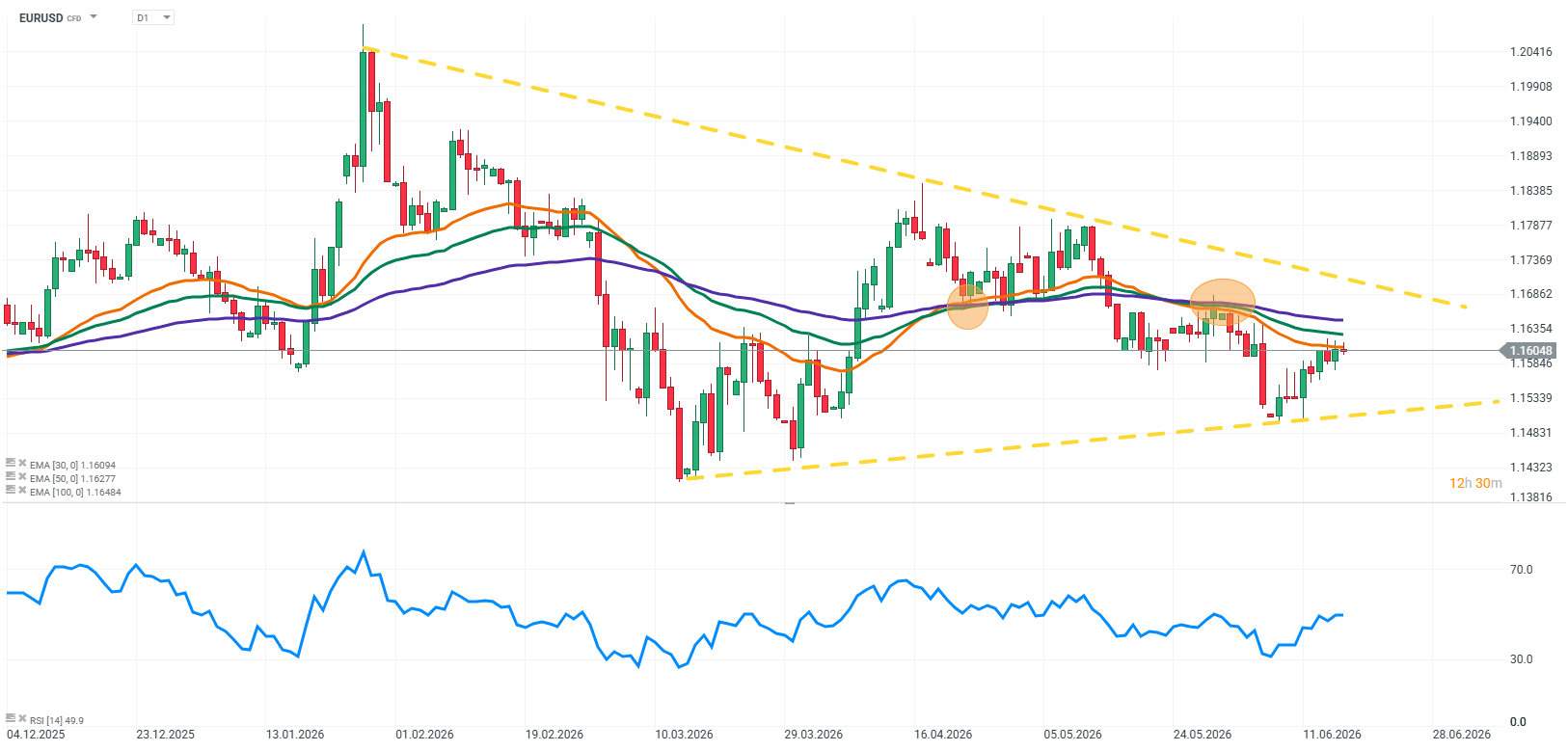
The EUR/USD pair attracts some intraday sellers following a modest Asian session uptick to mid-1.1700s and fills a major part of a bullish gap at the start of a new week. Spot prices, however, manage to hold above the 1.1700 round figure, warranting some caution before positioning for an extension of Friday’s retracement slide from a one-and-a-half week top.

From a technical perspective,ย the EUR/USD pairย holds a modest bullish bias as it trades above the 200-period Simple Moving Average (SMA) on the 4-hour chart, suggesting dips are being absorbed for now. Meanwhile, the Relative Strength Index (RSI) is near 53 points to mildly positive but not overstretched momentum, while the Moving Average Convergence Divergence (MACD) indicator remains slightly in positive territory. This hints that upside pressure is present but not yet impulsive.

However, Friday’s pullback makes it prudent to wait for a sustained strength and acceptance above the 1.1750 area, or the 23.6%ย Fibonacciย retracement level of the March-April upswing, before positioning for further gains. A subsequent hurdle is aligned at the recent cycle high area at 1.1847.

On the downside, initial support is seen at the 38.2% retracement around 1.1692, followed by a key confluence zone formed by the 200-period SMA at 1.1648 and the 50.0% retracement at 1.1644. A deeper pullback could then target the 61.8% level at 1.1596, ahead of 1.1528 and 1.1441.

(The technical analysis of this story was written with the help of an AI tool.)

EUR/USD 4-hour chart

Chart Analysis EUR/USD
Currency Hedger No Comments

AUD/JPY Price Forecast: Weakens below 113.00, while broader uptrend remains intact

  • AUD/JPY weakens to around 112.95 in Mondayโ€™s early European session.ย 
  • The cross keeps bullish vibe above the 100-day EMA, but further consolidation cannot be ruled out in near term.ย 
  • The immediate resistance level emerges at 113.40; the initial support level is seen at 112.00.ย 

The AUD/JPY cross loses ground near 112.95 during the early European session on Monday. The Australian Dollar (AUD) softens against the Japanese Yen (JPY) as uncertainty surrounding Middle East tensions and the closure of the Strait of Hormuz boosts safe-haven assets. 

US President Donald Trump announced the US will begin guiding ships through the Strait of Hormuz starting Monday, per CNN. Meanwhile, Iranian official Ebrahim Azizi warned that the plan is a violation of the ceasefire.

On the other hand, markets expect the Reserve Bank of Australia (RBA) to deliver a third straight interest rate hike on Tuesday. The primary driver is a significant jump in headline inflation in March, fueled by global energy shocks and Middle East tensions.  

Chart Analysis AUD/JPY

Technical Analysis:

In the daily chart, AUD/JPY maintains a constructive bullish bias as spot holds well above the 100-day Exponential Moving Average (EMA), keeping the broader uptrend intact despite the latest pullback from recent highs. Price is also trading above the lower Bollinger Band, while the Relative Strength Index (RSI) at 50.8 has eased back to neutral territory, hinting at a consolidation phase rather than an outright reversal.

On the topside, initial resistance is aligned with the 20-day Bollinger middle band at 113.40. A sustained break above this pivot would expose the April 28 high of 114.72, en route to the upper Bollinger band near 115.18 as the next bullish target. On the downside, immediate support is seen around the 112.00 psychological level, followed by the lower Bollinger band at 111.65; a deeper correction towards the 100-day EMA at 109.37 would still be consistent with a broader bullish structure while offering a potentially stronger demand zone.

Currency Hedger No Comments

Top 3 Price Prediction: Bitcoin, Ethereum, Ripple โ€“ BTC extends rally, ETH and XRP near key resistance zones

  • Bitcoin extends gains on Monday after taking a breather in the previous week.
  • Ethereum approaches the 200-day EMA, a decisive close above this level could open the door for an upside move.
  • XRP hovers near the $1.40 resistance zone, a breakout above this barrier may trigger a fresh rally.

Bitcoin (BTC) pushes higher on Monday, trading above $80,000 and resuming its uptrend after a brief consolidation phase last week. Ethereum (ETH) andย Rippleย (XRP) follow BTCโ€™s footsteps and extend gains at the start of the week, nearing their key resistance zones, where a breakout suggests a fresh rally ahead.

Bitcoin hits $80,000

Bitcoin priceย is trading at $80,161 on Monday, retaining a constructive bias as it holds above a dense support band defined by the 50% retracement at $78,962 (drawn from the January high to the February low) and the 100-day Exponential Moving Average (EMA) near $75,903. The shorter-term 50-day EMA around $74,448 reinforces the underlying uptrend.

Momentum remains firm, as the Relative Strength Index (RSI) on the daily chart hovers in bullish territory near 66, and the Moving Average Convergence Divergence (MACD) has turned higher and returned to positive territory, hinting that buyers still control the near-term tone despite the proximity to major overhead barriers.

On the topside, initial resistance emerges at the 200-day EMA around $81,912, followed by the 61.8%ย Fibonacciย retracement at $83,437 and a more prominent horizontal cap near $84,410; a daily close above this cluster would open the way toward the January highs around $97,924.

On the downside, immediate support is seen at the psychological $80,000 handle, with the 50% retracement at $78,962 as the first substantive floor; a deeper pullback would expose a broader demand area between the 100-day EMA at $75,903, the prior channel top near $75,680, where buyers would be expected to re-emerge while the broader bullish structure remains intact.

Ethereum could extend gains if it closes above the 50-day EMA

Ethereum is trading at $2,370 on Monday, maintaining a constructive near-term bias as price holds above the 50-day and 100-day EMA at roughly $2,256 and $2,344, respectively. ETH, however, is approaching a dense Fibonacci barrier, with the 38.2% retracement at $2,380 capping the immediate topside, while higher retracements and the 200-day EMA, clustered around $2,575, reinforce broader overhead supply. 

A rising RSI on the daily chart near 58 suggests firm but not overstretched bullish momentum, while the negative yet improving MACD histogram hints that downside pressure is fading within this developing up-leg.

On the upside, initial resistance is located at the 38.2% Fibonacci retracement at $2,380, beyond which the $2,575 area forms a critical confluence zone, combining the 50% retracement at $2,575 with the 200-day EMA at $2,575; a daily close above this cluster would open the way toward the 61.8% Fibonacci retracement at $2,770.

On the downside, immediate support emerges at the 100-day EMA at $2,344, followed by the 50-day EMA at $2,256, while the upper boundary of the horizontal parallel channel around $2,148 and the 23.6% retracement at $2,138 guard the broader bullish structure, with only a drop toward the channel floor near $1,747 threatening the medium-term uptrend.

XRP is near key resistance at $1.40

XRP price is trading at $1.41 on Monday, is hovering just above the 50-day EMA at $1.40, which lends initial trend support, but it remains well below the 100-day EMA at 1.50 and the broader downward parallel channel cap near $1.54, keeping the medium-term tone capped within a broader corrective structure.

The RSI at 53 suggests mildly positive but not overstretched momentum, while the MACD has slipped slightly into negative territory, hinting that upside traction may be fading as price consolidates under higher EMAs.

On the topside, immediate resistance is located at the 100-day EMA around $1.50, followed by the upper boundary of the descending channel near $1.55; a sustained break above these would be needed to challenge the 200-day EMA at $1.74 and the more distant horizontal barrier at $1.90.

On the downside, the 50-day EMA at $1.40 underpins the market as first support, ahead of the horizontal floor at $1.30, while the channel base down at $0.73 marks the broader structural support zone in the event of a deeper pullback.

Currency Hedger No Comments

USD/JPY consolidates near 157.00 as Iran tensions counter suspected JPY intervention

  • USD/JPY edges up following a modest bearish gap opening on Monday amid some USD dip-buying.
  • Rising Iran tensions and reviving Fed rate hike bets turn out to be key factors supporting the buck.
  • Intervention fears might keep the JPY bears on the back foot and cap the upside for spot prices.

The USD/JPY pair attracts some dip-buyers following a modest Asian session downtick to the 156.60 region on Monday. Spot prices climb to the 157.00 mark in the last hour, though it lacks follow-through, warranting caution before positioning for an extension of Friday’s goodish recovery from the 155.50-155.45 area, or the lowest level since February 25.

Renewed concerns about the risk of a further escalation of tensions in the Middle East assist the safe-haven US Dollar (USD) to fill a modest bearish gap, which, in turn, acts as a tailwind for the USD/JPY pair. US President Donald Trump announced that the US will begin guiding neutral ships out of the Strait of Hormuz under an operation called Project Freedom and added that if this process is disrupted, we will deal with it by force. In response, Ebrahim Azizi, head of the Iranian parliament’s National Security Commission, issued a formal warning that any US interference in the strategic waterway would constitute a ceasefire violation.

Meanwhile, Minneapolisย Federal Reserveย (Fed) President Neel Kashkari said on Sunday that a prolonged Iran conflict increases inflation risks and economic damage. Moreover, Kashkari raised the possibility of movingย ratesย higher, citing uncertainty around all aspects of the war. This further underpins the Greenback and lends support to the USD/JPY pair. However, reports that Japanese authorities likely intervened around May 1, spending approximately ยฅ5.4 trillion ($34.5 billion) to prop up the weak domestic currency, might hold back bears from placing fresh bets around the Japanese Yen (JPY). This should keep a lid on the currency pair.

Moving ahead, there isn’t any relevant market-moving economic data due for release from the US on Monday, leaving the buck and the USD/JPY pair at the mercy of fresh developments surrounding the Middle East crisis. The aforementioned fundamental backdrop, however, makes it prudent to wait for strong follow-through buying before confirming that spot prices have formed a near-term bottom and positioning for any meaningful upside.

Currency Hedger No Comments

EUR/USD falls to near 1.1700 as US to raise tariffs on EU vehicles

  • EUR/USD falls as Trump signals US tariffs on EU cars and trucks rising to 25% from 15%.
  • US Dollar trims daily losses as risk aversion rises on escalating Middle East tensions.
  • Trump plans escorting ships via Strait of Hormuz; Ebrahim Azizi warns US role violates ceasefire.

EUR/USD depreciates after opening at the bullish gap, remaining in the positive territory and trading around 1.1720 during the Asian hours on Monday. The pair declined asย the Euroย (EUR) faces challenges, which could be attributed to the recent comments from President Donald Trump, indicating the US will raise tariffs on European Union (EU) cars and trucks to 25% from 15%ย this week, citing alleged breaches of a trade deal.

Trump said in a social media post, warning EU-made vehicles would face higher duties unless production shifts to US plants, aiming to push carmakers to localize output. The European Commission rejected the claim, saying it is complying with last summerโ€™s agreement and vowing to defend EU interests if Washington violates the deal.

The EUR/USD pair also loses ground as the US Dollar (USD) pares its daily losses amid increasedย risk aversionย driven by escalating tensions in the Middle East. Bloomberg reported on Sunday that Donald Trump said the United States will begin guiding some neutral ships trapped in the Persian Gulf out through the Strait of Hormuz starting Monday.

Ebrahim Azizi, a former commander in Iranโ€™sย Islamicย Revolutionary Guards Corps (IRGC) and current head of the parliamentary National Security and Foreign Policy Committee, said that any US interference in the new maritime regime of the Strait of Hormuz would be considered a violation of the ceasefire. He added that the Strait of Hormuz and the Persian Gulf are not a place for rhetoric.

Currency Hedger No Comments

GBP edges higher despite Middle East uncertainty

  • GBP/USD edges higher to around 1.3580 in Mondayโ€™s early Asian session.ย 
  • Traders will closely monitor the developments surrounding the Middle East.ย 
  • The BoE and the Fed left the interest rates unchanged at the April policy meeting last week.ย 

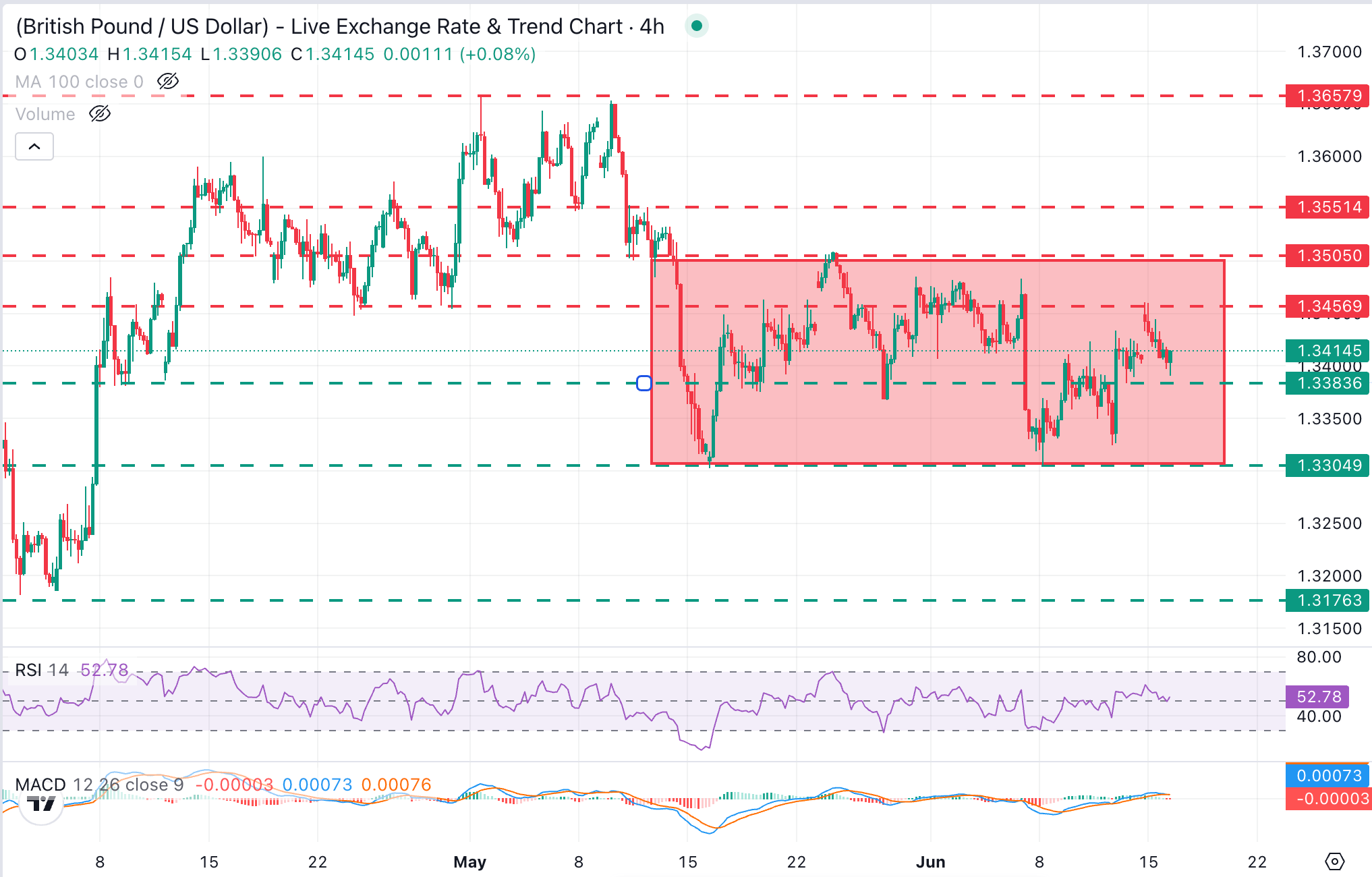
The GBP/USD pairย posts modest gains near 1.3580 during the Asian trading hours on Monday. Nonetheless, the potential upside for the major pair might be limited amid Middle East uncertainty. The US employment report for April will take center stage later on Friday.ย 

Markets could turn cautious after US President Donald Trump said the US would start an effort on Monday morning to free ships stranded in the Strait of Hormuz as a “humanitarian โ€Œgesture” to aid neutral countries in the US-Israeli war with Iran. An Iranian official warned that US interference in Hormuz will be considered a violation of the ceasefire, adding that the Strait of Hormuz and the Persian Gulf are not a place for rhetoric. 

Iran earlier claimed that the US had reacted to its 14-point plan through Pakistan, and it was reviewing the response, though Trump said it was unlikely to be acceptable. Signs of rising tensions in the Middle East could boost a safe-haven currency such as the US Dollar (USD) and create a headwind for the major pair. 

Last week, both the Bank of England (BoE) and the USย Federal Reserveย maintained current interestย rates.ย BoEย Governor Andrew Bailey said if price pressures triggered by the conflict proved to be severe, a โ€œforceful tighteningโ€ would be required. Bailey played down fears of near-term rate hikes but added that “we’ll continue to monitor the situation and its impact on the UK economy very closely.โ€

Currency Hedger No Comments

Canadian Dollar remains subdued amid lower oil prices

  • USD/CAD holds firm as commodity-linked Canadian Dollar weakens amid lower oil prices.
  • WTI struggles after Bloomberg reports Donald Trump plans to escort ships via the Strait of Hormuz.
  • Iran proposed a one-month deadline for talks to reopen the Strait of Hormuz and end conflicts in Iran and Lebanon.

USD/CADย inches higher for the second successive day, trading around 1.3590 during the Asian hours on Monday. The pair remains stronger as the commodity-linked Canadian Dollar (CAD) faces challenges amid lower oil prices. West Texas Intermediate (WTI) oil price remains in the negative territory for the third successive day, trading around $98.50 per barrel at the time of writing.

Crude oil prices struggled following a Sunday report by Bloomberg indicating that Donald Trump said the United States will begin guiding neutral ships trapped in the Persian Gulf out through the Strait of Hormuz starting Monday.

However, Ebrahim Azizi, a former commander in Iranโ€™sย Islamicย Revolutionary Guards Corps (IRGC) and current head of the parliamentary National Security and Foreign Policy Committee, said any US interference in the new maritime regime of the Strait of Hormuz would be considered a violation of the ceasefire. He added that the Strait of Hormuz and the Persian Gulf are not a place for rhetoric.

The upside in USD/CAD may remain limited as the US Dollar (USD) struggles amid easing safe-haven demand, with traders assessing progress in USโ€“Iran peace negotiations. Mediation efforts to end the conflict have continued as the war in Iran enters its third month. Donald Trump hinted that Tehranโ€™s latest peace proposal may fall short of expectations, Bloomberg reported Sunday.

According to Axios, citing sources familiar with the matter, Iran has proposed setting a one-month deadline for talks aimed at reopening the Strait of Hormuz and ending both the US naval blockade and the conflicts in Iran and Lebanon.

Currency Hedger No Comments

NZD/USD approaches 0.5925 hurdle as Iran tensions loom ahead of NZ and US jobs data

  • NZD/USD shows some resilience below 0.5900 and attracts some dip-buyers on Monday.
  • US-Iran tensions and reviving Fed rate cut bets support the USD and might cap the pair.
  • Traders this week will take cues from NZ employment details and the key US NFP report.

The NZD/USD pair attracts some dip-buyers at the start of a new week and climbs back above the 0.5900 mark during the Asian session. Bulls, however, need to wait for a convincing breakout through the 0.5920-0.5925 horizontal barrier before positioning for any further gains, as the focus remains glued to developments surrounding the Middle East crisis.

US President Donald Trump announced over the weekend that the US will begin guiding neutral ships stranded in the Strait of Hormuz under an operation called Project Freedom and added that if this process is disrupted, we will deal with it by force. In response, Ebrahim Azizi, head of the Iranian parliament’s National Security Commission, issued a formal warning that any US interference in the strategic waterway would constitute a ceasefire violation. This keeps geopolitical risks in play, which could benefit the safe-haven US Dollar (USD) and act as a headwind for the NZD/USD pair.

Meanwhile, Minneapolisย Federal Reserveย (Fed) President Neel Kashkari said on Sunday that a prolonged Iran conflict increases inflation risks and economic damage. Moreover, Kashkari raised the possibility of movingย ratesย higher, citing uncertainty around all aspects of the war. This turns out to be another factor underpinning the USD. However, expectations that the Reserve Bank of New Zealand (RBNZ) would maintain a cautious stance or consider tightening to bring inflation back to the 2% midpoint counter the negative factors, supporting the New Zealand Dollar (NZD) andย the NZD/USD pair.

The mixed fundamental backdrop, in turn, makes it prudent to wait for a sustained strength beyond the aforementioned barrier before positioning for the resumption of the recent strong move up from the April monthly swing low. There isn’t any relevant economic data due for release from the US on Monday, leaving the USD at the mercy of geopolitical headlines. Tradersย this weekย will further take cues from key US macro releases, including the Nonfarm Payrolls (NFP) report, which, along with the quarterly employment report from New Zealand, should provide a fresh impetus to the NZDUSD pair.