

Currency Hedger No Comments

Swiss Franc flattens against US Dollar as investors await US-Iran deal announcement

  • The Swiss Franc ranges around 0.7870 vs. the US Dollar, with investors awaiting US-Iran deal confirmation.
  • The issues regarding the handover of uranium enrichment by Iran to the US and the authority on Hormuz remain unsolved.
  • Flash US S&P Global Manufacturing PMI surprisingly expanded at a faster pace to 55.3 in May.

The Swiss Franc trades flat against the US Dollar (USD) around 0.7870 during the Asian trading session on Friday.ย The USD/CHF pairย consolidates as investors await the confirmation of a prolonged peace deal between the United States (US) and Iran, following the announcement that both sides have reached a โ€œfinal draftโ€ with mediation from Pakistan.

As of writing, the US Dollar Index (DXY), which tracks the Greenbackโ€™s value against six major currencies, trades marginally higher to near 99.27.

On Thursday, market sentiment turned favorable for riskier assets after the Iranian Labourย Newsย Agency (ILNA) reported that a final draft between Washington and Tehran has been reached and a deal can be announced within next few hours.

However, Iran still seems not ready to surrender its enriched uranium and wants recognition of its authority on the Strait of Hormuz, Reuters reports.

On the economic data, front preliminary S&P Global Composite PMI data for May has come in steady at 51.7 as an unexpected strong growth in the manufacturing sector activity offsets the impact of moderate expansion in the Services PMI.

In the Swiss economy, investors seek fresh cues regarding whether the Swiss National Bank (SNB) will call for an exit from its dovish monetary policy stance due to rising global inflationary pressures amid elevated oil prices.

Currency Hedger No Comments

AUD/JPY Price Weakens to near 113.50, but broader uptrend remains intact

  • AUD/JPY drifts lower to near 113.50 in Fridayโ€™s early European session.ย 
  • Surprise rise in Australiaโ€™s Unemployment Rate will give RBA more reason to delay further rate hike at the June meeting.ย 
  • The constructive outlook of the cross prevails above the 100-day EMA, with neutral-to-mildly bullish RSI momentum.ย 
  • The first upside barrier emerges at 113.65; the initial support level to watch is 112.50.ย 

The AUD/JPY cross trades in negative territory around 113.50 during the early European session on Friday. The Australian Dollar (AUD) softens against the Japanese Yen (JPY) as markets slash the chance of more interest rate hikes from the Reserve Bank of Australia (RBA) after a surprise rise in the jobless rate. 

Australiaโ€™s Unemployment Rate jumped to 4.5% in April from 4.3% in March, the Australian Bureau of Statistics showed on Thursday. This reading registered the highest in about four and a half years. The report will provide the Australian central bank with more reason to hold off on a fourth rate hike at its next meeting in June, which could weigh on the Aussie. 

The probability of a rate hike at the next meeting dropped to just 3%, from 13% before the release of the employment report, according to financial market pricing provided by Westpac.

On the other hand, softer Japanese inflation data could weigh on the JPY and act as a tailwind for the cross. Japanโ€™s National Consumer Price Index (CPI) rose by 1.4% YoY in April, compared to 1.5% in March, the Japan Statistics Bureau revealed on Friday. 

Meanwhile, Japan’s core CPI climbed by 1.4% YoY in April, marking the slowest annual pace in four years.

Chart Analysis AUD/JPY

Technical Analysis:

In the daily chart, AUD/JPY holds comfortably above the 100-day Simple Moving Average (SMA) at 110.70, keeping the broader bias constructive despite the latest pullback from recent highs. Price is now trading just under the Bollinger Bandsโ€™ 20-day SMA basis line, suggesting topside momentum has slowed but not broken, while the Relative Strength Index (14) near 51 hints at neutral-to-mildly positive momentum rather than overbought conditions.

On the topside, immediate resistance is located at the Bollinger middle band around 113.65, with a break higher opening the way toward the May 14 high of 114.66. The next hurdle is seen at the upper Bollinger band near 114.83. On the downside, initial support emerges at the lower Bollinger band around 112.50, ahead of the April 13 low of 111.66. The key trend support is located at the 100-day SMA near 110.70, where buyers would be expected to defend the prevailing uptrend on deeper pullbacks.

Currency Hedger No Comments

British Pound: Rebound on easing fiscal and inflation fears โ€“ MUFG

MUFGโ€™s Lee Hardman highlights a strong recovery in the Pound and gilts as UK fiscal and inflation concerns ease. GBP/USD has bounced toward the 200-day moving average, while long gilt yields have fallen sharply. Softer UK CPI and weakening labour market data have reduced expectations for Bank of England rate hikes, though MUFG still sees downside risks for the Pound from energy and political uncertainty.

Pound recovery faces lingering downside risks

“The pound and gilts have staged an impressive rebound this week driven both by a reduction in fears over UK fiscal and inflation risks. After hitting a low of 1.3303 on 18th May, cable has risen back up towards the 200-day moving average at around 1.3420.”

“The spokesperson stated that Andy Burnham plans to stick the governmentโ€™s current fiscal rules which would curtail room to loosen fiscal policy if he becomes prime minister. The policy โ€œu-turnโ€ helps to ease downside risks for the pound and gilts in the near-term.”

“The report revealed a much larger than expected drop in core and services inflation helping to ease some concerns over the risk of more persistent inflation in the UK. It provides some reassuring news that underlying inflation was continuing to slow before the energy price shock hits harder heading into the summer.”

“In response to the softer CPI report, the UK rate market has moved to scale expectations for BoE rate hikes. The timing of the first rate hike has been pushed out until July or September, and there are only around 50bps of hikes priced in by year end.”

“Overall, the latest developments leave the pound on a stronger footing in the near-term but we still judge that risks remain tilted to the downside. The ongoing fallout from the energy price shock and lingering UK political uncertainty continue to pose downside risk for the pound.”

Currency Hedger No Comments

Euro: Growth worries cap upside against US Dollar โ€“ Rabobank

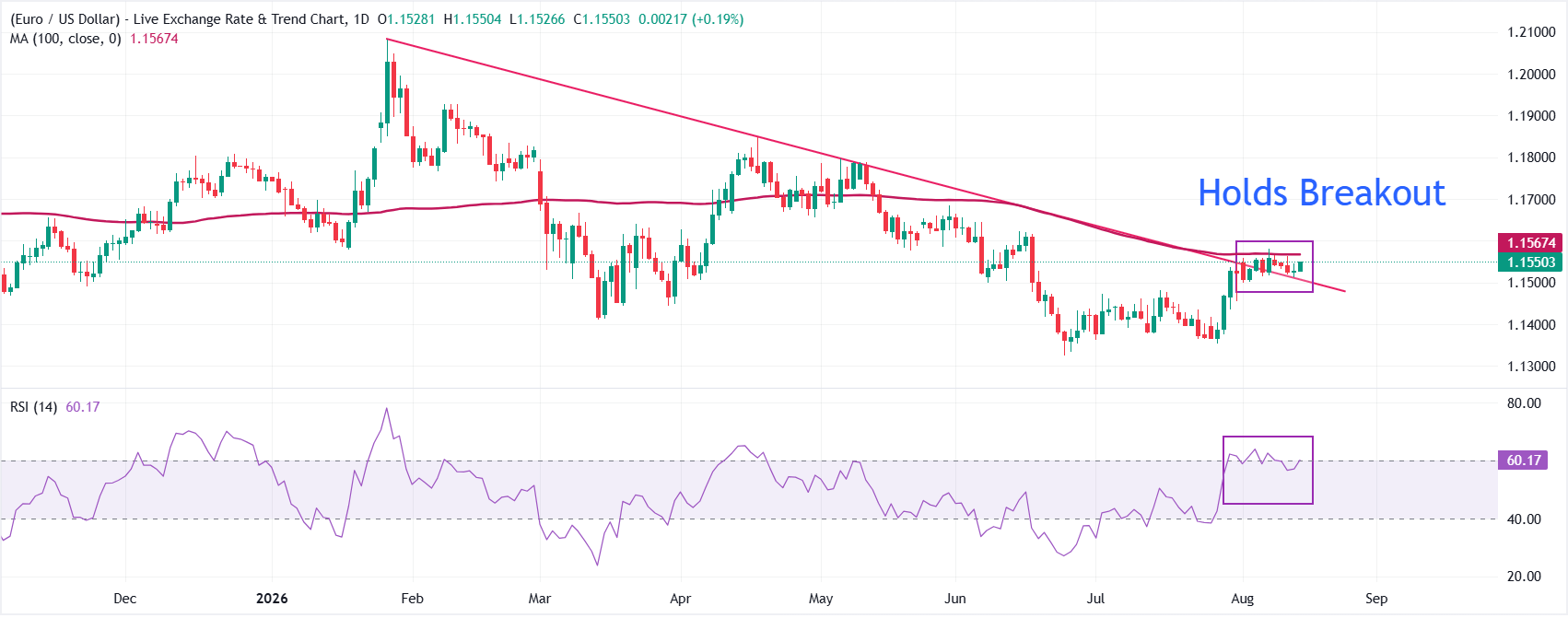
Rabobank’s Senior FX Strategist Jane Foley highlights that weak French and Germanย PMIย data have undermined Eurozone growth expectations and led markets to question how much the European Central Bank (ECB) can still tighten. Foley now sees risk of only one 25 bps ECB hike this year, arguing that slower Eurozone growth and energy-related headwinds will limitย EUR/USDย gains, keeping the pair below 1.20 in 2024.

Weak Eurozone data weighs on Euro

“The EUR reacted poorly to this morningโ€™s shockingly poor French PMI release, with EUR/USD briefly dipping back below the 1.16 level. The preliminary data for May showed a sharp drop in the composite number to 43.5 from 47.6 the previous month, with weakness evident in both the manufacturing and the services sectors. The composite number, which is a 66-month low, would usually be associated with recession.”

“The data have caused the market to question whether the ECB needs to hike rates as much as has been expected to rein back demand in the face of the supply shock. This weekโ€™s releases of softer than expected UK and Australian labour data have had a similar impact on short-dated interest rates in their respective markets. Currently the market is priced for just over 50 bps of ECB policy tightening on a 6-month view.”

“In Raboโ€™s view, there is risk of just one 25 bps rate hike from the ECB this year. Further paring back of ECB rate hike expectations would undermine the value of the EUR.”

“In our view, any absence of positive news regarding a peace deal in the Iran war could still bring dips to the EUR/USD 1.15 area in the weeks ahead, with the USD likely to benefit fromย safe havenย flows. Assuming a gradually reopening of the Strait of Hormuz in the month ahead, we expect EUR/USD to edge higher. However, faced with slower growth in the Eurozone, we do not expect a move to EUR/USD1.20 this year.”

Currency Hedger No Comments

Currency Talk – EUR/USD, USD/CHF, USD/CAD

Key takeaways

  • What is the technical outlook for EURUSD, USDCHF and USDCAD?

EURUSD EURUSD prices have recently broken below the 1:1 uptrend, whose lower boundary was at 1.1650. According to the Overbalance methodology, this paves the way for the downtrend to extend, potentially as far as the low at 1.1420. Conversely, for a return to an uptrend, the price would first need to move back above the 1.1650 level, and ideally also break through the 1.1720 level, where the upper limit of the local 1:1 downtrend pattern is located.

EURUSD โ€“ H4 chart. Source: xStation USDCHF The USDCHF remains in a long-term downtrend. The price rebounded from a key resistance level at the end of March, leading to a decline of nearly 300 pips. Currently, attention should be paid to a local descending geometric pattern, for which resistance is at the 0.7914 level. Should this level be breached, the price could continue to rise towards the next resistance level at 0.8035. Only a sustained break above this higher level would suggest a shift in the balance of power on the chart. For the time being, however, the base case scenario remains a downtrend.

USDCHF โ€“ H4 chart. Source: xStation USDCAD The USDCAD pair shifted sentiment at the start of May, and since then we have seen a local uptrend, supported by a green 1:1 bullish pattern. Should a correction occur, the key support level remains at 1.3723. A break below this level could open the way for a decline towards 1.3630, where the polarity of the previously negated bearish pattern, marked in red, is located.

USDCAD โ€“ H4 timeframe. Source: xStation

Currency Hedger No Comments

AUD/USD – Picks up above 0.7120 after finding support in the 0.7100 area

  • AUD/USD holds above 0.7100 after falling from 0.7174 highs on Wednesday.
  • An unexpected rise in Australian unemployment adds to the case for an RBA rate pause.
  • The pair is trading in a triangle pattern, with a bearish outcome favoured.

The Australian Dollar (AUD) gives away gains against the US Dollar (USD) on Thursday, as soft Australian employment data cemented hopes that the Reserve Bank of Australia (RBA) will take a pause in the coming months after three consecutive rate hikes. The pair trades at 0.7126 at the time of writing, after bouncing from lows near 0.7100, but remains well below Wednesday’s highs, at 0.7174..

Australian unemployment rate rose to 4.5% in April, according to the Australian Bureau of Statistics, reaching its highest level since 2021, against expectations of a steady 4.3% rate. The jump in the jobless rate was due to an unexpected decline in net employment, which fell by 18.6K against the 17.5K increase expected.

Aussie’s weakness, however, is being tamed by a mild improvement in market sentiment as US President Donald Trump affirmed that Washington and Tehran would be in the final stages of a peace deal.

Technical Analysis: The pair is forming a small triangle pattern

AUD/USD Chart Analysis


AUD/USD trades at the lower band of the monthly trading range, with price action forming ang a small triangle pattern. Triangles are considered continuation patterns, and, in this case, would anticipate a bearish outcome.

Momentum indicators, in the 4-hour chart, are mixed. The Relative Strength Index (RSI) remains capped below the 50 line, highlighting a mild bearish pressure, while the Moving Average Convergence Divergence (MACD) has turned marginally positive, hinting that bullish momentum is attempting to rebuild above recent lows.

Initial support is seen at the uptrend line around 0.7108, with additional protection emerging at the 0.7080 area (April 14, May 10 lows). A break below this band would expose an intraday support area at 0.7030.

Rallies, on the contrary, are likely to be tested in the area between the triangle top, near 0.7160, and Wednesday’s high, at the mentioned 0.7174 level. Further up, Monday’s high, at 0.7185, will also challenge bulls ahead of a previous support area, near 0.7215.

(The technical analysis of this story was written with the help of an AI tool.)

Australian Dollar Price Today

The table below shows the percentage change of Australian Dollar (AUD) against listed major currencies today. Australian Dollar was the strongest against the New Zealand Dollar.

USDEURGBPJPYCADAUDNZDCHF
USD-0.01%-0.00%0.06%0.11%0.38%0.19%-0.02%
EUR0.00%-0.00%0.09%0.10%0.38%0.15%-0.02%
GBP0.00%0.00%0.09%0.11%0.40%0.17%-0.02%
JPY-0.06%-0.09%-0.09%0.02%0.33%0.04%-0.09%
CAD-0.11%-0.10%-0.11%-0.02%0.31%0.07%-0.14%
AUD-0.38%-0.38%-0.40%-0.33%-0.31%-0.23%-0.44%
NZD-0.19%-0.15%-0.17%-0.04%-0.07%0.23%-0.20%
CHF0.02%0.02%0.02%0.09%0.14%0.44%0.20%

The heat map shows percentage changes of major currencies against each other. The base currency is picked from the left column, while the quote currency is picked from the top row. For example, if you pick the Australian Dollar from the left column and move along the horizontal line to the US Dollar, the percentage change displayed in the box will represent AUD (base)/USD (quote).

Currency Hedger No Comments

Australian Dollar: Labor data threatens RBA-driven gains โ€“ Commerzbank

Commerzbankโ€™s Volkmar Baur notes the Australian Dollar has retreated from a four-year high versus the US Dollar as weak Chinese data and soft domestic labor figures weigh. He highlights rising unemployment and fading support from the Reserve Bank of Australiaโ€™s earlier rate hikes, with policymakers now leaning toward a pause. Baur warns AUD support could taper if the hiking cycle is already over.

Weak jobs and RBA pause pressure AUD

“The Australian dollar has been on the defensiveย this weekย after climbing to a four-year high against the US dollar at 0.726 last Wednesday. But weak data on the Chinese economy at the start of the week dealt the first blow, and now labor market data released early this morning show that things arenโ€™t going so well at home either.”

“In recent months, the AUD has benefited significantly from the Reserve Bank of Australiaโ€™s policy shift. While other G-10 central banks are still adopting a wait-and-see approach to the Iran conflict and rising inflation, the RBA has already raised interestย ratesย three times in its last three meetings. However, the supportive effect these rate hikes have had on the AUD is likely to gradually fade.”

“In a speech this week, RBA Chief Economist Sarah Hunter sounded less hawkish than she had in recent months, and – based in part on the minutes from the latest monetary policy meeting released on Tuesday – it appears that the Australian central bankers are currently leaning toward a pause. They now want to wait and see and let the rate hikes take effect first.”

“Now, as mentioned, labor market data is quite volatile, and one shouldnโ€™t overinterpret a single monthโ€™s figures. But signs are slowly mounting that the RBA may not just be taking a pause, but that this rate-hiking cycle has already come to an end. In that case, support for the AUD would taper off, and the AUD could come under pressure going forward.”

Currency Hedger No Comments

Euro: Downside focus against US Dollar tempered by rebound โ€“ UOB

United Overseas Bank (UOB) strategists Quek Ser Leang and Lee Sue Ann maintain a cautious stance onย EUR/USDย after a dip to 1.1582 was followed by a strong rebound to 1.1644. While they still highlight 1.1570 as the key downside focus, they stress that slowing bearish momentum and positive divergence mean losses could be limited, with consolidation expected between 1.1600 and 1.1650 near term.

Euro consolidates as bearish momentum fades

“24-HOUR VIEW: EUR fell to a low of 1.1591 on Tuesday. When EUR was at 1.1610 in the early Asian trade yesterday, we indicated that EUR โ€œcould dip below 1.1590 and potentially test 1.1570 before the risk of a rebound increases.โ€ We indicated that โ€œresistance is at 1.1630, followed by 1.1645.โ€ EUR subsequently dipped to a low of 1.1582 and then staged a surprisingly strong rebound during the NY session (high was 1.1644). Upward momentum is building, albeit not significantly. Today, instead of continuing to rise, EUR is more likely to consolidate between 1.1600 and 1.1650”

“1-3 WEEKS VIEW: We turned negative on EUR one week ago. After EUR dropped below 1.1600, we stated yesterday (20 May, spot at 1.1610) that โ€œthe focus is now at 1.1570.โ€ We added, โ€œwhile further declines below 1.1570 are not ruled out, the tentative slowing in short-term momentum, alongside early signs of positive divergence, suggests that the downside could be relatively limited.โ€ We did not quite expect EUR to rebound strongly to 1.1644. Downward momentum has slowed further, and a breach of 1.1665 (no change in โ€˜strong resistanceโ€™ level) would indicate that 1.1570 is out of reach.”